For years, the automotive industry followed a predictable rule: if you wanted a lower price, you had to accept lower quality. “Budget” SUVs were often synonymous with cheap plastics, uninspired designs, and underwhelming performance. Buying one felt like a compromise rather than a choice.
That era is ending. Driven by hyper-informed consumers and intense market competition, the gap between mainstream and premium vehicles is shrinking. Today, a budget-friendly SUV can offer a level of refinement that makes much more expensive luxury models difficult to justify. A prime example of this shift is the 2026 Mazda CX-50.
The Shifting Landscape of Consumer Expectations
The democratization of information has fundamentally changed how people buy cars. With instant access to professional reviews and real-world ownership data, buyers no longer just look at the sticker price; they look at the total value proposition.
Modern drivers demand a “complete package”:
– Material Quality: Soft-touch surfaces instead of hard plastics.
– Technology: Seamless integration of smartphone connectivity and driver assistance.
– Driving Dynamics: A vehicle that feels composed and responsive, not just functional.
Automakers have realized that to compete, they can no longer simply strip features to lower costs. Instead, they must find ways to deliver premium experiences within mainstream price brackets.
The Mazda CX-50: Rugged Design Meets Upmarket Intent
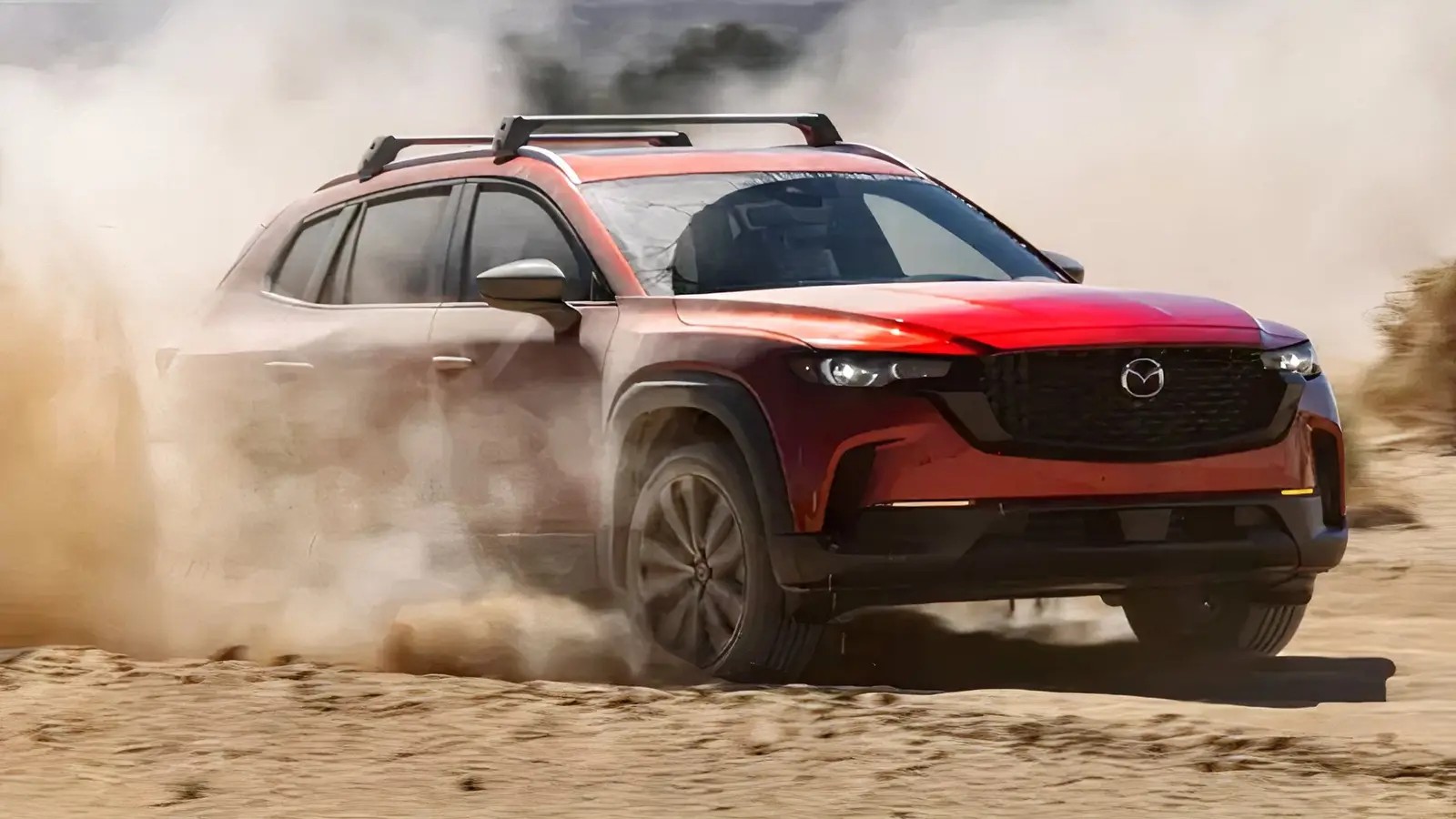
Mazda has carved out a unique niche by positioning itself as a “near-premium” brand. The CX-50 embodies this strategy, blending an outdoorsy, rugged aesthetic with a sophisticated execution.
Exterior Presence
Unlike many compact SUVs that aim for a generic, urban look, the CX-50 features a wider, more planted stance. With squared-off wheel arches and strong, purposeful body lines, it projects a sense of capability—particularly in specialized trims like the Meridian Edition. It looks at home both on a city street and on a trail.
A Refined Interior Philosophy
Inside, Mazda avoids the modern trend of “screen fatigue.” Rather than overwhelming the driver with massive, distracting displays, the CX-50 focuses on usability and elegance. The cabin is characterized by:
– Thoughtful Materials: A clean dashboard layout with high-quality upholstery.
– Balanced Tech: Essential features like Apple CarPlay, Android Auto, and a premium Bose sound system are integrated without feeling gimmicky.
– Driver Focus: A restrained design that prioritizes ease of use and a sense of calm.
Performance and Practicality: What the Numbers Mean
A vehicle’s value is ultimately proven by how it performs in daily life. The CX-50 offers a range of powertrains to suit different driver priorities:
- Efficiency: A 2.5-liter four-cylinder engine (approx. 187 hp).
- Hybrid Capability: A 2.5-liter hybrid variant (approx. 219 hp) for those prioritizing fuel economy.
- Performance: A turbocharged option delivering up to 256 horsepower and 320 lb-ft of torque, providing the effortless merging and overtaking power often missing in this segment.
Notably, all-wheel drive (AWD) comes standard across the lineup, a significant value add in a segment where AWD is frequently an expensive add-on.
The Cargo Trade-off
In terms of utility, the CX-50 offers roughly 31.4 cubic feet of space behind the rear seats, expanding to 56.3 cubic feet with the seats folded. While this is slightly less than some high-volume rivals like the Toyota RAV4, the CX-50’s wider cargo floor makes it highly practical for bulky items. Interestingly, it actually offers more cargo volume than several entry-level luxury competitors, such as the BMW X3.
Challenging the Luxury Status Quo
The most striking aspect of the CX-50 is how it disrupts the traditional hierarchy of car buying.
With a price range typically spanning from the low $30,000s to the mid-$40,000s, it competes directly with mainstream staples like the Honda CR-V and Hyundai Tucson. However, its driving dynamics—characterized by responsive steering and excellent noise insulation—feel much closer to the $50,000–$60,000 luxury segment.
While premium brands like Mercedes-Benz or BMW offer higher brand prestige and cutting-edge tech, the CX-50 asks a compelling question: Is the extra $20,000 worth it if the everyday driving experience is already this polished?
Conclusion: The Mazda CX-50 proves that “budget” no longer has to mean “basic.” By balancing rugged capability with premium refinement, it offers a level of value that challenges the necessity of much more expensive luxury SUVs.