


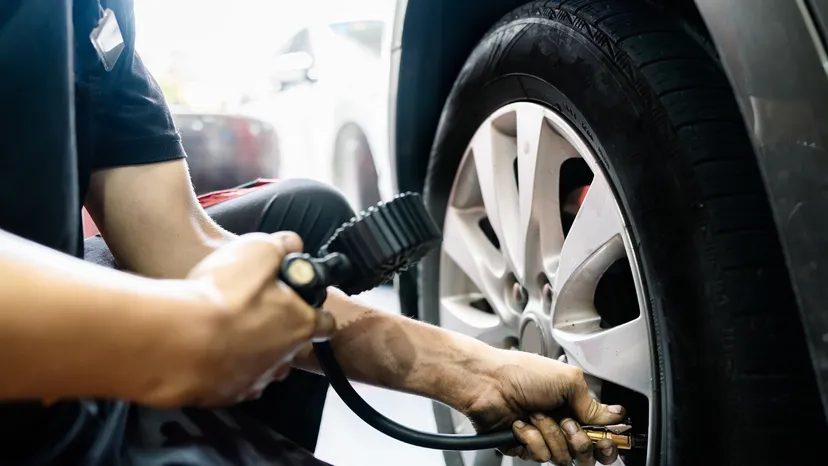
James Bond has them. So do Hummers. Truckers rely on them. The military has used them for decades. The technology is straightforward in its goal: let your tires adjust their pressure to match the terrain. This delivers ideal performance and safety when conditions change.
Right now, most consumer vehicles come with a Tire Pressure Monitoring System (TPMS). It’s a nice safety net. It tells you when pressure drops. It does not fix the problem. You still need an external air source. A compressor. A trip to a gas station. Or a lucky guess.
There are self-inflating tire systems available today. Most of them are locked away in commercial fleets and military hardware. They are expensive. They are complex. They are not for your Honda Civic.
The exception is the Central Tire Inflation System (CTIS) found in Hummers. It works. It’s proven. But it’s also built for a different class of vehicle.
This article covers the current landscape of tire-inflation technology. We will look at what is out there. We will see if a version for regular people is on the horizon.
How Do Self-Inflating Tire Systems Work?
Let’s be clear about what these systems do. They are not magic. They are engineering.
A typical self-inflating tire system (SIT) uses a pump and a sensor. The sensor monitors pressure. If the pressure drops below a set point, the pump activates. It adds air. It stops when the target is reached.
Some systems are more advanced. They adjust pressure based on speed. Or load. Or terrain type. Off-roading benefits most. Low pressure gives more traction. High pressure improves fuel efficiency on pavement.
The key is automation. The driver does not have to stop. The vehicle does not have to sit still. The tire adjusts in real-time.
Why Consumer Vehicles Don’t Have Them Yet
You might wonder why your car doesn’t have this. The answer is cost. And complexity.
Adding a pump. Sensors. Wiring. Control module. It all adds up. It adds weight. It adds potential points of failure.
For a trucker, the cost is justified by uptime. A broken tire on a highway means a stopped truck. A stopped truck means lost money. For a daily driver, the math is different.
Most drivers check their tire pressure once a month. Or when the light comes on. They are not willing to pay extra for a system that automates a task they do themselves.
Regulations also play a role. TPMS is mandatory in many regions. Self-inflating systems are not. There is no push from regulators to adopt them.
Which Systems Are Actually Available Today?
Let’s look at the market.
Commercial applications dominate. Heavy-duty trucks. Military vehicles. Industrial equipment.
The Hummer H1 and H2 use CTIS. It’s a robust system. It allows the driver to select presets. Low for mud. High for highway. It’s simple. It’s effective.
Other systems exist. Some are aftermarket. You can buy kits for off-road vehicles. They often require manual adjustment. Or a separate control unit.
One notable example is the system used by some expedition vehicles. It’s designed for long-duration travel. It allows pressure changes while

The Silent Drain on Your Tires and Wallet
You are likely driving on compromised rubber right now.
AAA says about 80 percent of cars are rolling around with underinflated tires. It is a staggering number. Most people assume their tires look fine. They do. But looking at a tire tells you nothing about its internal pressure. You cannot judge inflation by eye. You need a gauge. Period.
Tires are not sealed perfectly. They lose air constantly.
Hitting a pothole? That’s a shock to the system. Hitting a curb? Same thing. Even just sitting there, air escapes through permeation. The rubber lets gas molecules slip through its pores. Seasonal shifts make it worse. In winter, tires can drop one or two psi (pounds per square inch) every month. Summer? The heat expands the air inside, but it also accelerates leakage and stress on the sidewalls. The numbers fluctuate. The trend is always downward.
Why does this matter?
Underinflation is a triple threat. It destroys your tread life, kills your fuel efficiency, and messes with handling.
When a tire is soft, it flexes more. That flexing generates heat. Heat breaks down the rubber. You get premature wear on the outer edges of the tread. You also increase rolling resistance. The engine has to work harder to push a squishy tire down the road. Your gas mileage drops. It is a direct hit to your wallet.
Then there is the safety aspect.
A soft tire does not respond to steering inputs the same way. It feels vague. It takes longer to stop. In an emergency maneuver, that lack of pressure can mean the difference between a correction and a spin. It is not just bad for the tire. It is bad for the car. It is bad for you.
“You can’t tell if they’re properly inflated just by looking at them. You have to use a tire-pressure gauge.”
Stop guessing. Grab a gauge. Check them when they are cold. Fill them to the spec on the door jamb, not the number on the sidewall. Do it once a month. Do it before a long trip. The cost is negligible. The risk is real.

The Cost of Low Pressure
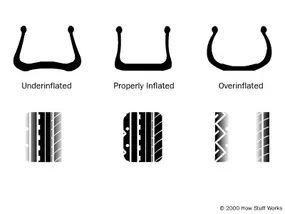
Run low on air and your rubber burns through mileage at an accelerated pace. Goodyear puts the number at 15 percent fewer miles for every 20 percent drop in pressure. That’s not just a hint of wear. It’s a race to the tread bar.
The visual proof is stark. Look at the faded patches on a abused tire. Those aren’t quirks. They are scars from excessive tread wear.
Heat Is the Enemy
Tires bend. They flatten right where they meet the asphalt. Then they spring back. That rebound isn’t free. It creates friction. It creates heat.
With underinflation, that spring is exaggerated. The tire flexes more. The wave of motion gets bigger. Friction spikes. Heat builds.
If the temperature climbs too high, the rubber binding the tire’s internal cords begins to melt.
That’s when you get a blowout. The structure fails. See How Tires Work for the deep dive on why rubber chemistry matters here.
The Fuel Penalty
Your engine feels the drag. It has to push harder against that extra resistance. AAA confirms it: a drop of just 2 psi slashes fuel efficiency by 10 percent.
Do the math on a year of commuting. That’s hundreds of dollars vanishing into the exhaust pipe. You’re paying to keep your tires soft. It’s a bad trade.
So check the gauge. The savings are real. The risk is not.


