The U.S. market forgot how to buy a station wagon. For decades. Then came the SUV. Big, boxy, expensive. It replaced the low-slung road trips and practical commuters. Now we are seeing a weird resurrection. A seven-wagon lineup in 2026? Volvo. Audi. Porsche. BMW. Mercedes. They are fast. They are plush. They are statement pieces that cost a kidney.
“These are not average family haulers.”
The AMG E53 Wagon punches 604 horses. The BMW M5 Touring screams from zero to sixty in 3.2 seconds while carrying nearly sixty cubic feet of luggage. It works. For the wealthy. The price tag, however, does not work for the average person. These vehicles are luxury goods wrapped in utilitarian packaging. Expensive toys.
Meanwhile. The Japanese automakers had a different plan in the ’90s. Toyota. Honda. Subaru. They built simple machines. The Camry Wagon. The Accord Wagon. No flair. Just toughness. Room. Durability. By the 2000s Lexus and Mazda tried to dress them up. The IS SportCross. The Mazda6 Sport Wagon. The market didn’t care. Buyers wanted height. They wanted the RAV4. They wanted the CR-V.
Japanese wagons vanished. Quietly. But one survived. A luxury-leaning outlier that arrived right when wagons became unfashionable. It was ahead of its time because nobody wanted a car that was too smart, too reliable, and just the wrong shape.
The Acura TSX Sport Wagan Anachronism
-
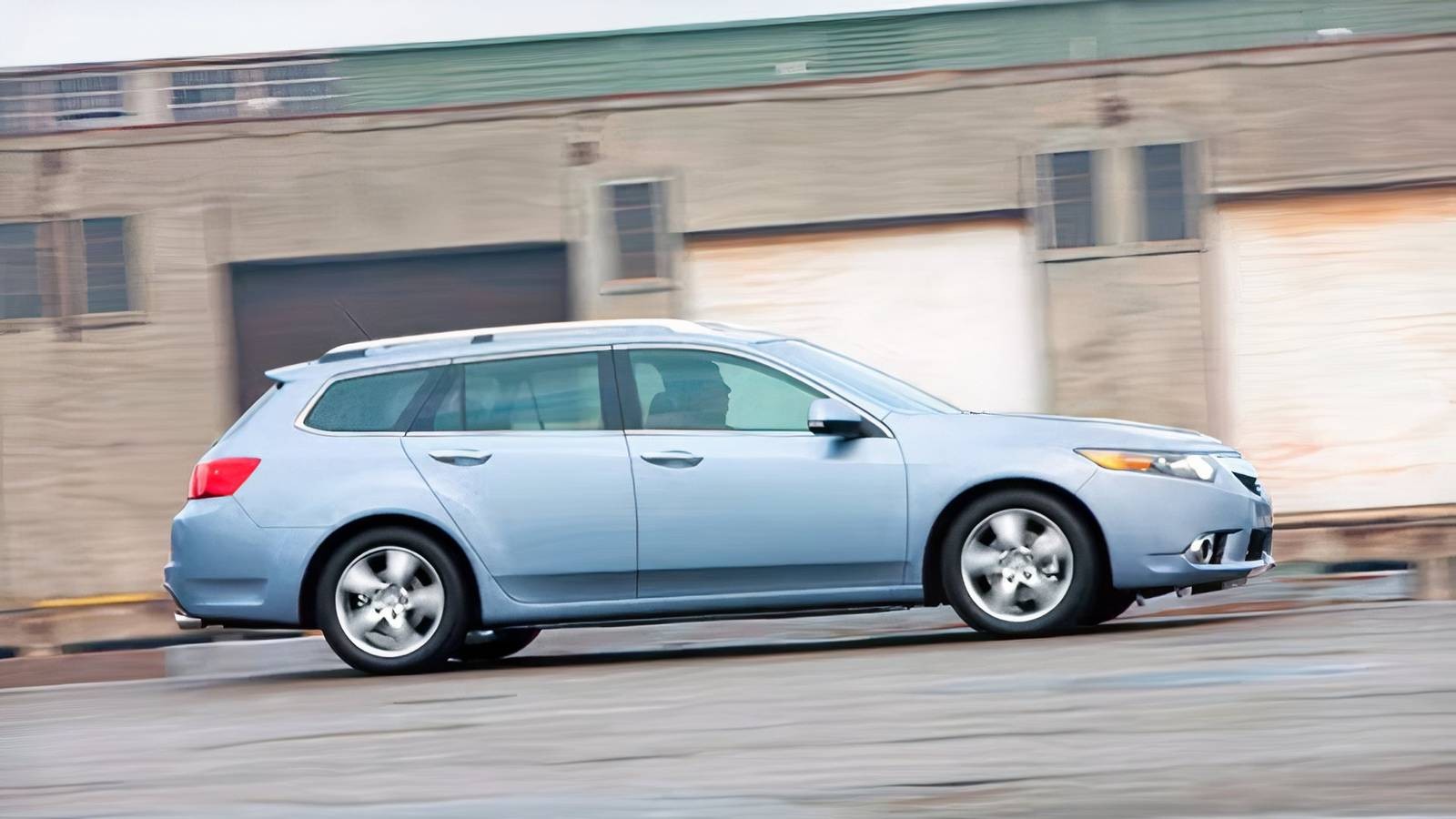
- Only four model years. The Acura TSX Sportwagon looked like a European. Long hood. Low stance. Tight overhangs. It had the raked window and sculpted haunches of an Audi A4 Avant. Not the Chevy Caprice Estate boxiness Americans grew tired of.
It was overbuilt. Not for speed. For longevity.
Underneath it shared DNA with the global Honda Accord Tourer. Not the soft U.S. sedan. The tighter. More rigid chassis built for European roads. Stronger steel. Higher structural integrity. It felt put together with conservative engineering principles that prioritize lasting ten years over looking good on a showroom floor.
The powertrain tells the real story.
One engine option. A 2.4-liter inline-4. The K24Z.
Forget the 600-horsepower plug-in twins of today. This thing uses a forged steel crankshaft. A timing chain. Natural aspiration. No turbo lag. No heat soak from forced induction. Honda’s i-VTEC tunes it for smooth delivery. Efficiency. Long life. The redline is high—7,100 RPM—but it doesn’t need to live there. It breathes easily in the mid-range.
The transmission? An automatic planetary gearset. Hydraulic valve body. Traditional torque converter. No CVT whine. No fragile dual-clutch electronics. Proven. Wide-tolerance components. Hard-wearing steel clutch packs. It was designed to shift gears comfortably and keep doing it for 200,00 miles without drama.
Suspension wise? Double-wishbone front. Multi-link rear. Thick control arms. Cast-iron steering knuckles. It drives on road for a decade. It feels composed at full load. Consistent. Not sporty in the track sense. Sporty in the “it will not break if you load it with lumber” sense.
Why Nobody Bought One
Sales figures tell a sad tale. Roughly 10,00 units sold in its entire run in the U.S.A..
It was niche. Maybe even too niche for a mass market brand.
Timing was brutal. The RAV4 and CR-V were selling out lots. Wagons felt old-fashioned. Low to the ground. Not rugged enough for the “lifestyle” image. The TSX had only front-wheel drive. No all-wheel drive badge. No manual transmission for the enthusiasts who hate autos. Just a comfortable automatic and a badge that didn’t scream “European Heritage” like the Audis and BMWs did.
Buyers wanted versatility. Height. The feeling of looking down on the road. The TSX asked you to sit lower. To accept utility over ego. The market rejected it.
“A wagon ahead of its time launched into a market moving on.”
The 200k Club
Today? The narrative has flipped.
Owners are hitting 200,00. Some 300,0 miles. Same engine. Same transmission. Kelley Blue Book owners rate it 4.8 out 5. Reliability scores? 4.9.
RepairPal says maintenance averages $472/year. Cheap. Most parts come from the seventh or eighth-gen Accord or the CR-V. Cheap parts. Common knowledge for any Honda mechanic. Sure. Electronics can glitch. A/C might leak. The steering rack needs watching on high-mileage units. Oil changes must not be ignored. Skip the oil? The chain stretches. Simple cause and effect.
But drive it? It stays together.
Used prices? $8,20. $9,90. A 2014 BMW Sport Wagon costs $11,8 on average. The BMW is flashier. Faster. Also more likely to leave you stranded with an electric cooling fan failure that costs a thousand bucks.
The TSX offers 66 cubic feet of space. Fold-flat seats. Soft-touch dash. Physical buttons. Logic layout. Perforated leather. It ages gracefully. Tech is dated. No touchscreens everywhere. You can retrofit it now if you want.
Fuel economy hits 24 combined. Fast? No. Seven and a half seconds to 60. Slower than your Civic Si. But does it matter? It is 189 inches long. Compact in the city. Huge inside.
In a sea of SUVs that cost as much as houses. Here is a car built by Honda engineers to simply continue. Not wow you. Just not break.