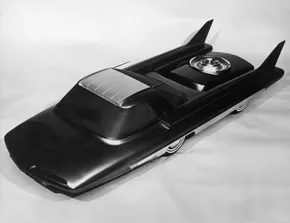
The 1950s were peak Atomic Age. Ford Motor Company looked at the horizon and saw a future powered by fission. They didn’t just think about it. They built a concept. The Ford Nucleon.
It wasn’t a joke. Ford claimed future reactors would shrink. They’d be lighter, safer, portable. The design put a power capsule in the rear. No more gas stations. Just charging hubs. Ford promised 5,000 miles of driving range before you needed to swap fuel or recharge. A wild number for the era.
Did they build a drivable prototype? No. They built a scale model. Half the size of a real car. It stayed a model.
Why Nuclear Power for Cars Is Worth Revisiting
It sounds like sci-fi. A plot point in a bad movie. But the energy crisis is real. Climate change isn’t slowing down. Experts are looking at old tech with new eyes. Nuclear power might make a comeback. Not just for grids. For vehicles.
When regulated properly, it’s clean. It’s affordable. It’s relatively safe. So why not put it in a car?
Look at how other nations use nuclear energy. It’s not just big power plants or aircraft carriers. The former U.S.S.R. and the United States both used small reactors to power satellites. Satellites fall. They break apart. It got controversial. Fast. But the tech worked.
There are specialized reactors heating homes in freezing climates. There are experimental setups trying to turn coal into clean-burning gas. These are research reactors. They prove small-scale nuclear application is possible. Scientists are studying them. They’re looking for ways to adapt the tech for roads.
How Nuclear Energy Could Fuel Modern Vehicles
We aren’t necessarily talking about sticking a mini-bomb in your trunk. There are three distinct paths forward.
- Nuclear-fueled hydrogen : Use nuclear energy to split water. Create clean, safe, affordable hydrogen fuel. You drive on hydrogen. The nuclear part stays at the plant.
- Grid charging : Nuclear reactors power the stations where you plug in your EV. Highly efficient batteries. Clean source.
- On-board reactors : The hard part. Scientists could create a miniature nuclear power plant. Put it directly in the car.
The barrier isn’t physics. It’s engineering and public fear.
Most people hear “nuclear” and think Chernobyl. They don’t think about the 5,000-mile range the Nucleon promised. They don’t think about zero emissions from the tailpipe.
The Ford Nucleon was a fantasy. But the problems it tried to solve are still here. Range anxiety. Fossil fuel dependency. Air pollution.
Some might ask if the risk is worth the reward. Maybe. Maybe not. The tech has changed since 1955. Reactors are smaller now. Safety systems are better. But the idea remains radical.
We need to look at the benefits. And the massive problems. The pros and cons aren’t balanced. They’re complicated.
The Physics of a Nuclear Commute: Why It Won’t Work (Yet)
The theoretical pitch for a nuclear-powered car is seductive. You fill the tank once. Maybe twice a decade. The fuel source? Highly enriched uranium. A single pound of this stuff can power an aircraft carrier or a submarine for years. Scale that down, shield it properly, and you have a vehicle that emits zero tailpipe pollutants. It’s always on. No ignition key. Just a constant, low-grade hum of fission.
There’s a catch. A massive one.
Radioactivity doesn’t care about your commute.
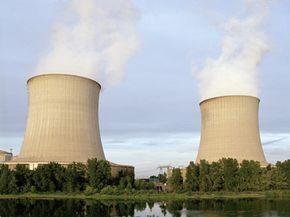
To keep the driver alive, the car needs shielding. Not a little bit. We’re talking about the heavy, dense protection used in power plants and military vessels. A standard nuclear reactor uses three layers of shielding plus a concrete containment structure that’s several feet thick. U.S. law mandates this for civilian plants. Military reactors are classified, but we know they use significant mass to stop radiation.
Put that much lead, concrete, or borated polyethylene in a sedan? The car won’t move. It’ll be a brick.
The shielding has to do more than just stop gamma rays. It needs to survive an earthquake. It needs to be airtight to prevent radioactive particles from venting into the cabin. And it has to stay intact during a high-speed collision.
Security Risks and the “Dirty Bomb” Problem
Let’s assume engineers solve the weight issue. Now we hit the security wall.
Having walkable amounts of fissile material on public roads is a nightmare for intelligence agencies. You don’t need weapons-grade uranium to build a dirty bomb. Low-enriched uranium spread across a highway with conventional explosives creates a radiological disaster zone. Your nuclear sedan becomes a potential WMD waiting to be hijacked.
Then there’s the crash scenario.
If the shielding fails in a catastrophic accident, you’re not just looking at a totaled car. You’re looking at a localized radiation leak. Can the containment hold? Probably not. Not in a 60-mph T-bone.
The Infrastructure Headache
Even if we ignore physics and security, the logistics are brutal.
Who handles the spent fuel? It stays radioactive for hundreds of years. You can’t just toss it in a landfill. Energy companies, automakers, and the government would need to build a standardized, secure disposal network from scratch.
Compare that to a gas station. Or an EV charger.
Building new nuclear infrastructure takes up to 10 years. The startup costs are astronomical. Rekindled interest in nuclear energy has already driven up uranium prices. The economics simply don’t scale for a single consumer vehicle.
How Would It Actually Run?
If you were determined to build this thing, how would it work?
A mini reactor would use a uranium bundle to heat water. That water turns to steam. The steam spins a turbine. The turbine spins a generator. Electricity.
Or, you could skip the generator. Use the superheated steam directly to move an engine. But then you need a separate power source for lights, AC, and electronics.
It’s a mini nuclear power plant on four wheels.
Complex. Heavy. Dangerous.
The Verdict
Nuclear-powered cars remain science fiction. Not because we can’t split atoms. We can. We do it every day.
It’s because the shielding makes the car immobile. The security risks make it illegal. The waste management makes it impractical.
We’re better off sticking to lithium-ion batteries. Or hydrogen. Or just burning oil until one of those works.
The dream of a car that never needs refueling? It’s out there. Just not in your driveway.