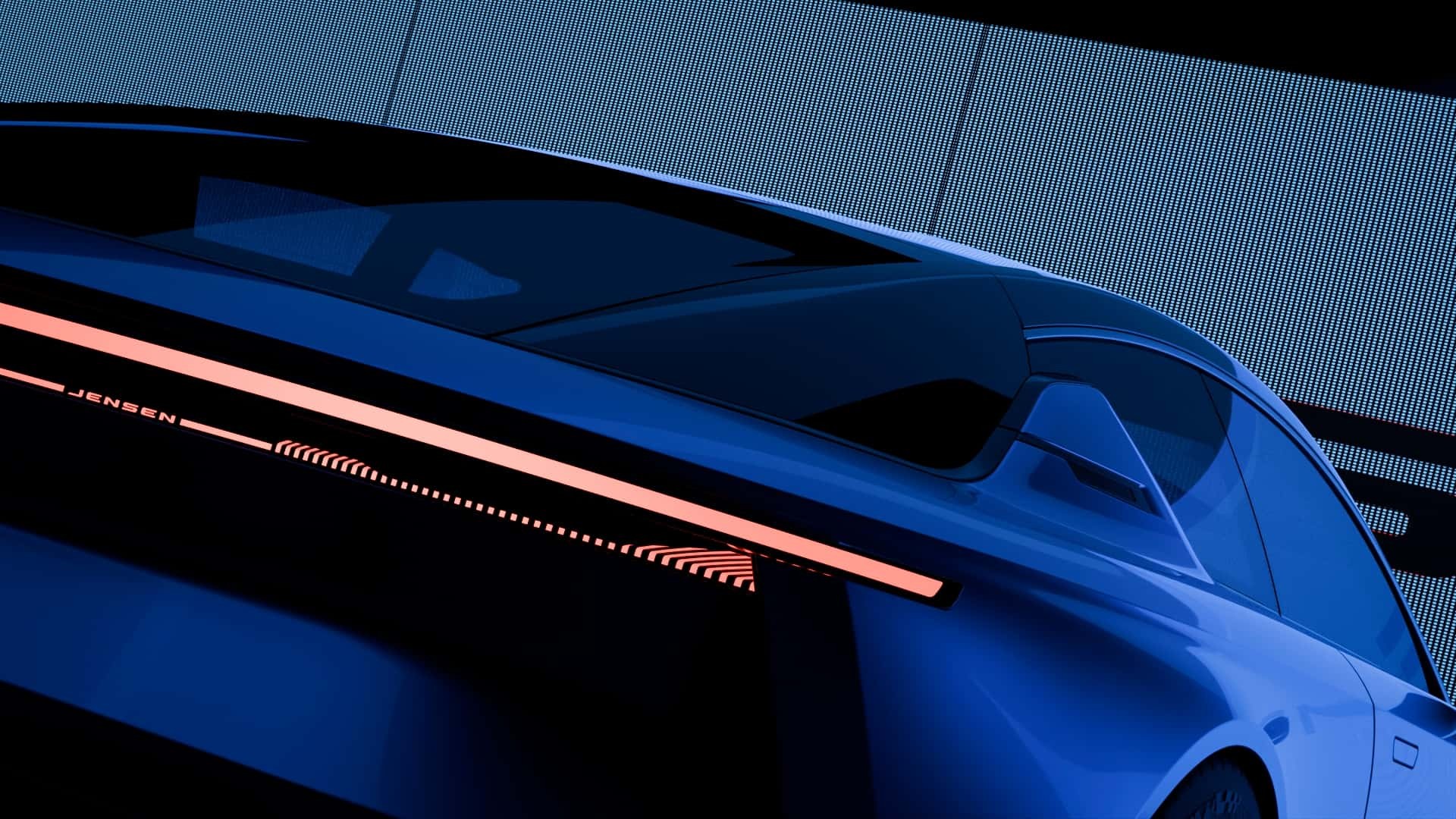
The Jensen Interceptor is back.
But don’t plan a grocery run with it. Yet.
Jensen International Automotive, a recently formed entity dedicated to reviving the legendary British badge, has announced its debut vehicle. It’s called the Interceptor GTX. It’s fast, it’s analog, and it’s strictly track-only.
No license plates. No highway compliance. Just a lightweight aluminum shell built for the tarmac.
Why Start With a Track-Only Jensen Interceptor GTX?
You might wonder why a new manufacturer would ignore road laws from day one. The answer is pragmatic. Regulations.
Certifying a new car for public roads is a nightmare of red tape. By releasing a Jensen Interceptor GTX exclusively for circuits, Jensen bypasses these hurdles. It gets into the pre-production phase immediately. It builds momentum without getting stuck in legal purgatory.
But there’s a social angle too. The company is treating buyers like test pilots.
“Jensen customers would essentially be driving prototypes.”
This approach flips the traditional development model. Instead of hiding cars in secret factories, Jensen is handing keys to enthusiasts who will drive them to the limit. These customers get an exclusive product. Jensen gets real-world data. It’s a feedback loop disguised as a sales pitch.
Specs and the Analog Drive
Details remain sparse. Sources are still dripping. What we know, however, paints a specific picture.
Aluminum chassis and bodywork keep weight down. This is crucial for a modern supercar trying to feel classic. Less mass means better agility, especially on a cornering-focused layout.
Under the hood? A supercharged V8.
It sits in the nose. That’s old-school. That’s British.
Autocar reports Jensen is chasing an analog driving experience. This phrasing is heavy with implication. Most insiders assume it points toward a manual gearbox. Why? Because “analog” rarely means a smooth, detached dual-clutch transmission. It means clutches. Gears. Effort.
The original Interceptor was one of the coolest cars to leave the UK. It mixed Italian-style flair with massive muscle. The GTX seems designed to recapture that spirit. A hefty motor pushing hard on a chassis that refuses to sanitize the drive.
What Happens Next?
This is the prototype phase, effectively.
Jensen uses the GTX to demonstrate capability. It proves the brand has style and performance DNA. If the track version gets people excited—and willing to buy in before it’s legally road-worthy—Jensen has its runway for future models.
Road-legal versions will follow. The goal is clear. Use the track car to validate the engineering and the brand. Then, bring the same soul onto the streets.
It’s a risky strategy. It relies entirely on enthusiast passion carrying the early financial burden. If you want to drive a new Jensen, you’ll likely do it on a race strip first. You’ll learn the car. You’ll break it, maybe. Then you’ll help them fix it for everyone else.
There is no smooth transition here. It is a sharp turn onto a closed course. The road follows later. If the handling is right, people will wait.