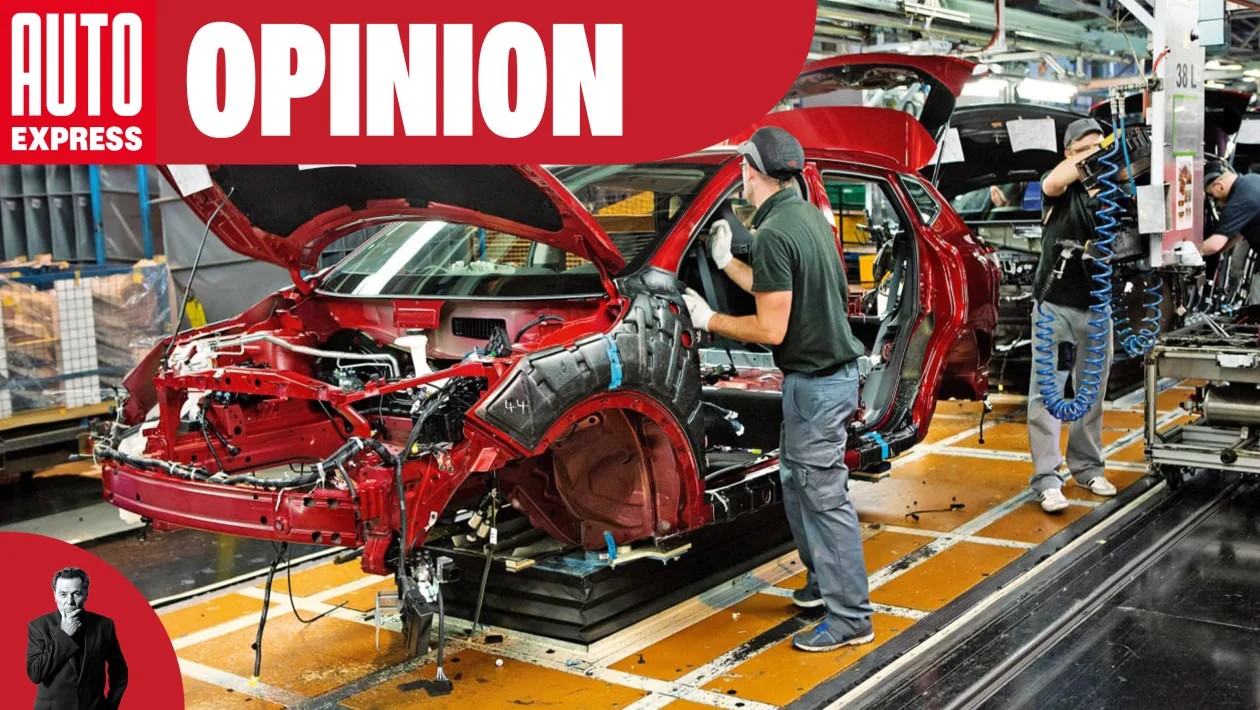
The Nissan plant in Sunderland has long been a cornerstone of British manufacturing. Since its opening in 1986, it has transformed from a subsidized newcomer into the UK’s largest and most productive automotive facility. However, as the global automotive landscape shifts, the plant faces a critical crossroads: to maintain its dominance, it may need to embrace the very force that once disrupted the British motor industry—Chinese car brands.
A Legacy of Disruption and Dominance
The arrival of Nissan in the North East was a watershed moment for UK manufacturing. While the plant brought state-of-the-art Japanese production methods and high-quality employment to Sunderland, it also signaled the beginning of the end for many traditional British mass-producers.
The efficiency of foreign-backed plants like Nissan and Toyota contributed to a painful restructuring of the UK industry. Shortly after Nissan’s inception, several iconic domestic production sites—including Peugeot in Coventry and Ford in Dagenham—were forced to close. This shift replaced “tired” domestic manufacturing with highly efficient, globalized production lines.
Today, the UK’s automotive output is heavily reliant on these foreign-owned entities. Without them, the UK would produce significantly fewer vehicles, and the domestic market would be dominated by high-end, luxury brands like Bentley and Range Rover, leaving a massive void in the “affordable” car segment.
The Capacity Challenge
Despite its status as a manufacturing powerhouse, Sunderland is currently operating at a significant deficit in terms of utilization.
- Current Capacity: The plant is estimated to be running at approximately 50% capacity.
- The Opportunity: The workforce is described as highly skilled and loyal, meaning the facility has the latent ability to scale production rapidly if demand and models are secured.
- The Goal: To secure the plant’s future, it must transition from being a single-brand hub to a high-volume, multi-brand manufacturing center capable of producing sensibly priced vehicles for the mass market.
The Chinese Connection: A Strategic Pivot
The most viable path to filling this capacity gap may lie with Chinese automakers, specifically Chery.
As Chinese brands look to penetrate the European market, they face the challenge of localizing production to meet consumer demand and regulatory requirements. Chery has already demonstrated its intent by securing a deal to utilize a former Nissan factory in Spain. This move sets a precedent for how Chinese firms can revitalize under-utilized European manufacturing assets.
High-level discussions are reportedly underway regarding a similar arrangement for Sunderland. For Nissan, partnering with or hosting brands like Chery could provide the volume necessary to keep the plant running at full throttle. For the UK, it offers a way to remain a serious player in the mass-market automotive sector.
Why This Matters
The evolution of the Sunderland plant reflects a broader trend in global manufacturing: the move from national champions to integrated global supply chains. The question is no longer about protecting “British” brands, but about maintaining manufacturing capability on British soil.
If Sunderland can successfully integrate Chinese-led production, it will secure its economic relevance for the next several decades.
The survival of Britain’s mass-market automotive manufacturing depends on filling existing capacity; Chinese brands like Chery represent the most logical partners to achieve this scale.
Conclusion
To ensure the next 40 years of productivity, the Sunderland plant must evolve beyond its traditional roots. By potentially hosting Chinese manufacturers, the facility can bridge the gap between current under-utilization and the high-volume demands of the modern European car market.