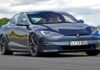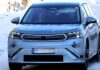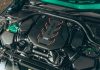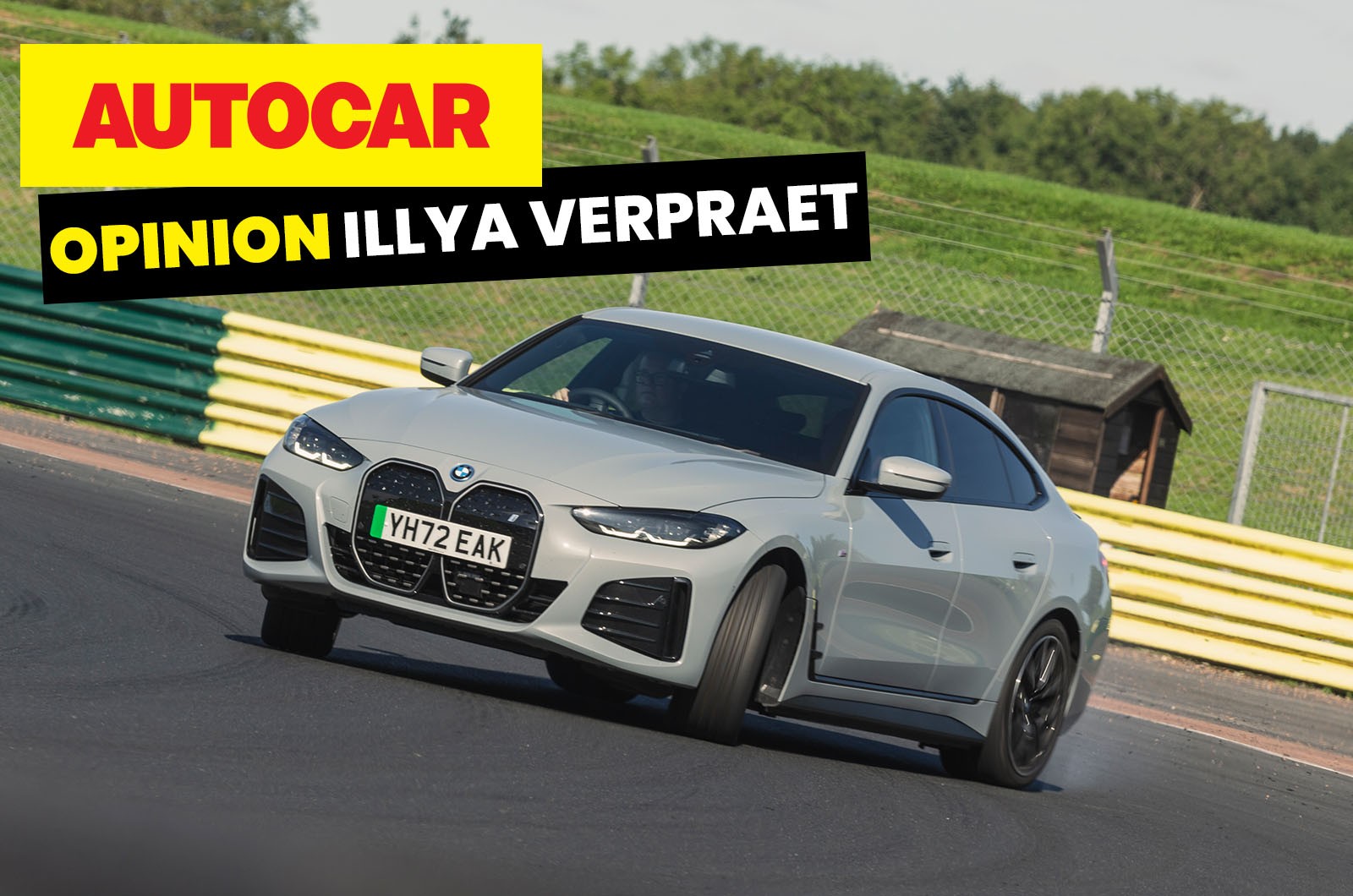
Testing vehicles on handling circuits like Horiba MIRA serves a dual purpose. On a technical level, it allows journalists to stress-test stability control systems and emergency avoidance maneuvers. However, on a more visceral level, it reveals how much effort manufacturers truly invest in the “soul” of a car.
In recent years, Electric Vehicles (EVs) have emerged as the most fascinating subjects in these tests, not because they are perfect, but because they are fundamentally rewriting the rules of vehicle dynamics and driver control.
The Battle of Software: Stability and Control
One of the most critical factors in performance driving is how much control the driver actually has over the car’s electronic “safety nets.” In modern vehicles, Traction Control (TCS) and Electronic Stability Control (ESC) are ubiquitous, but their implementation varies wildly between brands:
- The Restrictive Approach: Many manufacturers lock these systems entirely, prioritizing safety and liability over driver engagement.
- The Laissez-faire Approach: Brands like Hyundai and Kia offer more freedom, allowing drivers to deactive systems more readily.
- The Inconsistent Approach: Some manufacturers struggle with calibration. For instance, the MG 4 provides a sense of total control until the moment a drift begins, at which point the system intervenes aggressively, forcing the car into a “limp mode” that kills the momentum.
This inconsistency matters because a drift car requires a predictable relationship between driver input and vehicle reaction. If the software is unpredictable, the car becomes a liability rather than a tool for skill development.
The Digital Throttle: Precision vs. Delay
In the era of mechanical throttle cables, the connection between the pedal and the engine was direct. Today, the accelerator is essentially a “torque request device.” When you press the pedal, you aren’t moving a cable; you are sending a digital signal to a computer that decides how much power to deliver.
This shift creates two distinct experiences in the EV market:
1. The Lag Problem: Some manufacturers, particularly within the Geely group, struggle with calibration. In the Smart #1, this manifests as a sudden surge of power that feels like an accidental “clutch kick,” making precise throttle modulation nearly impossible.
2. The Precision Advantage: Other EVs offer near-instantaneous, fine-tuned control, allowing the driver to manage power delivery with surgical accuracy.
Redefining All-Wheel Drive: Torque vs. Distribution
Perhaps the most significant shift is how electric motors handle power distribution. Traditional internal combustion engines (ICE) rely on mechanical differentials and clutch packs to move power between axles. Electric motors, however, can react much faster, but they are bound by the physical limits of their individual motors.
The difference in “feel” is best illustrated by comparing two BMW models:
| Feature | BMW M340i xDrive (Petrol) | BMW iX3 (Electric) |
|---|---|---|
| Total Torque | 369 lb-ft | 476 lb-ft |
| Rear Axle Limit | Can send all 369 lb-ft to the rear | Capped at 321 lb-ft (motor limit) |
| Driving Character | Rear-Wheel Drive Bias: Designed to oversteer on corner exit. | AWD Bias: Acts more like a performance Subaru, prioritizing grip. |
While the iX3 has higher total torque, it cannot mimic the rear-biased aggression of the M340i because it cannot send more torque to the rear than the rear motor is physically capable of producing. Consequently, while the petrol M340i is built to slide, the electric iX3 is built to “grip and go.”
While EVs possess the raw torque to make drifting easy, the way manufacturers calibrate their software and distribute power often makes them more stable—and sometimes more predictable—than traditional performance cars.
Conclusion
Electric vehicles offer a unique paradox: they possess immense power and rapid response, yet their “digital brains” often prioritize stability and grip over the playful instability required for drifting. Ultimately, an EV’s ability to be a true performance machine depends less on its battery size and more on how finely its software is tuned.