


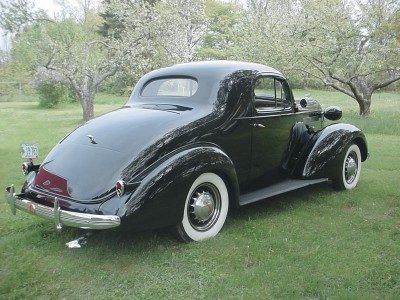
The Great Depression had left the American auto industry bleeding cash and buyer confidence. As the economy slowly clawed its way out of that wreckage, drivers stopped dreaming about speed or status. They wanted utility. They wanted value. And they found both hiding inside the 1935 and 1936 Pontiac line.
This wasn’t the era of flashy extravagance. A conservative, practical mindset had taken over the market. Buyers were done with the open-top roadsters that had defined the roaring twenties. They wanted roofs. They wanted enclosures. Closed body styles suddenly outsold open designs by a wide margin. It was about protection from the elements and a sense of security that convertibles just couldn’t offer.
Under the hoods, the trend followed suit. Displacement dropped. Six-cylinder engines became the default choice over larger, thirstier eightes. It was a shift toward efficiency and affordability. Pontiac capitalized on this change in consumer behavior better than most. They didn’t just survive the transition; they led it.
“Closed cars were far more frequently ordered than open body styles, as were engines of smaller displacements, usually sixes.”
This pivot toward the sensible wasn’t just a reaction to poverty. It was a new standard for ownership. The 1935-1936 Pontiacs became symbols of a matured market. They offered the reliability people craved without the premium price tag. You could still get a car that looked good and ran well, but the flashy excess was gone.
Buyers in these years were looking for the best bang for their buck. They knew the economy was fragile. Spending on a vehicle became a calculated risk. The Pontiac answer to that risk was straightforward engineering and modest styling. It wasn’t trying to win awards. It was trying to keep families moving.
The shift to six-cylinder powertrains also meant lower maintenance costs. Fewer cylinders meant fewer spark plugs, fewer valves, less complexity. For a household budget stretched thin, that mattered. It wasn’t just about the purchase price. It was about keeping the car on the road.
Closed bodies also meant better insulation. In a time when heating wasn’t standard in every vehicle, a sealed cabin was a luxury. It kept the wind out. It kept the rain off. It made daily commutes tolerable even in harsh weather. That utility drove sales numbers up across the industry, but Pontiac felt the shift most acutely.
The aesthetic of the era changed too. Lines became cleaner. Ornamentation was dialed back. Chrome was used sparingly. The focus was on the shape of the metal and the function of the glass. It was a visual representation of the practical mindset. No wasted motion. No wasted material.
This period marked a turning point where style began to serve function more directly. Designers weren’t just painting pretty pictures. They were solving problems. How do you fit more people in safely? How do you reduce drag? How do you make the car cheaper to produce without making it feel cheap?
The 1935 and 1936 models answered those questions with a mix of sturdy construction and accessible pricing. They were the bridge between the wild twenties and the standardized modern car. You can still see that influence today. The concept of
The 1935 models hit showrooms in late 1934 and landed Pontiac in a remarkably strong position. They sat squarely in the medium-price sector. Not cheap like a Ford or a Chevrolet. Not quite the luxury tier, but affordable enough for a broad swath of buyers. You got excellent value for the money.
This era marked an interesting “in-between” period for the marque. You had the preceding line: eight-cylinder engines only. European-influenced exteriors. Fabric inserts on closed body tops. A Dubonnet independent front-suspension system that was advanced for its time.
Then came the next generation: all-steel body construction. A more modern chassis.
The 1935-1936 models were the bridge. They separated themselves from the cars that came before with several unique features. The most obvious was the exterior design. It wasn’t just a facelift. It was a complete rethink.
Franklin Q. Hershey was the architect behind this new look. A Californian. He had designed for coachbuilder Walter Murphy. Recently he had come over from Hudson. His brainchild for Pontiac leaned heavily into Art Deco inspired styling.
1935-1936 Pontiac Styling Details
The styling of these models had no visual similarity to the 1934 Pontiac. But the mission remained identical. Establish Pontiac as a high-style but fairly inexpensive marque. A clear step up from the entry-level field.
The result was a sharper, more modern aesthetic. The lines were cleaner. The presence was more substantial. It signaled that Pontiac was moving away from the experimental phases of the early 1930s. They were settling into a formula that would define the brand for years to come.
“Pontiac found itself in a remarkably good position when the new 1935 models appeared.”
This transition period is often overlooked by casual observers. They see the steel bodies of the later years and assume the evolution was linear. It wasn’t. The 1935 and 1936 models carried specific character traits that vanished with the switch to full steel construction.
For enthusiasts tracking the lineage of Pontiac Art Deco design, these two model years are critical. They represent the final iteration of the fabric-top era. The last gasp of the Dubonnet suspension influence. Before everything became more uniform. More standardized.
If you are looking at a survivor from this era, keep an eye on the body panels. The steel versions that followed were stiffer. The earlier models had a certain flex and character that is hard to replicate in modern restorations. The styling cues Hershey brought from Hudson were subtle but effective. They gave the car a longer, lower profile without sacrificing interior space.
It’s a niche area of automotive history. But for anyone interested in how American manufacturers balanced cost and style during the Depression, the 1935-1936 Pontiacs offer a clear case study. They weren’t trying to be the cheapest. They weren’t trying to be the most luxurious. They were trying to be the most stylish for the price. And for two model years, they pulled it

The Silver Streak: A 20-Year Trademark Begins
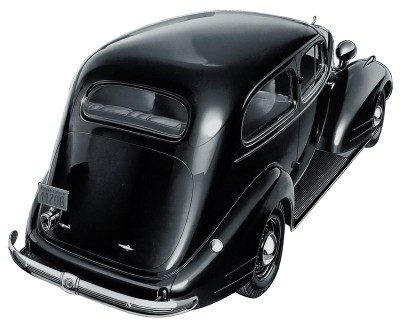
If you look closely at any Pontiac from the mid-30s to the mid-50s, you’ll see the line. It started in 1935 Pontiac, marking the first time the division rolled out its iconic silver streaks. This wasn’t just a trim change. It was an Art Deco machine that streamlined the body and introduced a design cue destined to last over two decades.
Up front, the treatment began with a bright band of multiple ribs. They ran from the windshield base across the hood top. This created a waterfall grille that felt surprisingly aerodynamic for the era. You’d also find deco-inspired trim on the hood sides. Parking lamps perched atop the fenders were shaped like teardrops.
The Silver Streak design theme was inspired by a photo of a Napier race car, its oil cooler protruding through the hood, that Hershey saw in a French magazine.
Legend says the idea came from a magazine photo. A French publication featured a Napier race car. The image showed the oil cooler sticking straight through the hood. Hershey spotted it. The impact was immediate.
Pontiac General Manager Harry J. Klingler liked it. General Motors Executive Vice President William S. Knudsen liked it too. They saw an innovative look that made the entire 1935 Pontiac line appear “bigger.” It gave the cars a big-car presence without the big-car price tag.
The streaks stuck around. They became an enduring trademark. You’d see them on every model until 1956. The end came with a twist. It was the son of “Big Bill,” Semon E. “Bunkie” Knudsen, who pulled the plug. He became division general manager in June 1956. He ordered the silver streaks removed from the 1957 models. The cycle closed.
Rounding Out the Design
The 1935 Pontiac wasn’t just about the hood. The fenders grew larger. They became more rounded than previous iterations. They still carried horizontal “speedlines” stamped just behind the wheel openings. This detail dated back to the 1933-1934 models. It kept a sense of motion even when the car was standing still.
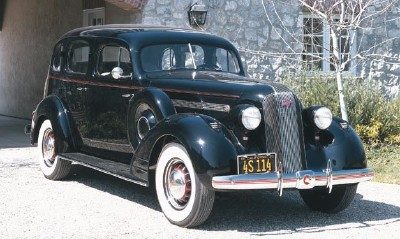

The 1935 Pontiac didn’t just react to the depression; it seemed to predict what buyers wanted when money was tight but style still mattered. The headline grabber was the full use of suicide doors on every model. This was a retrograde move. Rear-hinged doors were fading from favor, and Pontiac had only ever used them on the rear doors of four-door sedans before. Now, they were front-and-center.
It wasn’t just about entry. The split windshield made its debut in 1935, creating a distinctive Vee effect. That design choice would stick around until 1952. The body was undeniably modern. Streamlined. It looked nothing like the clunkers of the late twenties. While dimensions shifted between body styles and chassis lengths, the DNA remained consistent: running boards, rear fenders, and bumpers all told a similar story. Underneath it all was the General Motors “A” Body platform, shared with Chevrolet.
The Wood Frame Reality
The exterior was fresh, but the construction? That was old school. Fisher Body introduced the all-steel “turret top” for coupes and sedans. This was a step up from the fabric roofs of yesteryear. But don’t mistake steel skin for structural independence. The bodies still relied heavily on wooden inner framing. This was the industry norm.
Wood is lightweight. It’s sturdy enough at first. But it rots.
Over time, moisture killed that rigidity. The result? Sagging doors. Bad weather sealing. And worse, diminished crash safety. The 1935 Pontiac looked sleek, but it was built on a decaying skeleton if you lived in a rainy climate.
Interior Layouts and Choices
Inside, the six-cylinder and eight-cylinder models played the same hand. The layout was identical. The differences were in the details: fabrics, control knobs, and whether you opted for a bench or bucket seats. It was a choice between comfort and tradition, with no mechanical difference between the two seating arrangements.
The New L-Head Six
Mechanically, the shift was significant. Pontiac needed to compete in the lower-price brackets. Enter the new L-head six-cylinder engine. Designed by chief engineer Benjamin H. Anibal, this engine shared nothing with the previous sixes built between 1926 and 1932.
It wasn’t just an eight-cylinder with two cylinders chopped off. It was a related design, sharing details with the straight eight, but fundamentally its own creature. Conventional? Yes. Well-built? Absolutely. Durability came from four main bearings and a fully counterweighted crankshaft.
The sizing was interesting. The six had larger cylinders than the eight.
- Bore: 3.38 inches (vs. 3.19 for the eight)
- Stroke: 3.88 inches (vs. 3.50 for the eight)
This geometry meant the displacement gap was smaller than you’d expect. The six pushed out 208 cubic inches. The eight managed 223.
Power figures told a similar story. A single-barrel Carter carburetor and a 6.2:1 compression ratio yielded 80 bhp at 3600 rpm for the six. The eight, running the same compression and carb, made 84 bhp at 3800 rpm. The gap was negligible. For a car priced lower, the six was punching well above its weight.
The Eight Gets a Tune-Up
The inline eight was in its third year. It had already seen upgrades. The 1934 model year brought a revised intake manifold and a new “GMR” cylinder head. GMR stood for General Motors Research. This change added seven horsepower right from the start of the year.
For 1935, the focus shifted to durability. New micropolished rod and main bearings were introduced. The engine was already known for being tough. These changes made it bulletproof.
Chassis and Suspension
The mechanics were an updated version of the “double-drop” chassis used in the previous two years. This design offered two wheelbase options. Front suspension systems varied by model. You picked your chassis, then your suspension, then your body.
The 1935 Pontiac was a study in compromises that worked. Old construction methods met new styling. A small engine that acted big. A chassis that had seen better days but refused to quit.
“Wood was prone to rotting over time, which reduced rigidity. This situation would cause such maladies as sagging doors and weather-sealing problems…”
How many of these cars rotted out in the Midwest winters? Hard to say. But the ones that survived did so with style. The split windshield caught the eye. The suicide doors invited you in. And under the hood, the eight or the six simply kept turning.
The double-drop chassis was aging too. But for 1935, it held up. Pontiac knew its place in the GM hierarchy. It was the upscale Chevy. And with these mechanics, it held its own.
There are more details to come. The mechanics section continues.

The Hydraulic Leap and Suspension Split
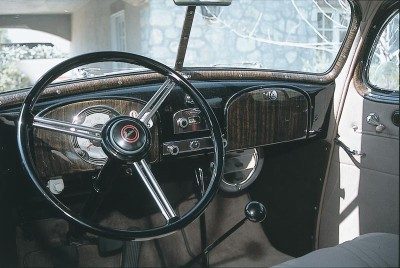
That wood-grain dash wasn’t just for show. It forced a strict, symmetrical layout that defined the interior aesthetic of the 1935 Pontiac. But the real story was under the metal. The DeLuxe Six and Improved Eight kept the independent front suspension inherited from 1934. It was the Dubonnet system—marketed as “Knee-Action.”
Chevrolet and Pontiac stuck with this setup. Oldsmobile, Cadillac, LaSalle, and Buick? They used a superior design by Cadillac. Both used the same “Knee-Action” marketing name. Confusing? Yes. Effective? Debatable.
The brakes were the big news. The old mechanical linkages were gone. In their place: hydraulic drums at all four corners. This was part of a wider industry shift toward safety. Most manufacturers were still lagging, but Pontiac jumped in early. Better stopping power mattered. Especially when you were driving a heavy machine through Depression-era roads.
Chassis, Body Styles, and Oddities
Pontiac played with two wheelbases this year. Sixes sat on a 112-inch frame. Eights stretched to 116.6 inches. The eights needed longer sheetmetal and running boards to fill that space. Total lengths hit 189 inches for the sixes and 193.6 inches for the eights.
Launch was late December 29, 1934. Two series: DeLuxe Six and Improved Eight. Body choices were plentiful. Coupes. A two-seater. A “sport coupe” with a rumble seat. Two- and four-door sedans. Touring sedans with extended built-in trunks. Sedans had flat backs with a hatch for the spare. Cabriolet convertibles with rumble seats were also on the menu.
Then there were the oddballs. The “Doctor’s Special” coupe featured a front seat with a compartment for a matching medical bag. Practical? Maybe. Stylish? Questionable. The “Opera Coupe” had a single jump seat folding out from the rear bulkhead on the driver’s side. It was a pre-production experiment. About 50 were built. A few survive today, including one original-condition Improved Eight.
Drivetrain and Options
Transmission? One choice. A fully synchronized, floor-shifted three-speed manual. Power went through a torque tube to a semifloating rear axle. Sixes had a 4.44:1 differential ratio. Eights got 4.55:1. Tires told another story. Sixes rolled on 16×6.00 balloon tires with wire-spoke wheels. Eights used wider 16×6.50 balloons on steel artillery-spoke wheels.
Options were sparse by today’s standards but competitive for the mid-price market. You could add antifreeze, wheel discs, trim rings, dual sidemount spares, bumper guards, heaters, “Air Mate” or “Air Chief” radios, a vanity mirror, luggage set, dash watch, or a glovebox smoker set.
The Standard Six Cuts Corners
February 1935 brought a new price leader: the Standard Six. It came in all body styles except the cabriolet and rumble-seat coupe. It undercut the DeLuxe Six by $50 to $60.
That $60 difference feels small now. Back then? It was about nine percent of the cost of a Deluxe Six business coupe. Nine percent off a new car today is significant. It meant something to a shopper in 1935.
The differences were mostly mechanical. The Standard Six ditched the Dubonnet suspension. It used a simpler, more reliable solid I-beam front axle with semi-elliptic leaf springs. Cost savings appeared elsewhere. The three-speed manual lost synchronization on first gear. No fender-top parking lamps. Single taillamp. Rear-quarter windows on four-doors lacked crank-open vents. Black fenders and running boards were standard, regardless of paint color. Dual sidemounts were not an option.
Profitability in a Depression
The new lineup and the addition of the six-cylinder engine were a massive win. Pontiac had lost ground during the early Depression. Klingler and his team found the right mix of attractive design and affordable pricing. Production surged. 129,468 cars rolled out of the factory. That was an increase of 50,609 units from the previous year.
Eight-cylinder sales dropped. But the sixes? Their production alone surpassed the total output of 1934. The six-cylinder models were exactly what the market needed. Pontiac solidified its position in the lower mid-price field while many competitors faded away.
1936 Evolution
The 1936 Pontiac didn’t reinvent the wheel. It evolved. Planners knew they had a winning setup. Changes were minimal but purposeful. They preserved the value Pontiac was known for. Prices crept up slightly for some models. Base prices for eight-cylinder sedans actually dipped. It was a smart move. Keep the momentum. Don’t break what isn’t broken.
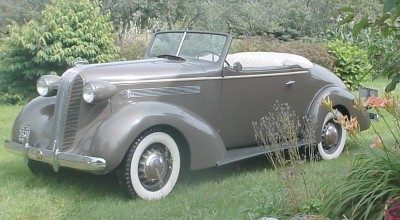

Subtle Shifts: The 1936 Pontiac Face-Lift
The 1936 Pontiac didn’t reinvent the wheel. It barely tweaked it. Compared to the 1935 model, the changes were so slight you might have missed them if you weren’t looking closely. Unlike many second-year updates that slap on a fresh face while leaving the aging bones exposed, Pontiac managed to keep the design integrity intact. It was a rare win for automotive styling.
The front end got narrower. Pontiac installed a tighter waterfall grille shell. The silver streaks that defined the “Silver Streak” era still ran down the hood, but they were fewer in number this year. The outer elements of the grille were painted to match the body, creating an optical illusion of even greater slimness. Headlamp buckets followed suit. They were narrower and longer, mounted directly to the sides of the grille shell rather than sitting proud of it.
Details mattered. Hood ornaments changed depending on whether you bought a six or an eight. The chrome moldings on the hood sides were reworked to point forward. They stopped where the leading edges began. Fender speedlines disappeared entirely. Front-hinged doors returned across the board, though four-door models kept their rear doors hinged at the back. Steel-spoke wheels became standard issue for the whole family.
Rebranding and New Options
Under the hood of the brand name, things got messy. The entry-level “Standard” series was renamed the Master Six. Pontiac expanded the lineup with two new body styles for this series: a cabriolet and a sport coupe. Mid-year, they added front bench seats to the Master two-door sedan. Sidemount spares became an option for this trim level, too.
Mechanically, the V8 got a bump. Displacement rose from 223.4 cubic inches to 232.3 cubic inches via a .06-inch overbore. Compression ratio climbed to 6.5:1. Horsepower ticked up from 84 to 87 at 3,800 rpm. They also pressurized the cooling system to five pounds per square inch. Better heat management meant less risk of boiling over on long summer runs.
The eight-cylinder models were now called DeLuxe Eights. They got a ventilated dry-disc clutch. The transmission in the Master Sixes switched to the fully synchronized three-speed manual used in the DeLuxe Six. Synchronizers made downshifting less brutal on the gears.
Dropping Dubonnet for Knee-Action
Some changes happened as running changes. Minor stuff. Like swapping 1935-style flush taillamps for bullet-shaped units on certain models. But the big one was mechanical.
Pontiac killed the Dubonnet independent front suspension. It had been on the DeLuxe Six and DeLuxe Eight. In its place came the “other” Knee-Action system. Originally designed for Cadillac by Maurice Olley, it was adapted for Pontiac by chassis engineer Robert K. Hutchinson.
Why did they drop Dubonnet? It was innovative but fragile. The system encased the coil spring and shock absorber. The wheel hub attached to a single control arm. It looked clever on paper. In practice, it was a maintenance nightmare. If the oil level in the springs dropped below full, handling went erratic. Wear accelerated. Mechanics hated it.
“The Dubonnet system… was not especially durable and required more attention than most motorists were used to providing.”
The replacement was conventional. Unequal-length upper and lower control arms. King pins floating in bronze bearings. It was trouble-free. Required little maintenance. Simple to repair. It stayed in production for years to come.
Depression-Era Growth
The product and pricing combination worked. Production numbers doubled in just two model years. This wasn’t just a modest uptick. It was a dramatic surge. Doing this during the Great Depression, when competitors were folding left and right, was remarkable.
But the 1935 and 1936 years were a transition. The popular six-cylinder engine and streamlined Silver Streak styling on turret-top bodies masked outdated features. Wood body framing. Straight-axle front suspension.
1937 would change everything. Enlarged engines. Full independent front suspension adoption. All-steel B-bodies shared with Oldsmobile, Buick, and LaSalle. The modern era was coming. Pontiac was ready for it.
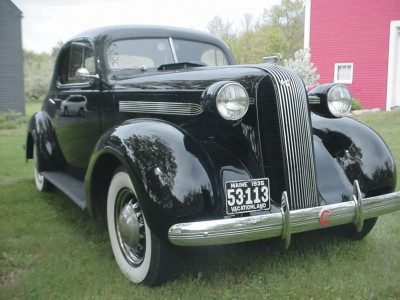

The hood ornament was changed for the 1936 Pontiac. It’s a small detail, but in the Depression-era auto game, aesthetics were a lifeline. You wanted your car to look newer than the one parked next to it. Pontiac understood this. They didn’t just tweak the metal. They rebranded the lineup to match the shifting market pressures of the mid-1930s.
The transition from the 1935 to the 1936 model year wasn’t just about new paint. It was a complete restructuring of how Pontiac categorized its engines and bodies. If you’re looking for 1935 Pontiac Standard Six specifications, you’re looking at the entry-level workhorse. The 1936 Pontiac Master Six took that same role but with a slight twist in naming and refinement.
The 1935 Lineup: Standard, DeLuxe, and Improved Eight
In 1935, Pontiac ran a three-pronged strategy. It was clean. It was easy to understand. And it moved metal.
The 1935 Pontiac Standard Six was the volume seller for affordability. Every model in this tier sat on a 112-inch wheelbase. It was a tight chassis, but it kept the footprint manageable.
1935 Pontiac Standard Six Models, Prices, and Production
| Model | Weight (lbs) | Price | Production |
|---|---|---|---|
| Coupe, 2-passenger | 3,065 | $615 | — |
| 2-door Touring sedan | 3,195 | $695 | — |
| 2-door sedan | 3,195 | $665 | — |
| 4-door Touring sedan | 3,245 | $745 | — |
| 4-door sedan | 3,245 | $715 | — |
| Total 1935 Standard Six | 49,302 |
Just above that was the 1935 Pontiac DeLuxe Six. Same 112-inch wheelbase. Same basic architecture. But the trim was better. The prices climbed. The weights increased slightly due to extra appointments.
1935 Pontiac DeLuxe Six Models, Prices, and Production
| Model | Weight (lbs) | Price | Production |
|---|---|---|---|
| Business coupe, 2-passenger | 3,125 | $675 | — |
| Coupe, 2/4-passenger | 3,150 | $725 | — |
| Convertible coupe | 3,180 | $775 | — |
| 2-door Touring sedan | 3,245 | $745 | — |
| 2-door sedan | 3,245 | $715 | — |
| 4-door Touring sedan | 3,300 | $795 | — |
| 4-door sedan | 3,300 | $765 | — |
| Total 1935 DeLuxe Six | 36,032 |
Then there was the top tier. The 1935 Pontiac Improved Eight. This was where you went if you cared about smoothness. The wheelbase stretched to 116.6 inches. That extra four inches changed the ride quality. It also changed the stance.
1935 Pontiac Improved Eight Models, Prices, and Production
| Model | Weight (lbs) | Price | Production |
|---|---|---|---|
| Business coupe, 2-passenger | 3,260 | $730 | — |
| Coupe, 2/4-passenger | 3,290 | $780 | — |
| Convertible coupe | 3,305 | $840 | — |
| 2-door Touring sedan | 3,400 | $805 | — |
| 2-door sedan | 3,400 | $775 | — |
| 4-door Touring sedan | 3,450 | $860 | — |
| 4-door sedan | 3,450 | $830 | — |
| Total 1935 Improved Eight | 44,134 |
Total production for the 1935 Pontiac? 129,468 units. Not bad for a depressed economy.
The 1936 Shift: Master Six and DeLuxe Eight
By 1936, the naming convention shifted. The “Standard” became the “Master.” It sounded more premium. It was supposed to feel more premium. The 1936 Pontiac Master Six kept the 112-inch wheelbase. It stayed light on its feet.
1936 Pontiac Master Six Models, Prices, and Production
| Model | Weight (lbs) | Price | Production |
|---|---|---|---|
| Coupe, 2-passenger | 3,085 | $615 | — |
| Coupe, 2/4-passenger | 3,120 | $675 | — |
| Convertible coupe | 3,125 | $760 | — |
| 2-door Touring sedan |


