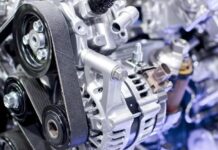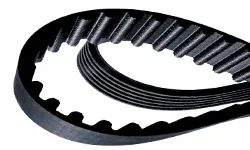
Most internal combustion engines use rubber belts to turn on the lights and keep the interior of the car cool. These pulley drive belts (often called serpentine belts when there is only one, or accessory belts when there are more than one) convert kinetic energy into electrical energy. They turn the alternator, power the water pump, operate the air conditioner compressor, and turn the power steering. Break one turns the vehicle into a brick.
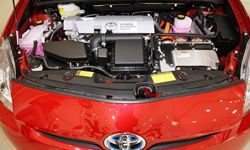
A hood may not cover such a belt. If you drive a 2010 or newer Toyota Prius, you are looking at a beltless engine. Toyota replaced the mechanical linkage with an electric motor. These motors handle accessory loads independent of the crankshaft. This change is not only new. This is a trend. As beltless engine technology advances, more manufacturers are introducing systems that separate the accessories from the internal combustion engine.
Why switch? The benefits are clear.
Better fuel efficiency
Hybrid buyers often prioritize MPG. The EPA rates the 2012 Prius at 50 miles per gallon. This number is no accident. It is the result of a combination of certain factors.
Aerodynamics play a role. The hybrid battery is one factor. However, the design of the beltless engine directly affects this high number. Traditional belts create friction. They drag on the engine. Engineers call this parasitic loss. Energy is wasted on rotating accessories that are not related to the driving force.
When the water pump and alternator are used with an electric motor, the load on the motor is reduced. The crankshaft rotates freely. Less energy is lost due to friction. More power is transferred to the wheels. As a result, Fuel consumption is reduced.
Reduced maintenance
Imagine you’re driving on a back road or stuck on your morning commute. My air conditioner suddenly breaks down. The control wheel turned into a brick. The thermometer starts to rise towards the red zone. All because the rubber belt broke.
This is a classic automotive nightmare. The serpentine belt is an unsung weak point in the engine compartment. Because they are made of flexible materials, they break down over time. They suffer from fatigue. In general, its service life is shorter than that of the engine. A belt that has been used for several years may have reached the end of its useful life. Of course, this almost always happens at the worst possible time.
You can try to catch them early. Look for ctethers. Check the tension. However, to avoid problems, you need to replace them proactively. In other words, you have to dragging the car to the shop. This means that you will have to pay a heavy bill. This means you have to sit back and watch while the mechanic completes the job. Of course, some owners adjust the tensioner themselves. Most people? They’d rather never touch it.
Enter the beltless motor.
Reliability factor
The logic here is very simple. There is no belt for the beltless configuration. They cannot loosen. They cannot fray. They weren’t there because they aren’t there in the middle of the highway.
Beltless motors have no mechanical points of failure, which makes them more reliable than conventional motors. Reliability is more than just a marketing buzzword. It is the single most important feature of the car if all else fails. If you don’t want to get stuck on the side of the road while waiting for a tow truck, we recommend choosing a beltless model.
Quieter Operation
Think about the last time an electric car passed you at a traffic light. It’s really creepy. Silence. This is the nature of electric motors compared to internal combustion engines (ICE). However, beltless technology also brings silence to hybrid and traditional engines.
Floor noise is reduced. Eliminates the loud squealing of worn belts. There is no longer any hum transmitted to the chassis. For drivers who want to listen to music without fighting the engine or just listen to the sound of the rain hitting the roof of the car, installing a beltless setup is an important step towards true cabin silence.
It is very peaceful. Almost too calm. If cars could drive themselves while we read books, we’d be in utopia. But until then, Quiet is a nice upgrade.
Reduce pollution
If you think less noise means less efficiency, think again. In traditional motors, serpentine belts represent a parasitic load. This is a mechanical tether that pulls horsepower from the wheels. It spins the alternator, water pump, power control pump, and AC compressor. Each rotation consumes energy. This energy must come from burning fuel or draining the battery.
Beltless motors separate these functions. Instead of one belt drive being multiple accessories, separate electric motors control wheel each task. For example, the electric water pump only works when the engine really needs cooling. Regardless of the heat load, traditional belt-driven pumps run as long as the motor is started. This is constant drain.
This decoupling allows for precise control. Don’t waste energy on rotating pumps that don’t need to rotate. Fuel is not wasted on compressor power

In addition to the pure practicality of the design, there are one equally compelling reason to buy a Prius. This means that it is much more environmentally friendly than conventional combustion engines. This environmental benefit is not magic. This is a direct byproduct of burning less fuel. When we use less gasoline, we also release less toxic gases into the atmosphere.
The key to this efficiency is the beltless engine.
Conventional engines use serpentine belts to drive components such as the alternator, power steering pump, and air conditioning compressor. That belt creates resistance. It consumes the energy needed to move the car. Beltless motors eliminate this waste. The power is allocated to the propulsion and electrical control devices.
Think of environmental considerations as the flip side of fuel efficiency. Both are important here. By eliminating mechanical resistance, the Prius can get more miles per gallon while reducing CO2 emissions. This is truly a win-win situation.
Operate the air conditioner without running the engine
If you own a Prius, you’re probably familiar with the remote climate control button on your key fob. You can cool the inside of your car from across the parking lot before you even touch the door. Most standard cars cannot do this. In conventional vehicles, the internal combustion engine must be started to start the air conditioner compressor. The belt should rotate. The engine must be running.
The Prius completely circumvents this limitation.
beltless engine Thanks to the architecture and the electric motor, the accessories get their power regardless of the combustion cycle. Air conditioning and power steering are available even if the main engine stops or fails completely. This is more than just a convenience feature. This is a fundamental change in the management of car systems.
Serpentine ending?
Given these advantages, it’s hard to argue that beltless engine technology won’t arrive quickly. Car designers constantly pursue two goals: fuel efficiency and reliability. This technique does both.
Removing the mechanical belt allows for the removal of damaged or stretched serviceable components. It also eliminates the associated energy loss. There are reasons why industry is switching to electricity. The question is no longer whether the technology will catch up, but how quickly.
who knows? In five years, all new cars will probably no longer have beltless. Or maybe you’re still arguing about the definition of “Prii”.