It looks like it is real.
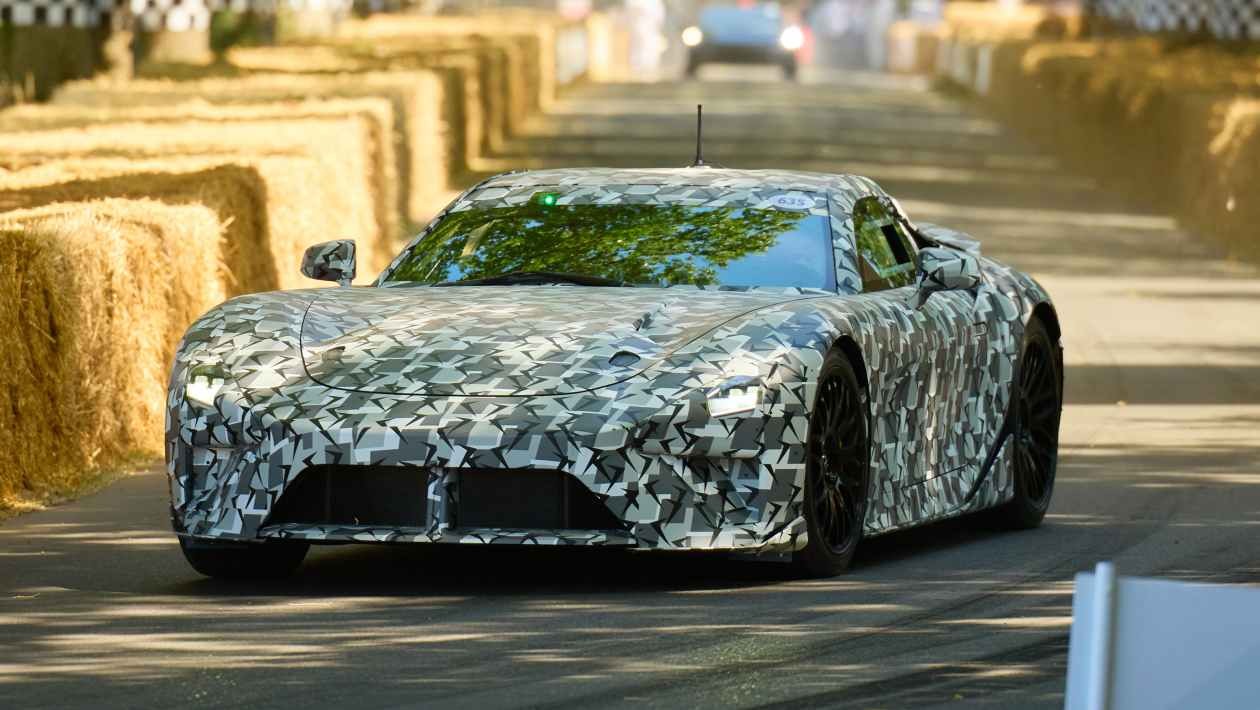
The Lexus LFA concept is actually heading toward production. It is the third car in Toyota’s new supercar lineup, sitting alongside the V8 GR GT and the GT3 racer that debuted last year. This time around the power source is different though. Battery electric. A fully functioning prototype popped up at Goodwood to prove the point.
It wore plenty of camo, sure. You expect that. But the silhouette gives it away instantly. That long nose, the upright headlights behind clear glass instead of open grilles, the aggressive stance—it’s all there. Even the polycarbonate windows scream temporary prototype solution. They’ll be swapped for real glass before long.
No V10 here
Let’s be clear. The V10 is gone.
This is the spiritual successor to that legendary NA engine masterpiece, but mechanically? Totally alien. The scintillating combustion powertrain is out, replaced by batteries and motors. Performance should jump significantly on paper. But can Lexus capture that soul? That drama? Especially when the benchmark was so loud and visceral. That’s the hard question.
Weight is a concern.
The original LFA boasted an exotic carbon fibre tub. This new thing shares its core structure with the GR GT. It’s aluminium. The V8 Toyota already weighs around 1,750 kg. Add a battery pack to that platform and you can kiss the featherlight heritage goodbye. EVs are heavy. Physics doesn’t care about nostalgia.
The soul of a dream car is harder to engineer than the hardware.
But there is hope under the metal.
Toyota views this as the test bed for solid-state batteries. The tech is close to mass production. Maybe by 2028. If this supercar launches first it will carry the next generation of battery science. That matters. Solid-state packs mean higher energy density. Better stability. Less weight compared to current lithium-ion setups. More range.
So it might not be quite so bad.
Inside the cockpit
The interior has already made appearances too, at the 2025 Japan Mobility Show. A new design language is rolling out across the brand. It centers on a digital interface spanning three surfaces for control and display. Lexus is trying to separate the driver from the passenger again, curving the dash toward the driver, changing color tones. A trick they used on the LC coupe before it left the UK market in 2024
What about the sound?
Silence is boring for a supercar. Lexus knows this. They are developing augmented engine noise. Simulated gear shifts. Yes, it is synthetic. But if those Yamaha-tuned speakers can recreate the V10 howl, is it really that different? Driver involvement comes through feedback. Noise is part of the package.
Will it sell out?
Lexus hasn’t given a launch date. Not really. But with the prototype showing up like that? A full reveal could be next year.
Production will be limited though. Always is with hypercars. And if the V8 GR GT is already oversubscribed, the electric version faces a bottleneck. Capacity is the enemy.
It is coming. Whether it feels right is another matter. 🏎️