The UK automotive market is witnessing a significant shift as Chinese manufacturers aggressively expand their footprint. Following the rapid success of the Jaecoo 7—which has already challenged established names like the Nissan Qashqai—the Beijing-based conglomerate Chery is launching its next major offensive. Their target? The Ford Puma, the current UK bestseller.
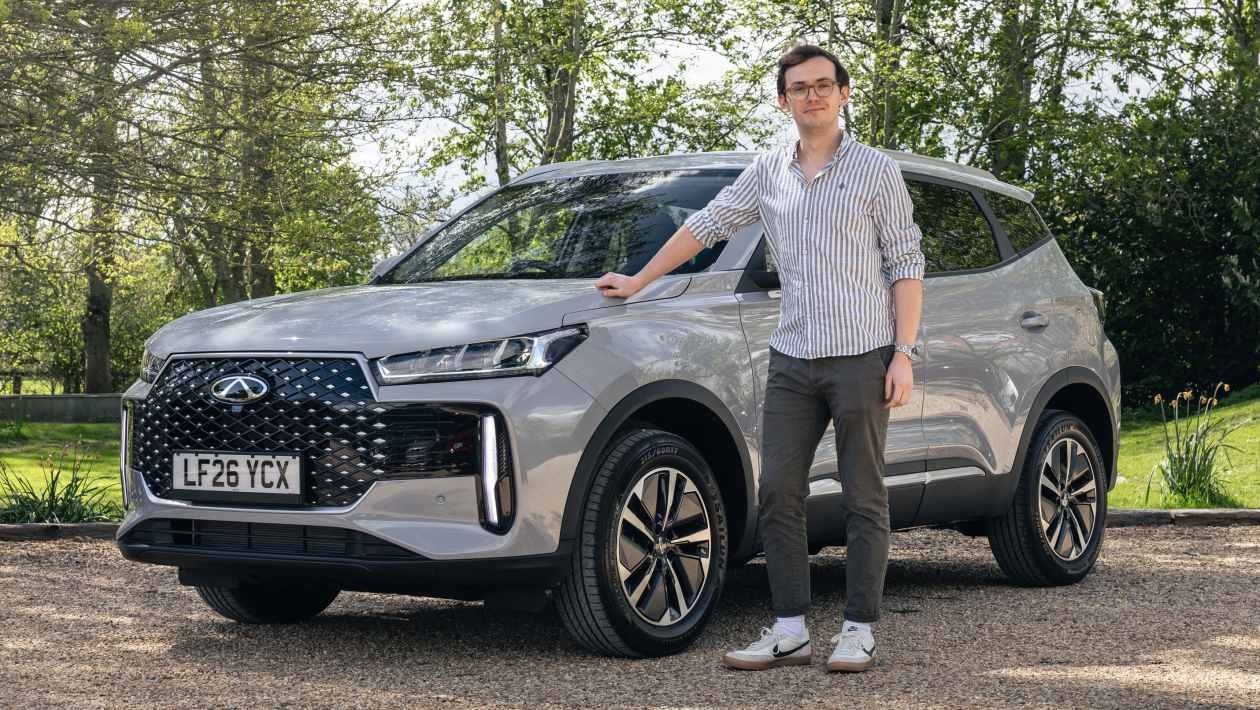
The newcomer is the Chery Tiggo 4, a compact B-segment SUV designed to appeal to small families by prioritizing one thing above all else: affordability.
The Price Advantage
The Tiggo 4’s most compelling argument is its entry price. Starting at just under £20,000, it is approximately £7,000 (or 25%) cheaper than its primary rival, the Ford Puma. In a cost-of-living crisis, this price gap is a massive lever for Chery.
The vehicle will launch in two distinct trims:
* Aspire (Entry-level): Despite being the base model, it is well-equipped with dual 12.3-inch screens, adaptive cruise control, blind-spot monitoring, and a reversing camera.
* Summit (Top-spec): For an additional £2,000, buyers gain premium touches like heated leather seats, a heated steering wheel, a 360-degree camera, and a powered bootlid.
Performance and Efficiency
Unlike many competitors that rely on simpler “mild-hybrid” systems, the Tiggo 4 utilizes a 1.5-litre full-hybrid powertrain. This setup delivers a respectable 201bhp and 310Nm of torque, allowing for brisk acceleration (0-62mph in 8.9 seconds).
However, the driving experience is a mixed bag:
* The Good: Once at cruising speed, the car feels refined and powerful, making motorway overtaking effortless.
* The Bad: The transition from a standstill can be clunky, as the Dedicated Hybrid Transmission (DHT) occasionally fumbles before engaging, accompanied by an unpleasant engine groan. Additionally, while the ride is comfortable, it feels somewhat firm, transmitting road imperfections into the cabin.
* The Efficiency: While the full-hybrid system aids economy, real-world testing yielded around 53mpg. While respectable, this lags behind rivals like the Renault Captur, which can achieve upwards as much as 60mpg.
Interior: Perceived Luxury vs. Reality
Visually, the Tiggo 4 punches above its weight. The cabin uses leather-effect trims and a restrained design to create a “premium” feel. However, there is a distinction between perceived quality and actual build:
* Surface Level: The materials look high-end and the twin-screen layout is sleek.
* Under the Hood: Much of the interior trim feels hollow to the touch, and the touch-sensitive climate controls can be frustratingly unresponsive.
* Technology: The infotainment system lacks built-in satellite navigation, making users reliant on Apple CarPlay or Android Auto. While the screens are responsive, the software integration feels somewhat unpolished.
Practicality for Families
The Tiggo 4 is clearly designed with young families in mind. It offers a generous 430-litre boot and sufficient rear legroom for adults. Small but thoughtful details, such as rear blind-spot sensors (useful for monitoring children opening doors), add value. However, the inclusion of older USB-A ports instead of the modern USB-C standard feels like a missed opportunity for a new model.
Verdict
The Chery Tiggo 4 is not a class-leader in driving dynamics or cutting-edge technology, but it is a formidable challenger on price alone. It offers a high level of standard equipment and a powerful hybrid engine at a fraction of the cost of its European counterparts.
Summary: The Tiggo 4 succeeds by offering a “more for less” proposition; while it suffers from minor refinement issues and unpolished software, its massive price advantage makes it a very difficult option for budget-conscious buyers to ignore.