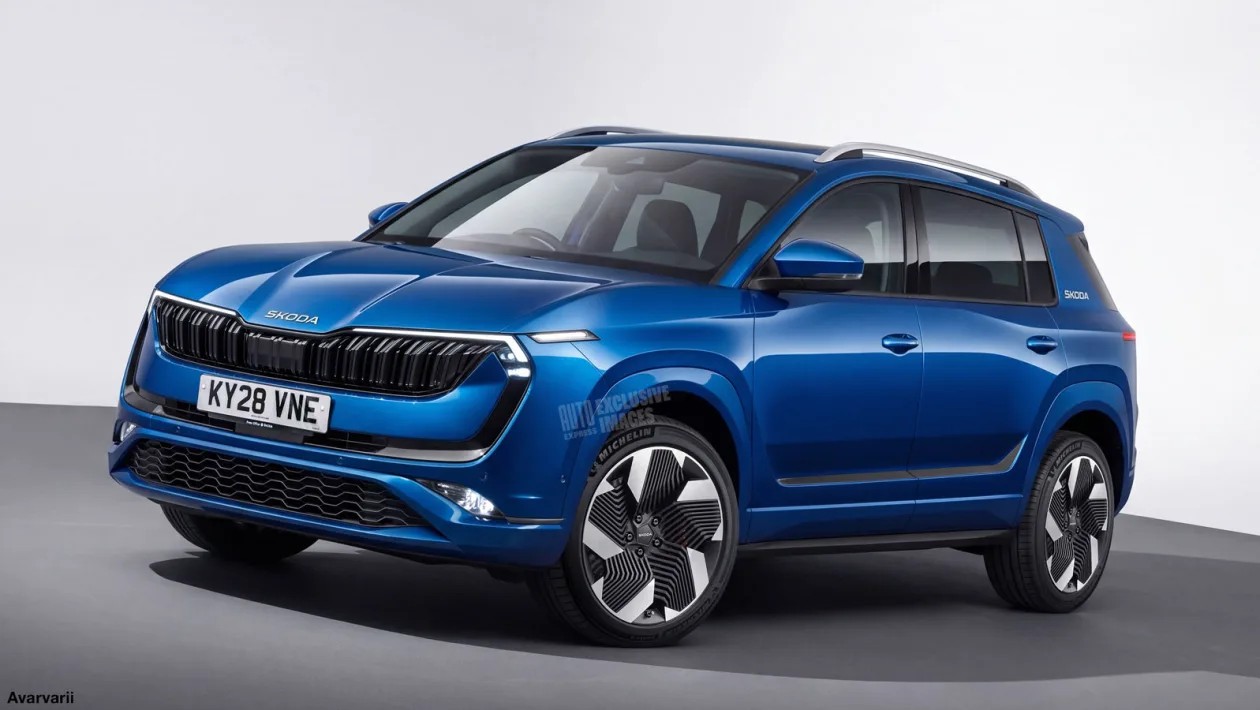
Skoda isn’t waiting. The next-generation KAROQ arrives in 2028. That sounds far away but the timeline is aggressive.
Usually it takes four years to build a car. This time? Three. Maybe even less. They want to move at what Johannes Neft calls “China speed”. It’s a direct challenge to rivals like Nissan Qashqai and Kia Sportage, which have evolved significantly. But the real pressure comes from the East. Value-heavy imports like the Jaecoo 7 are flooding the market. Skoda can’t afford to be slow.
Not that they’re cutting corners. Space matters. Driving ease matters. They aren’t dropping their Simply Clever legacy for the sake of a calendar. Sustainability is key though. It will be front and center inside.
“We will do that at ‘China speed.’”
— Johannes Neft, Skoda head of technical development
Why so rushed?
The current KAROQ has been selling well. Over 102,001 units in 2025. Roughly 10,00 in the UK alone. It’s a decade into production. Popular? Yes. Stagnant? Also yes.
Uncertainty killed momentum for years. EU emission rules kept shifting. Skoda paused. They couldn’t green-light the second-gen model while regulations danced. Now? Rules are clear enough to act. All systems go.
The VW Group is speeding up everything. It’s a reaction to agile Chinese manufacturers. They use existing platforms. MQB Evo fits here perfectly. Used by the VW Golf, Superb, and even the Kodiaq.
Having a platform ready saves months. Maybe a year. It’s about synergy. Neft said it explicitly: “As soon as you have something existing you can be much faster.”
So if you hate waiting, used markets have older KAROQs for as low as £8,80. But wait. The new one will be different.
The Engine: Not Electric (But Hybrid)
Don’t expect a pure EV here. That slot is taken by the award-winning ELROQ.
Instead look for hybridisation. A big shift for a combustion car in Europe. Neft sees hybrid tech as essential for flexibility.
First up is the full hybrid. Debuts in the Golf and T-ROC later this year. Coming to the Octavia too. What’s under the hood?
- Turbocharged 1.5L petrol four-cylinder
- Two electric motors (one drives wheels one generates energy)
- Tiny 1.6 kWh battery in the boot floor
No plug required. Pure-electric drive assists efficiency. Think lower fuel bills not longer ranges.
Plug-in hybrid options exist too. Like the Kodiaq has. These might come later or alongside the launch.
One thing is clear: range anxiety isn’t the primary design driver. Convenience is.
Exterior: Solid Modern Evolution
No spy shots yet. No teasers. Just concept cues.
Vision O concept cars show the path forward. It represents Modern Solid philosophy evolving. Expect black loops around the grille. Sculpted bonnets. Sharp lights.
Wait. Won’t this look like every other Skoda?
Designer Romain Bucaille bristles at the idea of repetition. “A computer can scale it,” he argues. “You don’t need designers if you just repeat everything.”
The new KAROQ needs personality. Yet it must belong. Ice cars and combustion cars usually clash visually now. Skoda refuses that split. One showroom feel. One brand identity.
Whether it burns petrol or charges at night it should feel like home. That’s a delicate trick. Keep essence evolve design don’t alienate loyalists don’t bore new buyers.
Expect larger grille openings. Vertical slats typical of the brand integrated smoothly. Not aggressive. Confident.
Interior: Screens Meets Scrubs
Big displays are inevitable. New Android-based infotainment arrives. Hopefully physical climate buttons stay. They’re appearing on the flagship PEAQ. Good move.
Simply Clever returns. Always does.
– Umbrella in driver door
– Ice scraper in tailgate
Boffins probably have newer tricks ready too. Price-wise it stays competitive. Current models start under £31k. The 2028 version won’t stray far. Hybrid versions cost extra inevitably but not wildly.
Skoda’s strategy balances ICE and electric equally. As long as people buy gas cars Skoda builds gas cars. As long as it’s legal viable and demanded they won’t abandon them.
By end of next year even the FABIA and KAMIQ get mild hybrids. Just like the VW Polo.
Everything slows down for no one in Europe right now. Speed wins.
What happens when Chinese rivals also adapt their hybrid strategies? Will Skoda’s three-year cycle keep them ahead or leave them behind?
Time tells.