The Chevrolet Impala tops the list of America’s most durable car brands. It has survived the rise and fall of competitors and changing market trends. This article traces the badge’s history and explores how they got started, where it went wrong, and why they’re still around.
This name first appeared in the 1958 model year. It was attached to the Chevrolet Bel Air Impala. This is Chevrolet’s new flagship. It is located at the top of the series.
The original Impala took the Bel Air platform and added chrome. It had more trim. It looked expensive. Buyers could get it as a two-door hardtop. It was also the only full-size Chevrolet offered as a convertible that year.
The Impala remained at the top of its class until 1966. That year, General Motors decided to enter the personal luxury car market. They took the Impala name and gilded it further. This created the Chevrolet Caprice. The Caprice was even plusher.
After 1966, the Impala’s position weakened. For over 10 years it sat under the Caprice. In 1976, the situation changed again. Chevrolet uses this once-famous name to identify its entry-level large Chevrolet models. The top-tier badge becomes the lowest-level option.
This confusion in the ranks did not stop the nameplate’s moment of glory. The revived Impala really took off in 1994. Chevrolet built a full-size muscle car Corvette-powered. They called it the “Impala SS”. This revival proves that the name still has power.
1958 Chevrolet Bel Air Impala
The 1958 model year was the beginning of the legend. The Bel Air Impala is a unique beast. This is more than just a trim level. This is a new identity.
Chrome and convertible
The 1958 Impala was all about excess. More chrome than you could shake a stick at. It defined American automotive style in the late 1950s. The hardtop version is stylish. But the real highlight is the convertible.
This was the only full-size Chevrolet convertible in 1958. If you want open-air driving in a big Chevrolet, the Impala is your only choice. This exclusivity strengthens its position as a top model.
A stepping stone to luxury
The Impala didn’t stay at the top for long. By 1966, the Caprice had taken the crown. The Impala is a mid-range choice. This move undermines its exclusivity. However, the name remained.
It is unusual for nameplates to move up and down the hierarchy. Most car names stay within one niche. The Impala has changed from a luxury car to an entry-level large car. Then it returned to performance with the SS.
Returned in 1994
The 1994 Impala SS was different. It’s not about luxury. It’s about power. Under the hood of a Corvette V8. It’s a nod to the car’s past. But it also looked forward. This shows that this name still has some meaning in modern times.
Impala
1958 Bel Air Impala: The Definition of Premium
If you’re looking for the top of Chevrolet’s 1958 lineup, you’ve found your answer. The **1958 Chevrolet Bel Air Impala is a new top-of-the-line, luxuriously equipped machine designed to soften the ride and add prestige. There are only two styles: sports coupe or convertible. There are no sedans. There are no wagons. If you want an Impala, you can buy it in convertible or hardtop form.
The structural difference between the Impala and the regular Bel Air can be seen in the rear windshield pillars. The hardtop has a slightly shorter greenhouse and a longer rear deck. This gives the car an elongated body look and makes it look much more expensive than the badge suggests. Bright rocker moldings and dummy rear-fender scoops add to the illusion of size.
The simulated roof vents with their distinctive shapes are clearly inspired by Mercedes-Benz.
There are three taillights on each side, a unique visual cue that sets it apart from smaller models with two lights or wagons with just one light. Above the side moldings, a special crossed-flag insignias proudly announced the car’s status.
Prices for the six-cylinder engine start at $2,586. $2,693 gets you the V-8. Adding options typically pushes the total price even higher, easily exceeding $3,000 for fully equipped examples. The production numbers show its uniqueness: 55,989 convertibles and 125,480 sports coupes were produced. This corresponds to about 15 percent of Bel Air’s total production. No other series includes a convertible, making the Impala a unique entity in the Chevy stable.
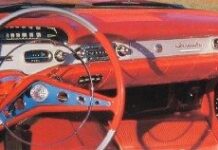
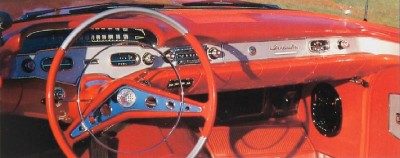
The interior design is amazing. A racing-inspired two-spoke steering wheel dominates the dashboard, and color-keyed door panels with brushed aluminum trim add refinement.
Upon its release, the Impala was heavily promoted as Chevrolet’s entry into the mid-priced segment. The design was less radical than originally planned, but that didn’t matter. It’s touted for its “quick, eager-to-please handling that lets you know you’re the boss.” The name stuck. It has become almost synonymous with Chevrolet itself.
Under the Skin: Engineering the Boss
Longer, lower, wider. This was a recurring theme across all 58 Chevrolets. The entire range has been changed to full coil suspension, replacing the old rear leaf springs. The new “Safety Girder” X-frame lowers the ride height without sacrificing headroom. A sturdier, safer platform that can handle the extra weight and power well.
The engine compartment has been significantly updated. The 283-cubic-inch engine was a standard V8 with 185-290 horsepower depending on carburetor. But for drivers who really want to be “the boss,” there’s a new option: a big 348-cubic-inch turbo-thrust V8 engine.
This monster is derived from a truck engine and is available in 250, 280 or 315 horsepower. It’s a real machine with not only Impala style, but visceral performance.
In a recession year when sales were down for nearly every brand, the 1958 Chevrolet Bel Air Impala helped Chevrolet regain the top spot by a wide margin. This is more than just a car. This is a statement.
1958 Chevrolet Bel Air Impala Facts
- Model: Bel Air Impala
- Weight Range (lbs): 3,458-3,523
- Price Range (New): $2,586 – $2,84
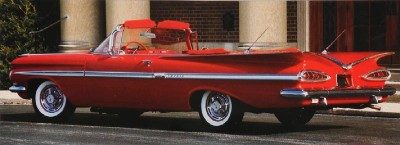
Redefining the styling of the 1959 Chevrolet Impala
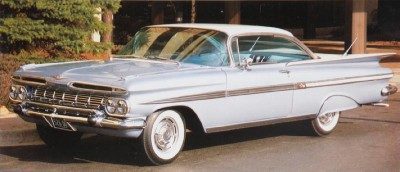
The tailfins has received a new direction. The vertical spikes of the late 1950s are gone. Instead, they shot outward. This fundamental change set the 1959 Chevrolet Impala apart from other General Motors products. It was a radical break from excess. Advertisers loved giving parts names. They call these fins “bat wings”. They called these lights “cat’s eyes”. These nicknames are not used in sales brochures. They simply called this deck “saucy”. The rest was retrospective.
Sharing the platform and growing pains
Chevrolet wasn’t alone using this platform. The body shell was shared with lower Buick and Oldsmobile models. Pontiac used them too. This is the economy move of General Motors. The wheelbase has been extended. 11/2 inches longer than previous model. The X-Frame frame brings it all together. Roofs is lowered 3 inches. Bodies is now over 2 inches wider. Dimensions add weight. The trend is clear. Tom McCahill of Mechanics Illustrated noted that the trunk lid is huge. He said it had enough room to land a Piper Cub.
New body style and visibility
Impala is now its own series. This is no longer just an trim level. You can buy a 4-door sedan. There is a 4-door hardtop. The two-door Sport Coupe was there. So was the convertible. The Sport coupe has a shorter roofline. It wrapped over the back window. This provides “virtually unlimited rearward visibility.” A combination curved windshield improves the appearance. The hardtop sports sedan takes a different approach. It removed the pillars. The rear window becomes very large. Headroom has been increased under the slim ‘Flying Wing’ roofline.
Why the 1959 Impala Matters Today
People often search for restoration 1959 Chevrolet Impala Restoration. They wanted to know why styles had changed so dramatically. The outer fins were a response to competitors such as Chrysler. A shared platform reduces costs. However, weight gain is a well-known problem for restorers.
“The growing size contributed to an abundance of poundage.”
What engine options are there in the new X-Frame? The V8 engine were still the heart. However, the chassis changes affected the handling. The low roofline promotes aerodynamics. The wide frame increases stability. These are real changes disguised as styles.
Where else do you see this platform? Oldsmobile. Buick. Pontiac. This is a mass production strategy. Chevrolet got the prestige model. The others got the economy versions. However, the basic structure is the same.
How does the rear view compare to the predecessors? The wrap-over glass is a huge step forward. Drivers complain less about blind spots. The pillarless design also helps. It’s not just about looks. It’s all about functionality.
saucy decks are still a hot topic. Restorers look for specific curves. In the original brochure, didn’t use those nicknames. They let the shapes do the talking. Today, these shapes define an era.
The V-8 lineup doesn’t change much on paper. The basic unit was still a 283 cubic meter engine with 185 horsepower. If you need more power, you can upgrade to 210 hp or 290 hp versions of the same small block. Or you can make it bigger. This big 348 cubic meter engine has a whopping power of up to 315 horsepower. There are many options throughout the year.
Money is also important. The V-8 Impala convertible starts at $2,967. Swap the V-8 for a six-cylinder engine and save $118. It wasn’t much, but in 1959 every dollar counted.
Inside, you know the Impala is top-of-the-line. It has armrests in the front and back. An electronic clock is installed on the dashboard. A double sliding visor protects your eyes. The crank-type ventilation window in the front window allows you to control the air flow without having to lower the glass. The dashboard has a sculpted design and the gauges are placed under the hood to prevent glare. Comfort is the most important thing. A new Flexomatic 6-way power seat can be fitted for those who refuse to lift a finger.
1959 Chevrolet Impala Facts
- Model: Impala
- Weight Range (lbs): 3,570-3,670
- Price Range (New): $2,592-$2,967
- Production quantity: 473,000 (approx.)
1960 Chevrolet Impala
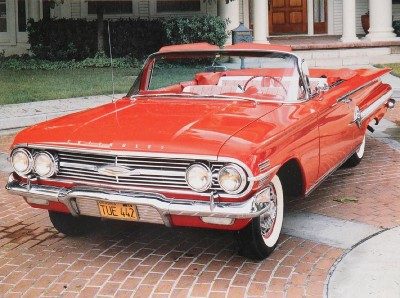
1960 Impala Tones Down the Chrome
If you look at a 1959 Chevrolet today, you will notice that the tailfins is not as extreme as it was in 1959. Now collectors love the excess. Enthusiasts believe that the bigger the fin, the better. But by 1959, stylists and marketers knew this trend was coming to an end. They needed a pivot. They need a conservative facelift.
The 1960 Chevrolet Impala delivered that shift.
This is not a revolution. It was a retreat from the edge. The sweeping horizontal fins is still there, but they were toned down. The rear of the car is angular and tapered. It integrated neatly into the quarter panel. The result is a more temperate rear end. Tasteful, even.
“The effect was helped by three modestly sized round taillights mounted on either side of the top-of-the-range Impala.”
The changes at the front end are even more dramatic. Those ferocious, snorting-nostril the air intakes above the headlights? Gone. Deleted completely. The 1960 redesign was restrained by Fifties standards of the 50s. Chevrolet’s marketing philosophy is “Space – Spirit – Splendor”. Not excess.
The 1960 Impala didn’t just lose the chrome. It lost attitude. For a moment, the Chevrolet played it safe.
The design direction changed quickly. Enthusiasts who favored the 1959 model saw a loss of aggression. But the 1960 model had a different appeal. It was cleaner. Sharper. Less cluttered.
That restraint defined the era for one year. Before the pendulum swung back.
The top-of-the-range Impala now has three circular taillights on each side. The angular back is balanced. They give the car a more integrated look. The quarter panels flowed into the bumper and there is no visual noise like in previous years.
The front grille is simplified. The air intakes that used to be in the headlight area are gone. The result is a smoother, less aggressive face. It looks more like a car than a spaceship.
For many buyers, that’s the point. The “Space – Spirit – Splendor” campaign sold a more mature vehicle. It was aimed at an demographic that had moved on from the wild styles of the late 50s.
But today’s collectors see things differently. They believe that 1959 was the peak of the automotive exuberance. The 1960 Impala is viewed as the cooldown.
Is it less desirable? perhaps. Isn’t that interesting? Debatable. The clean lines of the ’60 model had their own charm. It’s a study in reduction. A masterclass in when to stop adding chrome.
The tailfins didn’t disappear overnight. They just shrank. rather than protruding threats and become part of the bodywork. This integration became standard over the next few years. The 1960 Impala started a trend toward sleeker, more aerodynamic designs.
This is a subtle change. But this marks the end of an era. The 50s are coming to an end. The 60s are about to start.
The Impala is standing at an intersection. It chooses safety. Choose elegance. choose to breathe easily
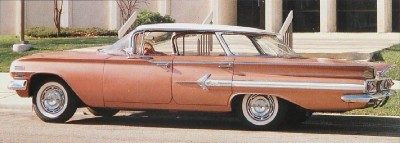
The 1960 Chevrolet Impala did more than extend the life of the Bel Air and Biscayne by a year. This model is very popular among buyers. More than 490,000 of these units have rolled off the assembly line, a number that dwarfed its siblings. Why? Because these cars are dripping with chrome. There seems to be more chrome than I expected.
The styling cues were specific. When you take a closer look at the hood, you notice that the air intake is not working. They are there to look good. The white strip is clearly visible on the rear fender. This is a gadget that catches people’s attention.
Body style and price
Chevrolet offers four different body models for sale.
– Sports Sedan: Hardtop with thin rear pillars and panoramic rear window.
– Sports Coupe: Another hardtop variant.
– Cabriolet: The only full-size convertible Chevrolet produced in the same year. Priced at $2,847, it tops the list. With the V-8, it costs $2,954.
– Sedan: A practical choice.
Behind the Scenes: The V-8 Series
The powertrain options have shrunk a bit compared to previous years, but the offer remains strong. V-8 engines are available in seven grades. Two displacements are available: 283-cubic-inch and 348-cubic-inch.
Topping the list is the 348-cubic-inch Super Turbo-Thrust Special. It breathes through three 2-barrel carburetors. The compression ratio is high, 11.25:1. Dual exhaust pipes produce 335 horsepower. This is raw, carbureted power.
The other 348 variants were more modest, yielding between 250 and 320 horses.
Next comes the Turbo-Fire 283 cubic inch V-8 engine. Available in 170 or 230 horsepower. But here’s the kicker. Fuel injection is no longer an option under the hood of full-size Chevrolets. Gone are the days of the Impala’s high-performance V-8 engine.
1960 Chevrolet Impala Facts
-
Model: Impala
-
Weight Range (lbs): 3,530-3,635
-
Price Range (New): $2,590-$2,954
-
Number built: 490,000 (approx)
1961 Chevrolet Impala
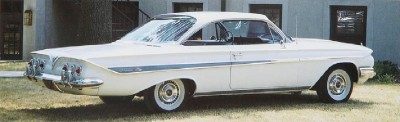
1961 Impala SS: Luxury meets 409 V8
The 1961 Chevrolet Impala didn’t start out as a legend. The DNA of the car born as a full-size sedan was a little too sporty. In early 1961, most buyers just wanted a comfortable ride. Little did they know they were sitting on the future of the US auto industry. That changed midway through the model year.
Chevrolet presents a supersport option. What followed was a piece of hardware that haunted pop culture for decades. 409-cubic-inch engine. Brian Wilson and the Beach Boys didn’t know it yet, but they were going to immortalize it in song.
What is the SS package?
The Chevrolet Super Sport is priced at $5,380. It’s not cheap. It is billed as a “highly personal” version of the Impala. But it’s not just a badge. A collection of specific devices.
You get a simulated knock-off wheel covers. Heavy-duty springs and shocks. Metallic brake linings. padded instrument panel. Sun’s 7000 rpm tachometer is mounted right on the steering column. 8×14 narrowband whitewall tires.
Inside there is an grab bar. It’s similar to the Corvette. Everyone else sat on the bench. The 1961 Impala SS did not have bucket seats.
Engine selection and numbering
The SS did not force the use of engines. There are three versions of the 348-cubic-inch V8 to choose from. The power range is 305-350 horsepower. If you choose the four-speed manual transmission, you get a special floor-mounted shifter with a steeply curved lever. The Powerglide automatic transmission is limited to milder engine options.
Only 453 Impalas were built that year with the SS option. Most are Sport Coupes. that’s it. The number of vehicles is 453.
Big 409
Only 142 SS Impalas with larger engines were built. 409-cubic-inch V8. You don’t get that on other models. At first it wasn’t. Breathe through the dual-snorkel air cleaner. This configuration produces 360 horsepower. Torque is 409 lb-ft.
These figures correspond to displacements. This is a coincidence. Or maybe not.
Why it matters now
Today, motorists are obsessed with these cars. Not because it’s fast by modern standards. But because they were the first. This is the first time a full-size car has offered this performance. the 409 was in a production sedan.
The SS package added weight. But it also improves grip. And stop. And style. The grab bar. Tachometer. The whitewalls. Everything is there.
The 1961 Impala SS was more than just a car. This is a statement. It’s small. Made by 453 people. But it stuck.
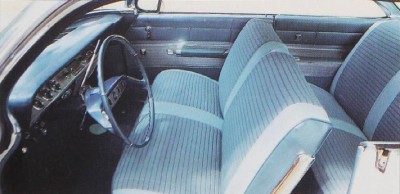
1961 Impala: Style over substance?
The SS trim is aimed at buyers who want sports car performance in full-size elegance. It’s not just about looks. The Impala had a 409cc V8 engine with a rear axle ratio of 4.56:1, and it hit 100 mph in 7 seconds. Quickly with time. In those days it was cruel, if not glamorous.
The 1961 Impala had three rooflines. A sporty coupe with a gentle front pillar and plenty of glass. Everything is visible. The basket is unprocessed. The crinkled sides, tapering moldings and sculpted back cover give it a distinctive, if slightly ostentatious, look. Luxurious wheel plates and wide frame side moldings in contrasting colors complete the look. Chevrolet claims the Impala is “arguably the best car in its segment.”
Production continues steadily. This is about the same as last year’s total. 491,000 pieces rolled off the production line. There were 64,600 of these convertibles.
1961 Chevrolet Impala Specifications
- Model: Impala
- Weight Range (lbs): 3440-3605
- Price Range (New): $2,536-$2,954
- Manufacturing number: 491,000 (approx.)
1962 Chevrolet Biscayne, Bel Air, Impala
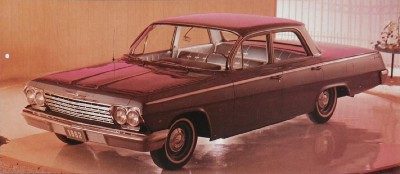
1962 Chevrolet Full Size Modifications and Performance
The 1962 Chevrolet Biscayne, Bel Air, and Impala full-size cars received a clean, boxy redesign that was larger and had more bodywork than before. The ad, featuring a full-size Chevrolet at an airport, has a “Jet-smooth Chevrolet” theme, praising its “room, zoom, smooth ride” and new sleek styling.
The Impala continues its role as a luxury Chevrolet with full-length upper body side moldings (with contrast trim), grooved body sills, stainless steel window moldings, and special rear fender decals. Each Impala model has its own unique roofline, including the slim pillar sedan. The rear roof of the Sport-coupe has convertible-like creases, and new inner fenders protect it from rust.
Total Impala production topped 704,900 units, compared to 365,000 for the slim Bel Air sedan and 160,000 for the Biscayne, which had a minimally trimmed but was known for its “beautiful simplicity.”
This year, the big 409-cubic-inch V8 engine is available on all full-size models, not just the Supersport, producing either 380 or 409 horsepower. The 409 horsepower version breathed through two four-barrel carburetors, while the less powerful versions had a single carburetor. Both have solid lifters, dual exhaust and 11.0:1 compression ratio. Enthusiasts can also order a lightweight aluminum front body panels.
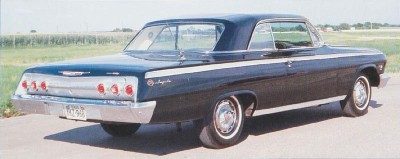
1962 Chevrolet Biscayne, Bel Air, Impala Facts
–Model: Biscayne
– Weight Range (lbs): 3400-3845
– Price Range (New): $2,324-$2,832
– Manufacturing quantity: 160,000 (approx.)
–Model: Bel Air
– Weight Range (lbs): 3405-3889
– Price Range (New): $2,456-$3,029
– Production quantity: 365,000 (approx.)
- Model: Impala
- Weight Range (lbs): 3450-3925
- Price Range (New): $2,662-$3,171
- Production number: 704,900 (approx.)
1963 Chevrolet Biscayne, Bel Air, Impala
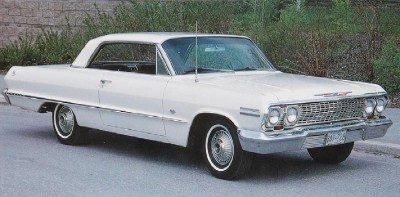
1963 Chevrolet Makeover: Style Over Substance?
Chevrolet’s mid-size sedan and coupe lineup (Biscayne, Bel Air, Impala) received a subtle but effective visual makeover for 1963. The body panels were reworked to create a sharper, more aggressive profile. While not a complete redesign, the silhouette has been treated to significant technical updates. Chevrolet’s marketing team relies heavily on this fantasy. The company’s brochure promised “jewel clean” and “jet-smooth driving”. This is classic advertising alchemy.
These ads put a lot of emphasis on features that have nothing to do with speed. They advertise “air-washed rocker panels” that prevent rust and self-adjusting brakes. They also highlighted a longer lasting exhaust system. These are smart upgrades for the daily driver. But the real story lies in the performance credentials underneath the sheet metal.
Engine options and horsepower data
The heart of the 1963 Chevrolet V8 is even more powerful. A Turbo-Fire 283 cubic inch V-8 engine was standard on many models. The power has increased to 195 hp. It is a durable and reliable mill. But if you want real muscle, you have to look higher up the food chain.
The mid-range 327-cubic-inch engine will become the new standard for performance lovers. Runs 250-340 horsepower depending on configuration. This transition quickly became a benchmark for GM’s performance.
And then there’s the king of the 1963 list, the 409 cubic-inch big block. This is not a single engine. This is a series of high-powered variants. Depending on your choice, you can get 340, 400 or 425 hp. The top version is serious business. It has two 4-barrel carburetors and an 11:1 compression ratio.
“Smooth-riding as a jet”
This information is important. With its 425 horses, the 409 was more than just a streetcar. This is a manifesto. 283 is designed for commuters. The 327 is perfect for the weekend warrior. 409 belongs to the winner.
Why 327 and 409 define this era
Enthusiasts don’t buy these cars because of the air-washed rocker panels. They are bought for the displacement. The move from the 283 to the 327 as the primary performance engine marked a clear direction. General Motors is betting on expanding the bore to increase torque.
The 409 is still a specialty tool. It is very heavy. It was expensive. But it is also symbolic. The 425 horsepower version’s twin four-barrel setup creates a unique signature. This sounds like a promise.
The style changes of 1963 were minor. However, the powertrain evolution is remarkable. The combination of sharp looks and genuine displacement created a unique moment in American automotive history. You can cruise comfortably. You can also leave everyone else in the dust.
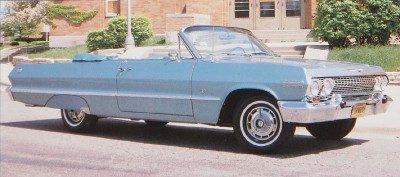
Most buyers passed up the V-8. They settled on a 140-horsepower turbo Thrift six-cylinder and called it a day. But on the other hand, a handful of drag racers got something special. Lightweight aluminum front body panels. A larger 427-cubic-inch enlargement of the 409 engine. Pure, unadulterated speed.
The Impala was the king again. 832,600 were built. This number includes 153,271 Super Sports. The sports sedan kept their own hardtop roofline. The Sport coupe finally gets a vinyl top. It’s still in fashion there.
The SS Impala convertible is the most expensive model. Looks very aggressive. You can buy it with any engine, but the SS package adds $161 to the $3,024 base price. Comes with a sturdy spring. Aluminum bucket seat. Swirl dashboard extension. Both have floor replacement. The new console has a lockable compartment.
1963 Chevrolet Biscayne, Bel Air, Impala Facts
–Model: Biscayne
– Weight Range (lbs): 3,205-3,810
– Price Range (New): $2,322-$2,830
– Production number: 186,500 (approx.)
–Model: Bellaire
– Weight Range (lbs): 3215-3810
– Price Range (New): $2,454-$3,028
– Production quantity: 354,100 (approx.)
– Model: Impala
– Weight Range (lbs): 3310-3870
– Price Range (New): $2,661-$3,170
– Production quantity: 832,600 (approx.)
1964 Chevrolet Biscayne, Bel Air, Impala
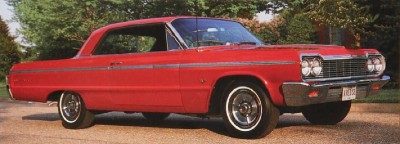
1964 Chevrolet Impala SS: A Unique Identity
By 1964, Chevrolet not only tweaked the Impala, but created a separate lane for the 1964 Chevrolet Impala Super Sport. It’s not just an option package anymore. It has become its own series. It can be bought as a convertible or as a hardtop coupé. The body lines remain sharp. Badges tell a different story.
The interior of the cockpit has been modified to suit exterior aggression. Upholstery changed to pleated vinyl. The front bucket seats has been replaced with a bucket seat. When you choose the four-speed manual transmission or the Powerglide automatic transmission, a floor-mounted gearshift popped up in the center console. There is No overhead shifter nonsense here. It feels very mechanical. It feels important.
The exterior details are subtle but well thought out. lined the rear cove moldings with a silver anodized swirl material. Wider upper body trim strips of the upper body runs along the sides. This is not chrome. It was anodized aluminum. It caught the light in a different way. It sets the SS apart from the regular Impala without drawing attention to itself.
“SS models have a rear cove outline moldings and a wide upper body bar finished in swirl-pattern silver anodized material.”
The Impala SS has grown this year. It is no longer an accessory. It was the destination.
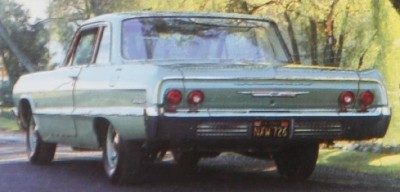
1964 year model information
The Super Sport package includes two trail options. The market will tell you where your money goes, but you can also opt for a six-cylinder engine. Few buy it themselves. Most buyers went straight to the V-8. If you want the maximum user experience, you can add a tachometer. The sports steering wheel follows. The fast steering effect is used in curves. A 7-position Comfortilt footrest completes the driver-focused option.
Design takes a stricter route. The corners are more square. The grille is a shaped whole across the entire width. It’s a subtle change, but it’s noticeable. The Impala retains the signature triple taillights on the sides. There is still a lot of bright work to be done. Chrome is important.
It’s a bestseller. They always were.
Total production was 889,600 units. Of these, 185,523 were super sports. The rest are standard Impala. There is a large gap between the top trim and other trims.
Choosing an engine is a minefield
Choosing a transmission is not easy. There are 7 engines. 4 shipments. The decision-making matrix is extensive.
The base 6 makes 140 horsepower. That will do. The V-8 option is the real story. You can specify 283 cubic meters. Or 327,409 was the title. It is described as “playful, especially in motorway overtaking situations”. This is polite and will probably block most of the traffic.
Power varies between 195 and 425 horsepower. A high-power model with Delcotronic all-transistor ignition is also available. This is a reliability improvement. There is no point in breaking it.
1964 Chevrolet Biscayne, Bel Air, Impala Facts
| Model | Weight Range (lbs) | Price Range (New) | Production Quantity |
|---|---|---|---|
| Biscayne | 3,230-3,820 | $2,363 – $2,871 | 173,900 (approx) |
| Bel Air | 3.235-3.865 | $2,465-$3,039 | 318,100 (approx) |
| Impala | 3,340-3,895 | $2,671 – $3,181 | 704,300 (approx) |
| Impala SS | 3.325-3.555 | $3,325-$3,555 $2,839-$3,196 | 185.325 |
1965 Chevrolet Biscayne, Bel Air, Impala
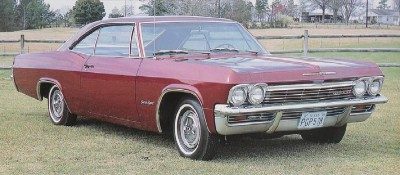
1965 Chevrolet Full Size Evolution: Biscayne, Bel Air, Impala
The 1965 Chevrolet full-size model was more than just an improved recipe. Stretch it out.
Cars like the Biscayne, Bel Air and Impala, which are big in every way, keep growing and growing. The change in style is dramatic. The sharp corner disappears. Instead, rounded sides and curved window glass are used. The front end is completely new, with a new hood profile that breaks with the image of previous years. The chassis below is even smarter. Chevrolet introduced a Girder-Guard frame that effectively reduces the size of the transmission tunnel inside the vehicle.
Structure and style updates
Chevrolet introduced the 1965 Chevrolet Full Size platform as a wide stance model. This is not just marketing. It has a bonded windshield for added rigidity and an improved full-coil suspension system. The Sport Coupe model has a stylish half-rear roofline that reduces drag and increases visual impact. The style of the wheelhouse has also been modified to match the soft lines of the hull.
The cabin interior has been functionally updated. The two-tone instrument panel embeds the gauges directly in front of the driver. It’s not just about looks. It makes it easier to read information quickly.
Shifting the transmission and Turbo Hydramatic
The 1965 model included significant mechanical changes. The first introduction of the Turbo Hydramatic automatic transmission. It offers buyers more advanced options beyond the column-mounted three-speed shifting. This is now fully synchronized and allows for smoother shifting.
Engine options are constantly changing. The new 250 cubic meter inline-six meets the needs of many efficiency-seeking buyers. Significant changes have been made to the V-8 lineup. The legendary double cab 409 has been discontinued. The smaller model remains in 340 and 400 horsepower versions.
Then came the big guns. A 396-cubic-inch turbocharged V-8 became available midway through the model year. It packs a powerful punch. You can specify it with 325 horsepower or choose the 425 horsepower version. The top option has an 11:1 compression ratio and a heavy lifter. It’s raw. It’s serious.
Impala SS information
The Supersport model is slightly different from the regular Impala. We kept the clear windshield molding. The rocker panels and lower fenders found on the base model are missing. This gives a cleaner, more aggressive and restrained image.
Total production of Impala SS coupes and convertibles was 243,114 units. That’s a huge amount for a performance-oriented model. A new center console has been included. Built-in rally-style electronic clock. Complete instrumentation now includes a vacuum gauge. For enthusiasts, this gauge is more than just a decoration. This is a direct reading of the condition of the engine.
The changes are subtle in some areas, but dramatic in others. The result is a car that feels both familiar and completely new.
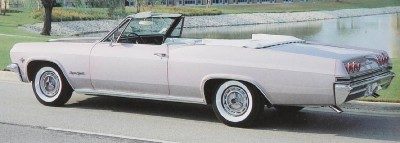
For just $200, the Impala sport sedan gets more than just an upgrade. It becomes something completely different. The Caprice Custom Sedan Option Group transforms your regular sedan into a halo vehicle and creates a nameplate that will outlast the body style for decades.
The package is special. Black-out grille. The vinyl roof features the iconic fleur-de-lis emblems. A unique wheel cover. Narrow sill moldings. It wasn’t just trim. It’s theater.
But Chevrolet didn’t stop at aesthetics. The engineers fine-tuned the suspension. They strengthened the frame. The result is a substantial, heavy, and refined. The luxury inside is amazing. No other Chevrolet has ever seen such a luxurious interior.
The specially sewn fabric door panel is combined with simulated walnut trim. The contoured, padded seats are a combination of fabric and vinyl, giving the car the feel of a luxury brand rather than a mass-market brand. The goal was clear. The idea is to give buyers a “one-of-a-kind” Cadillac look and driving experience without the Cadillac price tag.
It worked. Sales have skyrocketed. Chevrolet even included a V-8 model of the Caprice in its entire lineup in 1966.
1965 Class System: Biscayne, Bel Air, Impala, SS
Before the Caprice became its own series, it was an even higher trim level than the Impala. To understand where it fits, we have to look at a wide range of 1965 lineups. The numbers tell a story of volume and prestige.
| Model | Weight Range (lbs) | New Price Range | Units Built (Approx.) |
|---|---|---|---|
| Biscayne | 3,305 – 3,900 | $2,363 – $2,871 | 145,300 |
| Bel Air | 3,310 – 3,950 | $2,465 – $3,039 | 271,400 |
| Impala | 3,385 – 4,005 | $2,672 – $3,181 | 803,400 |
| Impala SS | 3,435 – 3,655 | $2,839 – $3,212 | 243 114 |
The Biscayne was the workhorse. light. cheap. Fully functional. Bel Air sits somewhere in between and bridges the gap between practicality and style. The Impala belongs to the luxury segment both in terms of weight and price.
Next comes the Impala SS. It’s heavier than a regular Impala, but lighter than a fully loaded Caprice model. The focus is on performance, not luxury.
Why Caprice stands out
The difference between the standard Impala and the Caprice is obvious. Buyers looking for the Caprice experience aren’t just buying a badge change. They pay for suspension upgrades. The stiffer the frame, less body roll. The interior is more than just beautiful. More comfortable.
This distinction enables Chevrolet
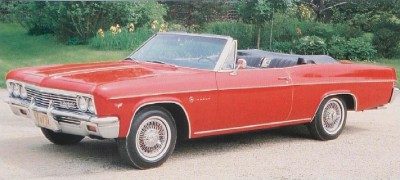
The Big 3 of 1966: Blocky lines and new foundations.
1966 brought significant changes to Chevrolet’s full-size lineup. The Biscayne, Bel Air, Impala, and Caprice ditched some of their earlier curves in favor of chunky, sharp body lines. This is more than just a design exercise. The hood has been redone, including new fenders and bumpers. The front grille has been renewed. But the most obvious change is behind. The rectangular wrap-around taillights sweep across the corners, making the car appear wider and more aggressive.
Engine Room: 427 V-8 Arrival
The biggest news under the hood was the arrival of the 1966 Chevrolet 427-cubic-inch V-8. This is not a pretty design. This is a bored version of the 396-cubic-inch Mark IV engine. Chevrolet offers two power levels for this beast: 390 horsepower or 425 horsepower.
For those who didn’t need that much displacement, there are still options. The 396-cubic-inch V-8 engine is still available, rated at 325 horsepower. The reliable 327-cubic-inch V-8 engine is still included. If you’re buying a 1966 Chevrolet Station Wagon, engine options are limited to these three, as the big 427 is reserved for harder-driving models.
Driving comfort: “jet smooth” promise
The Chevy’s appearance isn’t the only thing that’s changed. They changed the way cars moved on the roads. Hardtop models have a new perimeter frame and improved frame supports. The marketing campaign focuses on “Jet-smoother ride”. It’s not just about convenience. This was to isolating the cabin from chassis flex and road bumps that plagued early cars.
Inside the car, the driving experience has been improved. The 3-speed column shift is fully synchronized in all forward gears. No more grinding on downshifts. If you understand basic automotive terminology, you know this is a significant improvement in shift quality. The 1966 Chevrolet Impala and Caprice models benefited the most from these chassis upgrades, achieving the balance of style and substance that characterized full-size sedans of the era.
Why this matters
The 1966 model year was a transitional period. Chevrolet has moved away from the flamboyant fins of the early 60s in favor of a more practical and durable look. The 1966 Chevrolet Bel Air and Biscayne served as entry points, while the Impala and Caprice were favored by the luxury and performance minded. But all have the same new foundation.
This is not the age of minimalism. It’s about presence. Block lines are not a step backwards. They are statements. The 427 engine is more than just a number. This is the promise of power. How about a smoother ride? This is an invitation to drive further.
The question remains: does a blockier look age than a curved one? Or was this just a prelude to the 70s? The answer may be found in the way cars behave today.
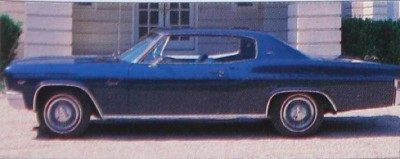
Caprice Separate & Sports Interior
The 1966 line wasn’t just a jumble of models. Redefine the hierarchy. The “Super Sport” upholstery draws attention with the new Strato bucket seats. These are not standard benches. It has a slim barrel design that creates a sporty feel without sacrificing too much space.
But the real story is the Caprice.
Once a luxury accessory package for the Impala, this nameplate suddenly became popular in 1965. Chevrolet is not just an accessory. They totally brought it out. “Capriccio” has become its own series. This is a direct attack on Ford’s new premium LTD. Marketing touts the four-model Caprice lineup as “the most luxurious Chevrolet ever.”
It stays on the bill. All Caprices are powered by a V-8. There are no exceptions for straight cubes.
The layout of the interior also matches the luxurious exterior. Buyers can choose reclining front seats for the Stratoback. The bespoke coupe version gets special treatment. It has a formal and “unique” roofline. Look out the back window. The decorative exhaust pipe is visible. There is also a 4-door model, but the coupe stands out.
Both body styles have a wide sill design. It has two-tone stripes on the sides. Penthouse? Includes Fleur de Lis logo. The mid-century sedan has lots of chrome and wood grain.
1966 Chevrolet Biscayne, Bel Air, Impala, Caprice Facts
The numbers don’t lie. They show exactly where the money is spent.
| Model | Weight Range (lbs) | Price Range (New) | Production Quantity |
|---|---|---|---|
| Biscayne | 3,310-3,895 | $2,379-$2,877 | 122,400 (approx) |
| Bel Air | 3,315-3,940 | $2,479 – $3,053 | 236,600 (approx) |
| Impala | 3.430-4.005 | $2,678-$3,189 | 654,900 (approx) |
| Impala SS | 3,460-3,630 | $2,842 – $3,199 | 119,314 |
| Caprice | 3,600-4,020 | $3,000-$3,347 | 181,000 |
Biscayne is still an entry-level workhorse. It is the lightest and cheapest on the list. The Impala dominates sales, perhaps because it offers the best balance between style and price. The Impala SS weighs a little more and costs a little more, but it’s produced in far fewer.
And then came Caprice. Heavier than the Impala. The price is several hundred dollars more. Still, it sold almost 200,000 copies. This is not just a niche luxury car. This is the mainstream view.
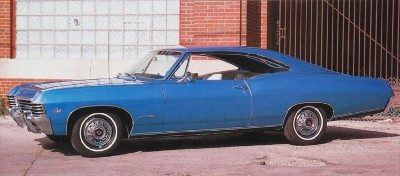
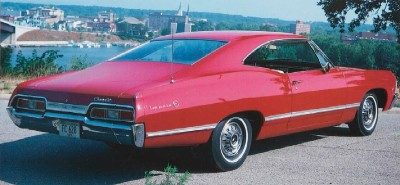
It’s strange how history sometimes gets wrapped up in symbolism. On April 21, 1967, the top-of-the-line 1967 Chevrolet Caprice Custom Coupe rolled off the assembly line in Janesville, Wisconsin. This is GM’s 100 millionth vehicle produced in the United States. It’s possible that no one planned for this special milestone to become a luxury coupe. Probably not. But in hindsight, does this bode well for how many buyers will covet Chevrolet’s most luxurious models in the future?
The car itself is special. It features the Caprice’s unique formal roofline. You often saw it with an optional vinyl top. No other Chevrolet model has this silhouette. It stood alone.
Design Tweaks and Lattice Grilles
The 1967 full-size Chevrolet was looked only slightly different in appearance from its predecessor. The dimensions remain approximately the same. The wheelbase is still 119 inches. It’s 4 inches longer than the midsize Chevelle.
Chevrolet sells the front end with a “lattice-work grille playing peekaboo around the front fenders.” The changes from last year are subtle but obvious if you know where to look.
Internally, choice matters. Buyers can opt for vinyl bucket seats with a center console. Alternatively, you can choose a Strato-back bench with a fold-down center armrest. The Impala Sport Coupe and its SS cousin have distinctive rooflines. It flows seamlessly to the rear deck. Graceful. Clean.
SS model and bright work
Not all Impalas are created equal. The Super Sport has less trim than other Impalas. It has black grille accents. The side and rear fender moldings are also black. It has a sportier look.
Lesser models leaned more toward brightwork. Chrome is everywhere. Inside and outside.
Both SS models (sport coupe and convertible) lack the bright wheel well trim. This is a carefully considered choice that focuses on performance over glitz.
Why Caprice’s milestones matter
The fact that the 100 millionth GM car is a Caprice is significant. This isn’t just a random assembly line number. It signaled a shift in what Americans wanted for full-size Chevrolets in the United States. They want more than transportation. They want style. They wanted a formal roofline. They want luxury.
The 1967 Chevrolet Caprice Custom Coupe rides on the same 119 inch wheelbase. It shared the underpinnings with the rest of the lineup. But the roofline sets it apart. The vinyl top option added to the exclusivity. It is a very unique car.
“The 1967 full-size car differed little in appearance from its predecessor; its dimensions remained roughly the same.”
This subtle change allowed the bodywork to speak for itself. The lattice grille. clean lines. The lack of unnecessary brightwork on the SS models. It’s a sophisticated evolution.
Legacy of the ’67 Full-Sizers
The Impala Sport Coupe has a special roofline. It didn’t just
1967 class: quantity, value and SS rarity
The numbers speak for themselves at Chevrolet in 1967. Although the full-size product line was produced in large numbers this year, the production hierarchy was very rigid.
The Impala Super Sport is at the top of the performance food chain. The main specifications are the 427-cubic-inch V-8. It produced 385 horsepower. You wanted it. You bought it.
Only 2,124 Impala SS models were built using this big block. This is only a small part of SS production. Of the 76,055 Impala SS units produced, most were equipped with smaller engines. Even the six-cylinder engine option was rare, as only about 400 Super Sports models were equipped with the straight-six engine.
But look at the bigger picture. The Impala family dominated. Total production of V-8-powered Impalas was 556,800 units. Add to that 18,800 six-cylinder cars and Super Sports, and you have a staggering number of cars on the road.
Biscaynes stayed at the bottom. Suitable for those with a limited budget. Bel Air is somewhere in between, and is more luxurious than Biscayne. And then came Caprice. Over 124,000 buyers paid a premium to take home this premium model.
Body style tells a different story than sales figures. Unlike the stripped-down Biscayne or mid-priced Bel Air, the Impala is available in a variety of body styles. These are versatile and make up the majority of sales.
1967 Chevrolet Biscayne, Bel Air, Impala, Caprice Facts
| Model | Weight Range (lbs) | Price Range (New) | Production Quantity |
|---|---|---|---|
| Biscayne | 3,335-3,885 | $2,442-$2,923 | 92,800 (approx) |
| Bel Air | 3,340-3,940 | $2,542-$3,098 | 179,700 (approx) |
| Impala | 3,455-3,990 | $2,740 – $3,234 | 575,600 (approx) |
| Impala SS | 3,500-3,650 | $2,898-$3,254 | 74,000 (approx) |
| Caprice | 3,605-3,990 | $3,078-$3,413 | 124,500 (approx.) |
1968 Chevrolet Biscayne, Bel Air, Impala, Caprice
The calendar changed to 1968, and the basic architecture remained, but the details were changed. The market was getting pickier. Safety regulations have tightened and weight and chrome have increased.
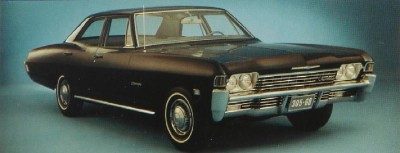
1968 Caprice: Redefining “Grand” in full-size Ford rivalry
The 1968 Chevrolet Caprice wasn’t just new. It declares itself. Sales literature is unapologetic about the new roofline, calling it a “classic” and claiming there’s nothing on the road that can match its unique style. You could see the ego in the ink. They don’t just sell cars. They were selling an aura. Inside, this aura is supported by surprisingly high-quality hardware. Courtesy lights. Ashtray lighting. An electric clock that actually ticked forward. The front center armrest doesn’t just fold up and disappear. The seats are also more luxurious. The door panels are now softer. The carpet also completely goes around the baseboards and thresholds. It was over-engineered comfort for a mass-market sedan.
Chevrolet calls these large cars “The Grand Chevrolet”. Slogans do a lot of work for them. “It will make you feel richer,” the brochure promised. “For the price of a Chevrolet” It’s psychological hacking. I believe you can improve your social status without the luxury tax.
Visibility got a quiet upgrade. No more ventipanes. The glass was cleaner. Astroventilation means you can let in fresh air and deal with wind noise without having to open the windows. Most Chevrolet models hide the wipers behind the glass for a stylish look. If you want to spend $79 on a retractable headlight, you can. It makes the front look stylish. The actual quantity purchased is lower than expected. For most buyers, beauty is not worth the mechanical complexity.
The shape of the custom coupe has changed. It used to be a Caprice exclusive. Now available on Impala. This opens the door for mid-range buyers who want the hardtop look without the Caprice price tag.
The front has a new look. Standard models looked sharper. At the rear, the traditional triple horseshoe taillights have been retained. The luxurious interior is attractive. But look at the hierarchy. Biscayne is at the bottom. Rock bottom price. Looked the part of the economy model. The Bel Air falls somewhere in the middle, appealing to mid-level buyers looking for a little more flair than the base model. The Impala overwhelmed the sales charts. This has been going on for several years.
Why did the Caprice matter if the Impala moved more units? Because the Caprice was the halo. This will improve your brand image. Proof that you don’t have to beg to buy American luxury goods. The Impala was the volume seller. The Caprice was the statement.
The roof line is different. This unique shape has created a niche market. It’s more than just a window above the B-pillar. This is a design cue that indicates this car is in a different series. Even if you can’t afford a Lincoln Continental.
Customers see a carpet under the door. They saw the clock. They felt the armrest. Marketing works because the details are real. No plastic veneer. real fabric. real glass. Actual engineering.
Retractable headlights are still a niche market. The Astro ventilation system became the standard because it solved a real problem. Wind noise. Dust. The lack of ventipanes improved visibility. it is not
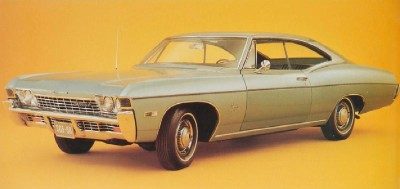
“Capriccio” attracted a lot of attention. In this quarter alone, 115,500 units were sold. This popularity comes at the expense of the Impala Super Sport.
SS sales are declining. It’s not a special series anymore. Dealers just added a $179 option tag to both the coupe and convertible. Buyers still love it. 38,210 Impalas left with this package. Most have small motors. However, 1,778 of them had the 427cc V8 engine. It was marked SS 427.
Full-size Chevrolets come with several options. We start with a modestly sized 250 cubic meter six-cylinder. It was upgraded to a 307-cubic-inch V-8. Or choose one of the two 327 available. Next is the 396. It produced 325 horsepower.
But the real conversation happens at the top of the list. L427. There are two flavors. 385 horsepower. or 425 horsepower. Lots of muscles. Even with a heavy Chevrolet body. The hard part is which one to choose.
1968 Chevrolet Biscayne, Bel Air, Impala, Caprice Facts
Here are the changes in last year’s lineup in numbers:
| Model | Weight Range (lbs) | Price range (new) | Production quantity |
|---|---|---|---|
| Biscayne | 3,400-3,900 | $2,581-$3,062 | 82,100 (approx.) |
| Bel Air | 3.405-3.955 | $2,681-$3,238 | 152,200 (approx.) |
| Impala | 3,250-3,940 | $2,846-$3,358 | 710,900 (approx.) |
| Casual | 3,660-4,005 | $3,219 – $3,570 | 115,500 (approx.) |
1969 Chevrolet Biscayne, Bel Air, Impala, Caprice
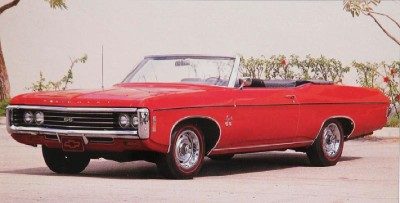
1969 Impala undergoes sculpted overhaul
The 1969 Chevrolet Impala doesn’t just have a new paint job. It’s a radical redesign designed to give the full-size sedan a more sculptural aspect. As a result, the overall look is slightly elongated, but the fundamental kinship with the previous model is still evident. Enthusiasts may notice the changes, but the DNA remains the same.
The wheelbase has not moved. They held steady at 119 inches. It’s only 3 inches longer than the four-door Chevelle, but despite the cosmetic improvements, the overall size remains in the same class.
Redesigned fenders bulge around each wheel well. This added muscle to the stance. At the rear, the rectangular taillights are integrated into the slim bumper. At the front, behind a thin bumper, there are four deep-mounted headlights that flank a revised grille.
The Impala was redesigned in 1969, giving it sculpted sides and a slightly longer overall look.
This is not subtle. The fenders are wider. The lights sank deeper. However, the wheelbase is a fixed 119 inches.
Did the design cues of 1969 remain for later years? The thin bumper treatment lasted. The same goes for deep headlights. It’s not a bulging fender. They come and go.
The Impala maintains its size. It just looks different.
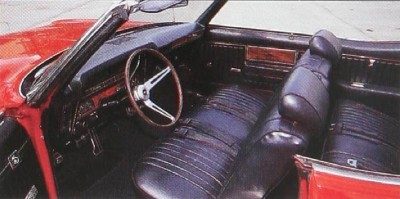
“Easy Street” is more than just a slogan. The 1968 Chevrolet marketing team wanted you to believe that buying an Impala would give you instant financial security. What about reality? Hide-A-Way wipers and vinyl body side moldings prove this. The full-size selection continues to expand. Biscayne and Bel Air rounded out the entry-level options. Caprices are the best, luxurious and expensive. The Impala and Caprice can now be ordered with an electric rear window defroster. It’s new. The ignition key was also moved to the steering column. Stop leaving your keys on the floor.
The basic engine has not changed much. It’s still a 155-horsepower, 250-cubic-inch six-cylinder engine. However, the V-8 got a bump. The bottom end displacement increases to 327 cubic inches. Horsepower reaches 235 horsepower. The Super Sport package remains the equipment and engine for $422. No need to buy. But if you do, you’ll earn a badge.
Only 2,455 Super Sport units rolled off the production line. Impala custom coupe. sporty coupe. convertible. that’s it. Not much. But the biggest news is the engine bay. A 390 horsepower, 427 cubic inch V8 joined the party. All super sports with big blocks received the “SS 427” designation. This is more than just a sticker. That’s the promise of torque.
There were several options between the V-8 and the 427. 255 hp 350. 300 hp 350. 265 hp 396. You can mix and match power according to your budget.
This is how these models compare with each other in terms of weight, price and numbers.
1968 Chevrolet Biscayne, Bel Air, Impala, Caprice Facts
| Model | Weight Range (lbs) | Price Range (New) | Production Quantity |
|---|---|---|---|
| Biscayne | 3,530-4,170 | $2,645-$3,169 | 68,700 (approx) |
| Bel Air | 3,540-4,230 | $2,745-$3,345 | 156,700 (approx) |
| Impala | 3,640-4,285 | $2,911-$3,465 | 777,000 (approx) |
| Caprice | 3,815-4,300 | $3,294 to $3,678 | 166,900 (approx) |
1970 Chevrolet Biscayne, Bel Air, Impala, Caprice
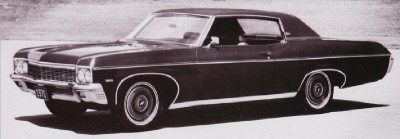
1970 Chevrolet Impala Redesign
The 1970 Chevrolet Impala and its full-size siblings received a facelift primarily for aesthetic reasons. They ditched the combined grille and bumper. The front and back have been completely redesigned. This looks like a major renovation.
This is not true.
These changes are modest. The illusion of change deceives the eye. But behind the scenes, things changed dramatically.
The engine selection changes
Inline 6-cylinder engines are not going away. It just moved. Only the four-door sedan retained it. This option is completely lost in the two-door Impala.
The V-8 is the star. Entry-level full-size cars start with a 350cc V8 engine. It produced 250 horsepower.
The selection is expanding rapidly. Can be upgraded from 350 horsepower to 300 horsepower. The 400 cubic meter V8 engine produced 265 horsepower.
Large displacements dominate. Two 454 cubic inch V-8s were featured. These replaced the legendary 427. Emission standards are coming soon. GM needs a solution.
The new 454 has been delivered. One version produced 345 horsepower. The second hit was 390. The power figures have increased. Efficiency problems disappear. The era of musical cars is turning a corner.
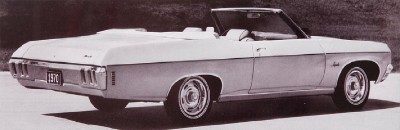
The Decline of the Full-Size American Muscle
The hierarchy has changed. You can no longer buy a two-door Biscayne or Bel Air. These models were now strictly four-door sedans, and their station wagon counterparts were the Brookwood and Townsman. If you want a two-door body model in the Chevrolet lineup, you’ll have to go for the Impala or Caprice, but even then, it’s hardtop only. There are no pillars blocking your view.
But there’s more to the Impala than just style. This is one of the last three Chevrolet convertibles left on the block. Only 9,562 were produced in a year when the ragtop was becoming a relic of a bygone era.
Interest in soft tops is waning. This was closely followed by an interest in large sports cars. result? General Motors has stopped production of the Impala Super Sport. As the market’s appetite for both size and speed wanes, the “Super Sport” badge that once promised performance has disappeared from the full-size lineup.
The production figures tell a grim story. The total production of full-size Chevrolet cars fell significantly below one million units. The 65-day strike in the fall of 1970 certainly didn’t help, but the trend was already there. Despite the turmoil, the Impala still outsells the other big Chevrolets by a wide margin. It is still the people’s choice.
1970 Chevrolet Biscayne, Bel Air, Impala, Caprice Facts
If you’re up to date on the specs and prices of the various trim levels over the past few years, here’s the breakdown.
| Model | Weight Range (lbs) | Price Range (New) | Production Quantity |
|---|---|---|---|
| Biscayne | 3,600-3,759 | $2,787-$2,898 | 35,400 (approx) |
| Bel Air | 3.604-3.763 | $2,887-$2,996 | 75,800 (approx) |
| Impala | 3.641-3.871 | $3,021-$3,377 | 505,471 (approx) |
| Caprice | 3.821-3.905 | $3,474-$3,527 | 92,000 (approx) |
| Wagon | 4.204-4.361 | $3,294-$3,886 | Not Available |
Notice the price creep. Prices for the entry-level Biscayne start around $2,787, and the top-of-the-line Caprice starts at $3,527. That’s a big gap for a car that doesn’t even have a V8 in the base Biscayne trim.
1971 Chevrolet Biscayne, Bel Air, Impala, Caprice
The landscape changed again. Biscayne, long the budget king, is gone. GM decided there was no future in the absolute
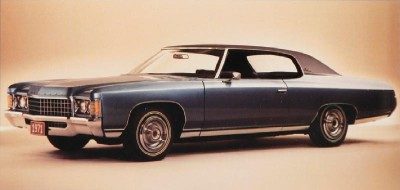
1971 Chevrolet Impala: A full-size muscle car for the masses
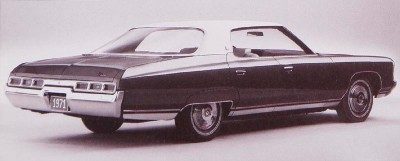
Skip the Caprice. Unless you’re willing to pay a fortune for a luxury hardtop coupe or luxury sedan, the 1971 Chevrolet Impala is your ticket to full-size supremacy. This is more than just a car. This is sold in bulk. With more than 475,000 vehicles (not including wagons), Chevrolet knows exactly how to move metal.
The body lineup is also versatile. Choose either a two-door pillarless hardtop, an equally stylish four-door version or a standard four-door sedan. There is also a convertible. It’s hard to believe now, but this era was the beginning of the end for open-top full-size sedan. Soon, the convertible will be completely removed from showroom floors.
Next up is the Impala Custom Coupe. It combines the high-end Caprice roofline with the mid-level Impala trim. You don’t have to pay a lot of money to feel luxurious. It’s a clever combination.
Behind the scenes and between the lines
The wheelbase has been extended to 121.5 inches. Wagons has increased by 3.5 inches, bringing the number to 125 inches. This redesign isn’t just about length. It’s about volume. Bodies protrude in all directions. The beltline swelled. The sides pushed out. The hood also has a new pronounced shape.
The new egg-crate grille leads the way. Gives the front end an aggressive, upright stance. Visible front fender edges add a touch of Cadillac style. I want someone who looks like they have money even if they don’t.
Mechanically is extensive. Standard engines include a 250-cubic-inch six-cylinder and a 307-cubic-inch V-8. However, if you need more power, you can choose the 454 with up to 425 horsepower. There is enough power for a daily driver.
Yet, most buyers didn’t touch the V-8s. Only a few Impalas with six-cylinder engines roll off the assembly line. The rest wanted muscle.
The Biscayne: Cheap Look, Real Price
Biscayne was lower in the hierarchy. This is the cheapest model. It is marketed strictly as a four-door sedan. But don’t let the price tag fool you. At first glance, the roots of the “economy” are not obvious.
Chevy dressed it up. Chromed window trim. Side moldings. Whitewall tires. Full wheel covers. On paper, it looks like a basic model. In person, it looked considerably nicer than its status suggested. It looks good enough to deceive the eye.
Did buyers bite? Not really. Buyers willing to spend a little more money weren’t interested in the ’71 Biscayne. They moved to Bel Air or Impala. Only about 22,000 Biscayne cars left dealerships. This model series did not survive after 1972. This is a quiet end to a car that looks much more expensive than it actually is.
The Flaws in the Polish
Chevrolet is pushing flow-through ventilation in a big way. This is a selling point.
1971: A strike that rocked Big Chevys
By 1971, enthusiasm for full-size Chevrolets remained. Production suffered greatly. That year, a two-month UAW strike shut down all Chevrolet plants. It hurt. But the numbers still held up. About 668,000 big Chevrolet cars rolled off the assembly line. This is not a failure. This is resilience.
Let’s take a look at the engine options. Out of the extensive fleet, only 10,200 inline-six left the factory. Buyers don’t want economy. They want power to match their luxury styling. The resemblance to Cadillac is striking. “Caprice” looked every bit the part.
“A properly selected Caprice or Impala is almost as good as a Caddy.”
Historian George Dammann stated that the interior of the top model was comparable to a Cadillac. No wonder the dealers sold it so quickly. The market also reacted. It wanted V-8s. It wanted the look. And it got both.
Model Breakdown
The information clearly shows the buyer’s choice. Impala and Bel Air dominated sales. Caprice has created a solid niche in the market. Biscayne is still the entry-level option.
| Model | Weight Range (lbs) | New Price Range | Units Built |
|---|---|---|---|
| Biscayne | 3,732–3,888 | $3,096-$3,448 | 22,309 |
| Bel Air | 3,732–3,888 | $3,233-$3,585 | 315,986 |
| Impala | 3,742–3,978 | $3,391-$4,021 | 374,598 |
| Caprice | 3,964–4,040 | $4,081-$4,134 | 110,497 |
| Station Wagon | 4,542–4,738 | $3,929-$4,498 | 115,007 |
The Impala won the sales crown. More than 374,000 of them were sold. Bel Air is followed by about 316,000. These are more than just cars. They are statements. Sales of more than 110,000 Caprices showed that buyers were willing to pay a premium for Cadillac-like aesthetic.
What changed in 1972?
This momentum continued until 1972. However, things are changing in the automotive industry. Exhaust gas regulations are being tightened. Insurance premiums go up. Big Chevrolet is facing a new reality.
The 1972 Chevrolet Biscayne, Bel Air, Impala and Caprice inherited this volatile market. The appearance is still evolving. The equipment list has expanded. But the ultimate appeal remains. Power. Size. Presence.
Do buyers stick to tradition? Or would smaller
1971 Chevrolet Impala: The largest of the Big Three
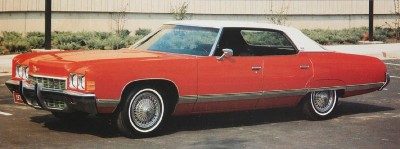
The 1971 Chevrolet Impala had a 0.5 inch longer wheelbase. Chevy did this in its full-size lineup. The total length reaches 220 inches. These numbers are important. They made Chevrolet the largest vehicles among the “big three” automakers. The wagon retained its old 125-inch wheelbase. However, its overall length stretched to a staggering 226 inches. Size is a selling point.
A completely new front end defined the look. The V-shaped grille is the focal point of the overall design. This gives the Biscayne, Bel Air, Impala and the luxury-focused Caprice a unique look. It looked nothing like from other models in the showroom. Caprice’s sales brochure put it bluntly. “You love driving behind the flashy grille of a car that costs hundreds of dollars. It’s a luxury gimmick that looks cheap. Horse-drawn carriages from Brookwood, Townsman, Kingswood and Kingswood Manor completed the family picture.
Production data shows this strategy to be effective. More than one million full-size Chevrolet cars, including station wagons, broke one million units. The Impala convertible is a niche car. Only 6,456 units were produced. However, the series as a whole thrived. It remains a true American favorite. The nameplate itself is the most popular in the history of the automotive industry. This year marked a milestone. The ten-millionth Impala rolls off the assembly line. Caprice was no slouch in the sales competition either. Factory doors opened for 178,455.
Under the hood, there are a variety of options, from efficient to aggressive. sat at the top a 270-horsepower version of the 454-cubic-inch V-8 engine. You could also get a 210 horsepower, 402 cubic inch V8 engine. A 400 with 170 horsepower is also available. Smaller engines include the 165 horsepower and the 200 horsepower 350. left the plant less than 3,900 full-size Chevrolet cars with the six-cylinder engine. In the world of big blocks, Sixes is an afterthought.
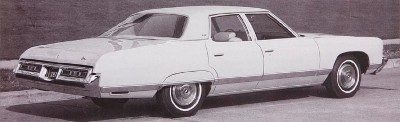
In 1972, the lineup tightened even more. The Caprice sheds some of its previous styling and settle into three distinct luxury trims. These included a fresh pillared four-door sedan, a body style that didn’t quite fit the hardtop coupe aesthetic, but sold nonetheless. you were locked into the Turbo-Fire 400 V-8. There are No small-block options here. It combines a Turbo Hydra-Matic transmission and variable-ratio power steering. standard. If you want the top-tier wagon experience, Kingswood Estate is the best choice. The sides simulated woodgrain. This is a sign of status.
One detail is missing. ventilation louvers for the tailgate of a full-size wagon. Gone. From here on out, it’s just smooth metal.
Meanwhile, the brass continues to move. Chevrolet’s general manager, John Z. DeLorean left General Motors this year. He left his job and started his own company. DeLorean Motor Company. They plan to build a stainless steel sports car with gullwing doors. It won’t end well.
1972 Chevrolet sales and weight data
The numbers don’t lie. The Impala is the volume king. Biscayne is economy choice. Caprice is a luxury bracket.
| Model | Weight Range (lbs) | Price range (new) | Production quantity |
|---|---|---|---|
| Biscayne | 3,857-4,045 | $3,074-$3,408 | 20,538 |
| Bel Air | 3,854-4,042 | $3,204-$3,538 | 41,888 |
| Impala | 3,864-4,150 | $3,369-$3,979 | 597,541 |
| Caprice | 4,102-4,203 | $4,102-$4,203 $4,009-$4,076 | 178,455 |
| Station Wagon | 4,686-4,883 | $3,882-$4,423 | 171,703 |
1973 Chevrolet Bel Air, Impala, Caprice
’73 Chevrolet Treasure
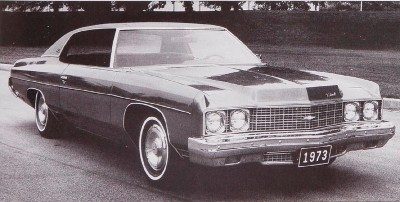
Forget Vette for now. In 1973, if you wanted a Chevrolet convertible, you had two options. One of them is the Corvette. The other is the Caprice Classic. Chevrolet sold 7,339 soft tops. List price is $4,345 each. This is more than just a car. This is Chevrolet’s top-of-the-line marketing brochure.
The hierarchy has changed. Biscayne production ended. Belair falls to the base. The Impala sits in the middle. Caprice reigns supreme.
Wagons were not immune to the effects of this upheaval. Biscayne’s old Brookwood is gone. It was absorbed into the passenger line. The top carriage became the Caprice Estate. Others wear fender skirts. Equipped as standard with a rear fender skirt that emphasizes the smooth body line. These are standard on all Caprices except wagons.
Safety changes happen quietly. The front bumper must meet the 5 mph crash standard. The rear bumper only takes 2.5 mph. Therefore, it is less noticeable. The roof becomes stronger. The beams of the side doors are thicker. I feel it in the metal.
The nose job is subtle but noticeable. Two grill styles are now available. The Caprice grille has a soft grid pattern. It looks different than the smaller model. The fender cap has also been replaced. The changes are gradual, but the front end seems to have changed.
The rear end tells a clearer story. The taillights will be square. It fits subtly into the redesigned rear bumper. The three lights on each side are unique to the Caprice. Lesser cars got two. It is a visual status symbol. The Glide-Away tailgate remains in full-size wagons. Unique features created especially for estate crowd.
Why Caprice is dominant
The design language distinguishes it from the rest of the Chevrolet range. You could spot a Caprice from a block away.
Grille patterns is the first explanation. The design of the crosshatch is loose. Be more open. It screams premium.
The Tail Light Assembly is another. There are three of them on each side. There is no room for negotiation.
Fender skirts covers the rear wheel. They hide the wheel wells. They make the car look longer. Sweeping.
Roof strength is not as important visually. But it is important for safety. The Side beams are thicker. The structure of the roof has been reinforced.
Bumper differences work. The front is bulky. The back is sleeker. 2.5 mph rear standard allows for sharper lines.
It’s not just about looks. It’s all about placement. Biscayne is gone. Bel Air is basic. The Impala is in the middle range. Caprice is at the end of the line. In 1973, this model was a convertible. Or a wagon. Or a coupe. But it’s always the top dog.
The numbers don’t lie. 7,339 convertibles were sold. $4,345 each. A significant chunk of the market. People spent money to buy the badge. for 3 rear lights. For a looser grille. They want Chevrolet to be the best it can be. Chevrolet delivered.
The rest of the lineup are also available. Brookwood disappeared. Caprice Estate took its
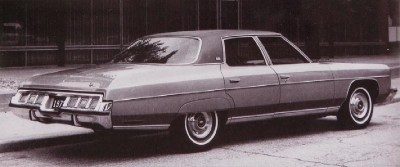
Transmission choice and the reality of the fuel crisis
Although the selection of top models has expanded, Under the hood the selection remains relatively traditional. Base engines include a choice of a 250-cubic-inch inline-6 or a 307-cubic-inch small-block V-8. If you buy a full-size body model, you can choose a V-8 with up to 350 cubic-inch V-8 The Caprice is the top-of-the-line model with a bigger-hearted, 454-cubic-inch V-8.
Chevrolet reworked the original compact architecture, expanding it to 400 cubic inches. Its 400 V-8 breathed through a two-barrel carburetor and produced a modest 150 horsepower. It wasn’t a performance hero. At the same time, the popularity of six-cylinder engines is declining. These were only fitted to Bel-Airs and featured a column-shift three-speed transmission. As with full-size cars with at least a 350cc V8, the transmission is mated to a Turbo Hydramatic.
The fuel tank holds 22 gallons of gasoline. That might sound like a lot until you try to move a 4,000 pound metal box across the country. These biggies are far from frugal. Car owners often have to go to gas stations to refuel, and the fuel tank burns faster than expected.
When the gas crisis occurred in late 1973, That little engineering imperfection became even more apparent. It wasn’t just an inconvenience. This is a national emergency. Frantic motorists had to wait in long lines to get into gas stations, staring at empty tanks and empty hopes. Gone are the days of unlimited range.
1973 Chevrolet Bel Air, Impala, Caprice Facts
| Model | Weight Range (lbs) | Price range (new) | Production quantity |
|---|---|---|---|
| Bel Air | 3.895-4.087 | $3,247-$3,595 | 41,832 |
| Impala | 4.096-4.162 | $3,386-$3,822 | 549,482 |
| Caprice | 4.103-4.208 | $4,064-$4,345 | 212,754 |
| Station Wagon | 4.717-4.858 | $4,022 – $4,496 | 173,974 |
1974 Chevrolet Bel Air, Impala, Caprice
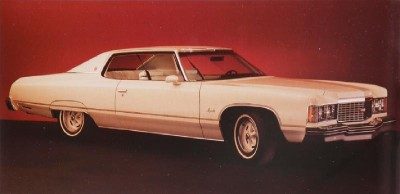
Sales collapsed. In 1974, Chevrolet’s total production decreased by 15%. What was the reason? OPEC oil embargo 1973-1974. This is not a gradual change. It’s already dawn.
Americans don’t buy big cars anymore. Impala. Capricious. Bellaire. They suddenly seem like a liability. Buyers are switching to smaller, more fuel-efficient cars. Despite the 10 percent price increase, there was no change. In fact, it can hurt.
Portico style takes over
The 1974 Impala Custom Coupe retained the “Colonnade” design language. It debuted in the Chevelle the previous year. result? Fixed quarter window. No rolling glass.
This season, the windows have grown.
A genuine pillarless hardtop coupe remains. The Impala Sport Coupe carries the roofline from 1973. Looks a lot like the original ’66 Caprice.
The front has been redesigned. A unique vertical bar. Bright accents.
Cost efficiency and luxury
A major marketing effort was made for the Caprice Classic. The brochure advertised it as an “enviable luxury”. There are signs that driving is not work. This is what cars do.
The sales figures tell a strange story. This four-door sedan outsold its cousin. coupe. hardtop sedan. Both are expensive.
However, this sedan has a higher mileage.
Radial tuning suspension
Chevrolet is not ignoring the crisis. They regulated the hardware. The full-size car has a new suspension. We make adjustments in the direction of the beam. Equipped as standard with steel belt belt rings.
The entire open car industry will disappear. There are very few left in the US market. But Chevrolet stood its ground. Open Caprice Classic is still available.
Inside, the Caprice Classic has a 50/50 reclining passenger seat. Comfort is not an afterthought. This is a selling point.
“Driving is what cars are supposed to do.”
This word sums up the era. People want to be driven. They don’t want to fight the V8 in traffic. Not when gas prices are skyrocketing. It’s not that the economy is bad.
The Impala survived. only. The landscape has changed. Large sedans are no longer the kings of the road. They are relics. I’m waiting for a market that may never return.
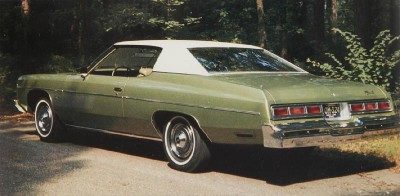
American spirit and ease
Patriotism is more than just a can of paint. General Motors is releasing a limited edition Spirit of American for the Impala, Nova and Vega. white frame. Accented with red and blue stripes. special character. The Impala has unique wheels that set it apart. This is a marketing move that screams freedom, even if it has no negative effect on the economy.
Practicality remains key in the full-size segment. The sliding tailgate is back and now standard in vans. If you need transportation, our big engines are on standby.
Power comes from a 454 cubic meter V8. It produced 235 horsepower. This allows a full-size truck to tow 7,000 pounds. This is not advice. This is an ability.
The basic model tells a different story. The wagon’s standard engine is a 400 cubic inch V8. It produced 180 horsepower. Other full-size cars start with a 350cc V8 engine. If you upgrade to a Caprice, you get a tuned version of the 400. It has 150 horsepower. More comfort with less power. That’s the compromise.
1974 Chevrolet Bel Air, Impala, Caprice Facts
Data from 1974 shows where the money went. Weight is important. Price is important. Volume is the most important thing.
| Model | Weight Range (lbs) | Price range (new) | Production quantity |
|---|---|---|---|
| Bel Air | 4.148 | $3,960 | 24,778 |
| Impala | 4.167-4.256 | $4,135-$4,229 | 357,754 |
| Casual | 4.245-4.344 | $4,465-$4,745 | 155,908 |
| Wagon | 4.829-5.004 | $4,464-$4,914 | 91,407 |
Impala has power. 357,754 units. That’s a lot of steel. Bel Air is the entrance. author. cheaper. You have fewer options. Caprice is somewhere in between, heavier and more expensive. The stroller is very heavy. Ready to roll 5000 lbs. You paid for the space.
1975 Chevrolet Bel Air, Impala, Caprice
The cycle has changed. 1975 brought new pressures. Emission regulations are getting even tighter. The oil crisis has already had an effect. Big engines haven’t disappeared, but they have changed. If you listen carefully, there are still 454 left. But the market is changing.
I didn’t lose much weight. Steel is still the most important ingredient. Prices are going up. Horsepower has nothing to do with inflation.
Bel Air remained in the rearview mirror. The Impala retains its crown. Caprice tries to be everything to everyone. It is very heavy. that
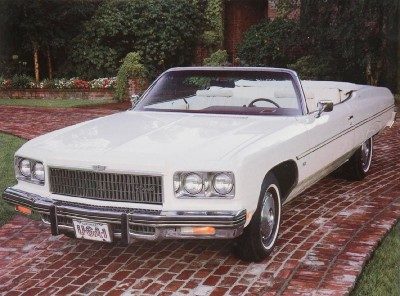
The last hurray of America’s big convertibles
“Chevrolet makes sense for America.” That was the slogan in 1975. When you get under the hood of these machines, it’s a strange choice. They are gas guzzlers. Yet Chevrolet kept shoving large vehicles like the Impala and Caprice onto driveways across the country.
The flagship product is the Caprice Classic. The length of the hardtop sedan from nose to tail is 223 inches. It’s not just long; it was heavy. It is very heavy. But there are trick up its sleeve. The side windows are cut into the roof sail panel. This gives the four-door hardtop a new look and broke up the mass.
Standard equipment included fender skirts. The bright wheel design enhances the chrome aesthetics. Every Caprice is a fully trimmed Classic. You can choose from five body types.
– Coupe
– Landau Coupe
– 4-door sedan
– Sports sedan
– Convertible
The last one is important. 1975 marked the end of Chevrolet’s full-size convertible lineup. Prices for the Caprice ragtop start at $5,113. Its price rarely stays the same. Most carried a mountain of extra accessories.
For the first time, buyers could spec a 50/50 reclining passenger seat for their convertible. Sporty fabric upholstery is also an option. For a dying breed, it’s a small luxury.
The Production numbers tells the truth. Chevrolet produced 8,349 full-size convertibles. The number is higher than at any time since 1970. At the time, dealers had 9,562 Impalas hit dealer lots. But the days of the oversized, ostentatious American convertible are over. The age of practicality was creeping in.
The Impala series has always remained true to its slogan “America’s favorite car”. The collection includes two coupés and two sedans. There are two types: pillared and pillarless options. There is also a Landau coupe. It did not become popular. Only 2,465 units were produced. They sold sparsely. The market had changed, and the big Chevrolet cars were left to fend for themselves.
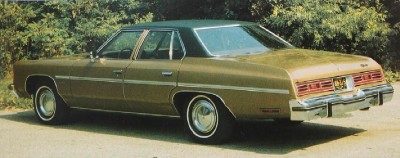
The roof line was changed again in 1975, but the numbers did not improve. The Impala received a facelift with larger rear door windows, but the subtle changes still generated enough metal sales to reach 91,330 units. It rides decently for a pillared sedan, but rests in other places. The Bel Air series is in its final season, with only one body style remaining: the four-door sedan. It was a single place in the queue and clearly not interested in buyers. Sales of full-size kegs have dropped to about half of their 1973 levels.
Behind the scenes, everything is affected by the GMO efficiency system. It is the company name for catalytic converters and electronic high energy ignition systems. Thanks to the cat, the engineers were able to retune the engine, achieving rare gains in durability and fuel economy, and actually improving the car’s usability. The full-size stable includes three station wagons: Caprice Estate, Impala and Bel Air, each with two or three rows of seats.
Here is how the sheet looked when the check cleared.
1975 Chevrolet Bel Air, Impala, Caprice Facts
| Model | Weight Range (lbs) | Price range (new) | Production quantity |
|---|---|---|---|
| Bel Air | 4,179 | $4,345 | 15,871 |
| Impala | 4,190-4,265 | $4,548-$4,901 | 211,708 |
| Caprice | 4,275-4,360 | $4,819 – $5,113 | 122,339 |
| Wagon | 4,856-5,036 | $4,878-$5,351 | 71,766 |
1976 Chevrolet Impala and Caprice
Bel Air is gone. That’s it. In 1976, Chevrolet combined its full-size lineup with the Impala and Caprice. The Impala became the best-selling flagship sedan, and the Caprice held the luxury car flag high. Station wagons still exist, but the hierarchy is changing. You can buy a base Impala if you want, but the Bel Air badge is a thing of the past. At the same time, Caprice prices and weights started to rise, showing where the market was headed. Heavier. More expensive. I’m not talking too much about the driving, but the list of options.
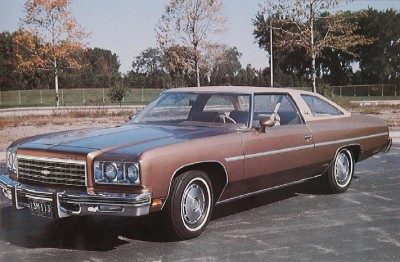
The last stand of General Motors’ giant sedan
By 1976, the hierarchy of Chevrolet’s full-size lineup had collapsed. The Bel Air was gone. The Caprice and Impala were the only ones left.
This year it has a new front panel. The grille has been redesigned. The style was different early on. The Caprice features new rectangular headlights and triple-unit wraparound taillights. The Impala has four round headlights. In an age where nuance matters, this is a nuanced difference.
The pillarless Impala Sport Coupe has disappeared from the collection. With its formal contours, the custom coupe became the only two-door option for the Impala. This move also marked the end of the four-door hardtop. After 1976, this body shape disappeared completely.
The last big Chevrolet
Caprice Classic and Impala were the last really big Chevrolets.
The overall length was over 222 inches. The wheelbase is 121.5 inches. It is solid metal.
The 454-cubic-inch V-8 engine was last installed in a Chevrolet model. It produced 225 horsepower. The output wasn’t record-breaking by today’s standards. But the package is ready.
Full-size cars have the full benefit of perimeter frame and full coil suspension. The result was a smooth ride. This makes the owners happy. That’s the point.
Luxurious interior and standard equipment
Both models have rare luxury. The dashboard shows simulated mahogany vinyl upholstery. It was on the steering wheel. It was on the doors.
Steel belted tires are used in every vehicle. They carried an automatic transmission. Also equipped with power brakes. Variable ratio power steering is standard equipment.
The standard bench seat could be replaced. Buyers can opt for 50/50 split front seats. Landau Coupes add a padded elk-grain vinyl half roof. It harmonized with the interior.
Model year 1976 was the last chapter. These cars are heavy. they are huge. they are completely different. It will never appear in exactly the same form again.
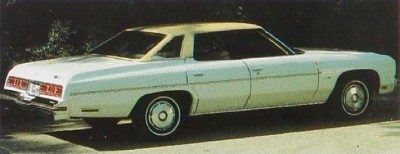
1977 Chevrolet Impala and Caprice: Comfort Continues
That philosophy didn’t change much from 1976 to 1977. If you want a full-size Chevrolet that won’t break down on the highway, the Caprice Classic remains the gold standard for ride quality. The brochure further emphasizes the idea that comfort is non-negotiable. Choose from sedan, sports sedan, coupe or unique Landau coupe. The car’s interior upholstery options are soft. Standard knit cloth with vinyl inserts or luxury vinyl finish. The suspension team left the front and rear anti-roll bars standard. They also tacked on radial tuning and tweaked the shocks to soak up the road surface.
Impala reflects this approach. All four body types are similar. The marketing copy calls this a “tradition of continuous improvement,” which is the company’s way of saying, “We haven’t changed this platform since the ’70s.” Budget-minded buyers still own the Impala S sedan. This is the lite version. No extra chrome. There are no fancy decorations. Best of all, it comes with steel-belted tires as standard, making it extremely durable.
If you need more than transportation, the list of options is long. Can the passenger seat recline? At hand. Driver’s seat power 6-way seat? Check. Power door locks and power windows are standard on higher trims, but are available elsewhere. The power trunk opener can be configured. rear defogger. Air conditioning options range from basic four-season systems to more powerful Comfortron configurations. The most important thing is that the cabin is quiet and cool.
1977 Chevrolet Impala and Caprice Production Information
These figures show the stability of demand. While the Caprice remains the premium model, the Impala remains the sales leader.
| Model | Weight Range (lbs) | Price Range (New) | Production Quantity |
|---|---|---|---|
| Impala | 4.175-4.245 | $4,765-$5,350 | 197,531 |
| Caprice | 4.244-4.314 | $5,284-$5,618 | 149,107 |
| Wagon | 4.912-5.007 | $5,350-$5,750 | 71,420 |
The weight range was roughly the same as last year. Prices have risen slightly. Inflation is progressing. Impala production was several hundred fewer than in 1976, but it was still a huge number. 197,531 units were transferred. The weirdness also went down a bit. 149,107 built. The station wagon segment is still a niche market, but consistently profitable. More than 71,000 wagons rolled off the production line.
This is not rocket science. It is a big, heavy and comfortable boat. For millions of Americans, that’s exactly what matters. The handling is not sharp. Acceleration is also sufficient. but
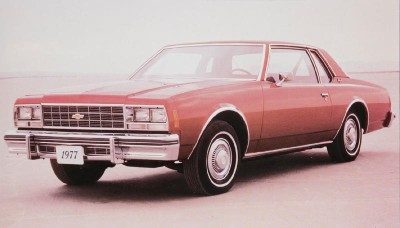
1977 Chevrolet Impala and Caprice: Strategic Retreat
The introduction of the Chevrolet Impala and Caprice in 1977 was a shock to the system. General Motors completely redesigned the B-body, significantly reducing the size. These aren’t just minor tweaks. They were shorter, taller, and noticeably narrower. Chevrolet marketed the updated lineup the “new Chevrolet,” promising cars that are “in tune with the times.” The motto is simple. It’s easier to handle and “takes up less space in the world.”
Customers were told that a smaller floor area does not mean less practicality. In fact, the internal volume has increased. Improved headroom. The rear legroom has been expanded compared to the 1976 model. Trunk space is also larger, measuring 20.2 cubic feet in sedan trim. This is a masterclass in packaging efficiency.
The industry quickly noticed. Motor Trend chose the downsized Chevrolet as the car of the year. The sleeker shape proved to be very robust, and the line continued through the 1990 model year, surviving only a minor facelift in 1980. Its durability extends beyond showroom floors. In the late 70s and 80s, police fleets often used these smaller, full-size patrol cars. It’s a testament to engineering excellence driven primarily by the reliability of its small-block V-8.
Powertrain Efficiency and control
Fuel economy became a priority, and 6-cylinder engines returned to the mainstream. These numbers were impressive at the time. EPA ratings are 22 mpg highway and 17 mpg city (six-banger). The new 305-cubic-inch V-8 became the top choice, returning 20 mpg on the highway and 16 mpg in the city. It had a two-barrel carburetor and produced 145 horsepower. If enthusiasts need more power, they can still opt for the 170 horsepower 350-cubic-inch V-8 engine.
Inside, the driving experience gets small but meaningful updates. The new smart switch combines the dimmer and turn signal functions. It’s a subtle change, but it simplifies the cockpit for a generation of drivers who demand every second.
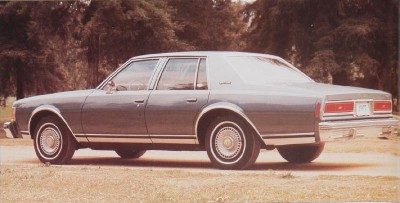
Nice contraction
This magic is very simple, but also very cruel. GM replaced the standard door-type tailgate with a sliding tailgate (a tailgate that folds out of the way). It can turn sideways and fold up like a traditional trunk lid. We don’t need any more theaters. Really helpful tool.
The size is also included. The wagon’s wheelbase is reduced from 125 inches to 116 inches. This makes it comparable to coupe and sedan platforms. The overall length of the vehicle has been shortened by more than a foot. This is more than just a facelift. This is footprint redefinition.
The configuration changes
The Impala range is simple: a 2-door coupe, a 4-door sedan and a 4-door station wagon. Depending on where the passengers sit, the van can be equipped with two or three seats.
In the middle of this year, the hierarchy changed a bit. 1977 Chevrolet Impala Landau Coupe has been added to the list. It has been carefully taken care of. The standard Impala lineup is even more upscale.
But the real headliner isn’t the Impala. It was Caprice.
Specify full size again
“Capriccio” appears in a completely different form. This isn’t just a new trim level. It redefined the concept of an American full-size car. Industry observers call this “the shape of the car of the future.” This marked a change from the boxy, bulky models of the late 1960s and early 1970s. Caprice is more stylish. More modern. A preview of the aerodynamic era that swept through the 1980s.
1977 serial number
Here’s how the market reacted: The numbers don’t lie.
| Model | Weight Range (lbs) | Price range (new) | Built Unit |
|---|---|---|---|
| Impala | 3,533 – 4,072 | $4,876 – $5,406 | 320,279 |
| Caprice | 3,571 – 4,118 | $5,187 – $5,734 | 341,382 |
Note that in 1977 the Caprice outsold the Impala. They are more expensive and heavier. The market votes with its wallet. They want new forms. They want Landau to appeal.
1978 Chevrolet Impala and Caprice
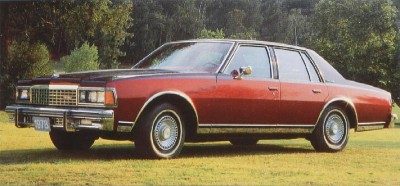
It was 1978, the second year of the downsized General Motors lineup, and Detroit was in a celebratory mood. The company has been shouting from the rooftops for the past year that its new compact full-size car is “the most successful new car in the country.” This claim is more than just a marketing ploy. It’s a survival strategy. The ’77 was a gamble, dropping over 500 pounds and shrinking its footprint to compete with the fuel-sipping imports that ate away at its market share. When the 1978 model rolled off the assembly line, confidence returned. An internal synopsis described it as “cool, refreshing and beautiful”.
For the buyer standing at the dealer lot, the differences between the flagship model Chevrolet Caprice and its sibling 1978 Chevrolet Impala are subtle but clear. These are more than just paint jobs. They are hierarchical signals.
Caprice Distinctions
The Caprice is meant to sit above the Impala, and the details show it. The front end has a unique new grille that sets it apart from the rest of the lineup. It’s more than just a web pattern. This is a statement. The hood is decorated with an eye-catching stand-up crest.
After getting into the car, the feeling of luxury increases even more. The lower door panels are carpeted, showing that this is more than just a commuter car. Simulated woodgrain accents decorates the dashboard and console and adds warmth to the vinyl and plastic. Sound insulation has also been improved, which makes the cabin quieter when driving on the highway.
Exterior details confirm its premium status. The Caprice has its own unique wheel covers, unlike the Impala. The taillights have been modestly redesigned and are now sharper, moving away from last year’s big look. For those who want an open-air experience without wind noise, there is an Power Skyroof that slides back into the roofline.
The Impala’s Fresh Look
The 1978 Chevrolet Impala didn’t get the full luxury treatment, but it wasn’t ignored either. It has an fresh grille design that gives it a unique look that sets it apart from the Bel Air and the Malibu. The taillights have been redesigned. The styling has been modernized, but there’s a more significant feature upgrade: bigger backup lights.
This is not just an about aesthetics. The larger reverse lamps improve visibility and safety and effectively reflect the stricter safety standards of vehicles. The Impala continues to be the value leader in the full-size sedan lineup, offering the new platform’s downsized handling and fuel economy without the added cost of the Caprice.
Why the Downsize Worked
The success of the 77 and 78 models was no accident. This is a response to a changing world. The 1973 oil crisis left a scar on American car culture. Buyers were tired of heavy, thirsty cars. By shedding weight and reducing exterior dimensions, Chevrolet has made its cars more efficient without compromising the interior space that families need.
The designation “successful new car” is by no means an exaggeration. This is reflected in e.g
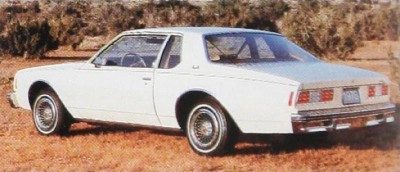
1978 Chevrolet Impala and Caprice Facts
| Model | Weight Range (lbs) | Price Range (New) | Production Quantity |
|---|---|---|---|
| Impala | 3,511-4,071 | $5,208-$5,904 | 290,744 |
| Caprice | 3,548-4,109 | $5,526-$6,151 | 321,653 |
1979 Chevrolet Impala and Caprice
Even in 1978, the momentum did not stop. If you’re looking for a 1979 Chevrolet Impala or Caprice, you’re looking at the end of an era. These full-size Chevrolets are still a mainstay of the American auto market, even if things are changing behind those giant wheels.
Sales volume and body style
Although the coupe market continues to decline, overall production of the full-size lineup remains strong. Four-door Impala and Caprice sedans were standard, dwarfing two-door variants. Landau coupe? These are a niche within a niche, appealing to buyers who want luxury but don’t have the practicality of a sedan.
“Most coupe buyers prefer the refined Caprice Classic.”
The choice of interior is simple. Choose fabric or vinyl. One noteworthy option from this model year is the 50/50 split front seats. This is a holdover from decades ago and could be called outdated by modern standards, but it allowed for some flexibility in passenger comfort.
Engine technical data and values
Behind the scenes, a conservative strategy is adopted. The standard engine is still a 110 horsepower inline-six. It’s not exciting. It’s not fast. But it worked.
For those who need more pulling power, GM offers two V-8 options.
* 305 cubic inch V-8 : 145 horsepower
* 350 cubic inch V-8 : 170 horsepower
All full-size Chevrolet sedans are equipped with automatic transmissions. At this point, manual transmissions were largely confined to Camaro and Firebird lineups.
California buyers received lower ratings. With emissions regulations tightening and the Golden State leading the way in compliance, West Coast drivers will slightly detuned to their powertrains.
1979 year model information
The 1979 model received minor updates. Body styling remained largely unchanged from the previous year, a common tactic in the late 1970s as manufacturers tightened their budgets and awaited the next generation of models. Concerns about fuel economy are starting to creep into marketing materials, but the sheer weight of these cars means they’re still thirsty.
1979 Chevrolet Caprice continues to outperform the Impala and strengthens its position as the more desirable trim. Buyers are willing to pay for the extra luxury features and prestige that come with the Caprice nameplate.
What to look for now
If you’re looking for survivors today, pay attention to the rust. These full-size Chevys feature rocker panels and frame rails
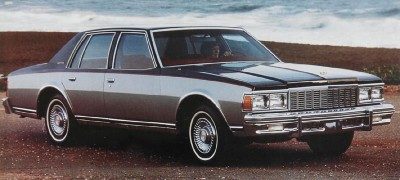
1979 Chevrolet Impala and Caprice: Still King of the Hill
Chevrolet didn’t mince words in 1979. They claim that the 1979 Chevrolet Impala and Caprice are the benchmark for full-size success. If you want to know how a big car performs, compare it to these two cars.
The irony? The same division that claim to be superior also advertise the fuel efficiency. They still call the Caprice “the new Chevrolet.” That label stuck from the 1977 downsizing era. This year, the changes are subtle.
Subtle updates to the main assembly
1979 Chevrolet Caprice Classic gets a new look. A segmented grille with bold vertical accents replaced the previous design. The headlights have also been revised. The coupe and sedan inherit a refined version of the classic triple-segment taillights.
Chevrolet’s sales brochures was loud about it. “America has driven it to the top.” They call it the “new generation”, which has become “the most popular of our times”.
Why the 1979 Model Matters
These cars defined the full-size car market in the late 1970s. The 1977 downsizing was a success. Improvements were made in the 1979 update. It’s not a revolution.
- Grille: Segmented design with vertical accents.
- Taillight: Refined triple-segment layout.
- Marketing: Despite its size, efficiency is the focus.
1979 Chevrolet Impala remains sales leader. The Caprice are at the top of the trim ladder. Both benefited from earlier downsizing. Drivers enjoy better fuel economy without losing the feel of a larger vehicle.
The Legacy of “The New Chevrolet”
The “New Chevrolet” label is a brand strategy. It reminds buyers that the old, gas-guzzling giants are no more. The 1979 models were lighter. It’s more efficient.
But it still looks like a Chevrolet. Big. Bold. Familiar.
Chevrolet claims to be standard for more than just pride. This is sales data. These cars outsold competitors. These set the trend for full-size vehicles in the late 1970s.
The 1979 Impala and Caprice were more than just cars. They are statements. Efficacy statement. style. America rules you.
Does this subtle update matter to today’s collectors? Probably not. But for 1979 buyers, it was a sign of continuity. progress. And success.
The brochure was right. America drove these to the top. For a brief moment in automotive history, Chevrolet completely dominated the full-size market.
What’s next for the big Chevrolets? The 1980s brought sharper angles. and tighter regulations. In 1979, however, the old guard still held sway.
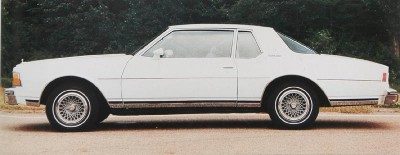
The engine selection remains conservative. There’s a base 250-cubic-inch six-cylinder engine and a 305-cubic-inch V-8. For serious power, go for the 350-cubic-inch V-8 with 170 horsepower.
Chevrolet has filled the cabin with comfort. Electric sunroofs are still popular. 6-way power driver’s seat. Intermittent Wiper. The Comfortron automatic air conditioner has a big impact on the climate. An electric rear defroster keeps the glass clear. Power antennas. Power trunk openers.
There was a separate come with a separate booklet. Malibu and Impala police versions have their own pages. Nova is no longer on this list.
Sales volume dipped. Just a fraction. Total full-size production was 588,638 units. That was it. Still, it is better than the manufacturer’s series of other manufacturers. Malibu is also not far behind in the ranking.
For millions of Americans, the equation is simple. Chevrolet equals a large car. Even scaled down. Name and size are almost synonymous.
1979 Chevrolet Impala and Caprice Facts
| Model | Weight Range (lbs) | Price Range (New) | Production Quantity |
|---|---|---|---|
| Impala | 3,495-4,045 | $5,828-$6,947 | 270,907 |
| Caprice | 3,538-4,088 | $6,198 – $6,960 | 317,731 |
1980 Chevrolet Impala and Caprice Classic
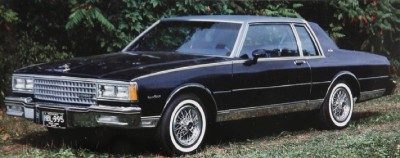
Subtle changes to the 1980 Impala series
For 1980, the Chevrolet Impala and Caprice received their first updates since being downsized in 1977. The changes aren’t drastic. These are subtle tweaks that tweak the profile rather than reinvent the wheel.
The bonnet and front fenders are slightly lower. The silhouette is rounded and gives a soft impression. The coupe lost the wrap-around rear window. Instead, the flat glass panels are attached to the more vertical roof pillars. Although the pattern has changed, the footprints are still familiar.
Under the hood, buyers can choose between a V-6 or V-8 engine. Gone is the old 250-cubic-inch inline-six. It was replaced with a new 229 cubic inch V-6 engine. This new base unit produces 115 horsepower. This corresponds to the result of previous versions. The same cannot be said for California buyers. They got a Buick-made 231-cubic-inch V-6. It produced 110 horsepower. The power is slightly lower, but necessary to comply with emission regulations.
V-8 option increases range. The 267-cubic-inch engine produced 120 horsepower. The 305-cubic-inch V8 engine produced 155 horsepower. These numbers define the performance range for the year.
Wagons has a small V8 engine as standard. This is the basic configuration. 305 is optional. The same goes for the 105-horsepower Oldsmobile 350 V-8 diesel. Diesel is still a narrow choice for full-size sedans.
The transmission situation is simple. There is only one option. 3-speed automatic transmission. Nothing else is available. Simplicity is the way to go.
“The 1980 Impala put consistency ahead of change and kept the three-speed automatic as the only transmission option, even though it opted for a new engine.”
This approach reduces costs. It also keeps the complexity low. Enthusiasts may want more options. But the market doesn’t need them. The 229 V-6 became the standard entry point. If you need more torque, the 305 is the best choice. Diesel is for the pragmatic minority.
The lines under the hood change the way your car drives on the road. The power plant remains conservative, but looks a bit more aggressive. Vertical pillars improve rearward visibility. This is a real win. Rounded fenders soften the front end.
This is the year of sophistication. It’s not a revolution. The Impala remains stable in its position. “Caprice” does the same thing. Both models are based on proven components. Although the 229 V-6 was a new engine, it was essentially a smaller version of the existing architecture. 305 is a well-known area.
Buyers looking for efficiency chose the V-6. Those looking for performance chose the 305. Diesel engines are an afterthought for many people. It sat in the back of the lineup. A three-speed automatic transmission connects everything. There are no exceptions. There is no other option.
The design changes are small. But they show a transition to smoother lines. The flat rear window is a return to tradition. The wraparound is a holdover from the 1970s. It’s gone now. The car looks more beautiful.
Sales may reflect this stability.
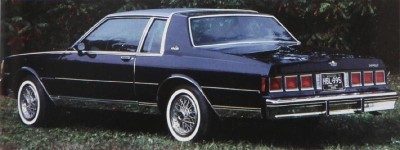
1980 Chevrolet Massacre
The two-tiered strategy continued for some time. The Impala is at the bottom of the food chain and the Caprice Classic at the top, looking down on other cars with chrome and vinyl roofs. Four-doors moved units. Wagons moved units. Two doors? only. The Caprice consistently outperformed its base model.
Then came 1979.
The fuel crisis did not only affect sales. It breaks them. Gas prices spiked. Nobody buys boats with wheels anymore. The new Citation attracts buyers who might otherwise have looked at a full-size Chevrolet model. The results were dismal for Detroit’s largest sedan.
Trading volume has collapsed.
We are talking about a drop from half a million units in 1979 to less than half the number in 1980. It was a bloodbath. The Impala and Caprice never regained their former glory. They became niche products in a changed market.
1980 Chevrolet Impala and Caprice Classic Facts
model
Weight Range (lbs)
Price range (new)
Production quantity
Impala
3,344 ~ 3,924
$6,535 to $7,186
99,527
Caprice
3,376 ~ 3,962
$6,946 to $7,536
137,288
Sports Coupe
3,104 ~ 3,219
$6,524 to $6,604
116,580
Landau Coupe
Not available
$6,772 to $6,852
32,262
1981 Chevrolet Impala and Caprice Classic
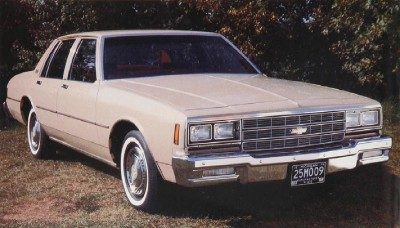
1981 Impala and Caprice technology
For the most part, Chevrolet’s full-size lineup gets a subtle makeover. It’s not 1981. The sheet metal looked familiar, but the real story is in the mechanics.
General Motors added the Computer Command Control (CCC) system. It’s not just about tightening emission regulations. It’s all about drivability. The computer controls the mixture more precisely than previous systems. The result? Smoother operation.
But the headline feature was new. four-speed automatic transmission with an overdrive fourth gear. The ratio is 0.67:1 with long legs. This is less than the engine speed at cruising speed.
This wasn’t standard across the board. Only one engine option can be combined. 305-cubic-inch V-8.
The transmission also has a lock-up torque converter. When it is turned on, there is no slipping. The power transmission becomes direct.
For a heavy land yacht, these numbers are impressive.
**EPA highway ratings hit 26 mpg. **
This is not just a laboratory statistic. Actual driving closely matches this number. For a full-size car in 1981, this was impressive.
Chevrolet has managed to balance emissions compliance with real fuel savings. The 1981 Chevrolet Impala and Caprice Classic proved that big cars could still be efficient. If you’re looking for the best gas mileage of any 1981 full-size sedan, these are the best choices.
Visual changes are minimal. But under the hood, the CCC emissions system and 4-speed automatic transmission make a noticeable difference.
Why is this important? Because it shows that GM can innovate even under severe constraints. lock-up torque converter is important. Bridging the gap between comfort and efficiency.
Today, the number does not seem very large. But at the time, the 305 V-8’s 26 mpg was the benchmark.
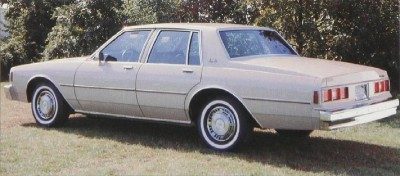
The engine selection for 1980 remained unchanged from the previous year, except for a slight decrease in power. The base engine is still the 229-cubic-inch V-6. It produces 110 horsepower. If you’re in California, you can get your hands on a Buick-built 231 V-6. It’s the same power. Same 110 horses.
At the top, buyers can specify a 267-cubic-inch V-8. It produced 115 horsepower. Not a lot, but it was an option. The real choice for any power was the 305 V-8. This unit produces 150 horsepower.
In 1980, diesel options were limited. Only the station wagon was equipped with an Oldsmobile 350-cubic-inch diesel V-8. In 1981, the market changed. That diesel became available across the entire Impala and Caprice range.
1981 Chevrolet Impala and Caprice Classic Facts
| Model | Weight Range (lbs) | Price Range (New) | Production Quantity |
|---|---|---|---|
| Impala | 3,326-3,897 | $7,129-$7,765 | 85,964 |
| Caprice | 3,363-3,940 | $7,534-$8,112 | 133,461 |
1982 Chevrolet Impala and Caprice Classic
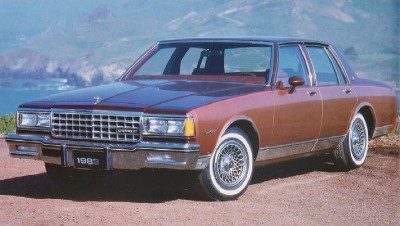
1982 The composition was reduced
Rumor has it that the Chevrolet Impala and Caprice Classic may be discontinued after the 1982 model year. A funeral is expected for these full-size icons.
Instead, GM dialed it back.
The changes are minimal. The strategy is simple. It’s about cut the dead weight.
Sales did not increase and killed two specific bodies. The Impala sports coupe is gone. The same applies to the Caprice Landau Sports Coupe.
One door is still open.
The Caprice sports coupe survives. This is the only two-door option in the lineup.
“The low-selling Impala Sport Coupe and Caprice Landau Sport Coupe are didn’t make the cut.”
Enthusiasts who wanted a four-door car. But if you wanted a two-door in 1982, I bought a Caprice. Or you looked elsewhere.
The era of diversity is coming to an end. Efficiency was opening.
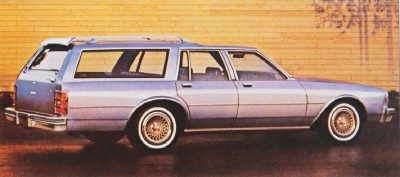
The engine range has not changed significantly. A four-speed automatic transmission was new to the previous year’s 5.0-liter V-8, which eventually trickled down to a smaller 4.4-liter (267 cubic inch) V-8. This move gives buyers choice without changing the core mechanics.
Chevrolet uses a 3.8-liter 229-cubic-inch V6 as the standard powerplant for coupes and sedans. Wagons has a small V8 engine as standard. California is, of course, an exception. Smog laws require state-mandated coupes and sedans to use Buick’s 231-cubic-inch V-6 engine. Wagons in the Golden State? They made the big 305-cubic-inch V-8 standard. Because of its presence, the Olds 350 diesel V-8 engine remains an option.
Gas prices have risen. Old big boats like Impalas and Caprices suddenly looked like liabilities rather than status symbols. But they are still value plays. The spacious Impala sedan can be purchased from the dealer for $7,918. The more prestigious and popular Caprice Classic Sedan costs just $8,367.
Compare with your competitors. Prices for the Chevrolet Cavalier CL subcompact start at $8,100. A Celebrity intermediate? $8,600. For a few hundred dollars more than a compact, you can get a full-size cruiser that can swallow passengers. This calculation doesn’t make sense, but the market likes it.
1982 Chevrolet Impala and Caprice Classic Facts
| Model | Weight Range (lbs) | Price range (new) | Production quantity |
|---|---|---|---|
| Impala | 3,361-4,050 | $7,918-$8,670 | 64,679 |
| Caprice | 3,373-4,010 | $8,221-$9,051 | 123,510 |
1983 Chevrolet Impala and Caprice Classic
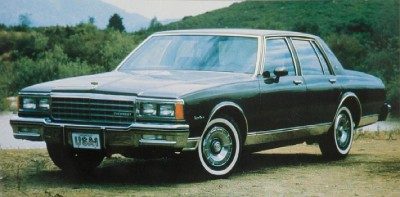
The Great Slaughter: What Survived the 1983 Impala Cut
Rumor has it that the 1983 Chevrolet Impala and Caprice Classic are being scrapped. The full-size sedan market is in decline. Gasoline prices have stabilized, but consumer preferences have shifted towards smaller and more efficient cars. But these models are not going away. They stayed. However, there is no excuse not to do some serious pruning.
Chevrolet narrowed down its lineup with ruthless precision. The Caprice Coupe was missing. It’s not just a matter of reduced production. It marks the end of an era. This was the last two-door version of the Caprice. The Impala wagon also disappeared from the list.
Engine compartment: streamlined power system
Mechanical changes are just as fast. The smaller 4.4-liter V8 engine has been discontinued. It never gained traction. Even in the midst of the fuel crisis, buyers ignored this. Removing this simplifies the list of options.
This way, the basic powertrain can handle heavy lifting. The 3.8-liter Chevrolet V-6 was the entry point. It produced 110 horsepower. This is good enough for cruising, if not exciting. The California driver used a similar Buick engine due to stricter emissions regulations.
If you need more torque, the upper trim offers an option. The 5.0-liter V-8 gasoline engine produces 150 horsepower. This unit is standard on other van models. Provides the electricity needed to transport goods.
Diesel engine options and transmission selection
Diesel is still an option. The 5.7-liter V8 diesel engine produces only 105 horsepower. It is aimed at vehicle buyers and drivers who prioritize fuel economy over performance.
All engines have a three-speed automatic transmission as standard. If you need better shift points or traction, you can opt for a four-speed automatic transmission. This is an update. It is not a necessity. However, it is an option for those who value the driving experience.
Significant changes were made to the 1983 model year. It’s a bad year. Chevrolet is gearing up for even bigger things. Or maybe something smaller. The full-sized giant is still eating. But their lives are still hanging in the balance.
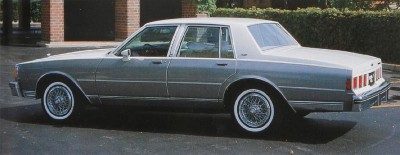
Gas prices have stopped rising like a mountain goat. They plateaued. Shoppers stop worrying about their wallets and start focusing on their driving habits. Suddenly, people started needing space again. for torque. With its long hood and big V-8 engine, this full-size American sedan is breathtaking.
Chevrolet had been in a holding pattern. Lean years. Budget cuts. Why replace a platform that still moved product? It’s hard to justify the engineering costs when the old cars were still selling near 200,000 units a year. But the numbers don’t lie. Sales are on the rise. Although the Impala and Caprice have lost their coupe versions, they have a soul that surpasses anything else in the range. They are cash cows. The reliable workhorses.
Then came 1984.
The numbers don’t lie
To understand this change, you need to look at the raw data. The ’83 model proved the concept was still valid. Here is what moved off the lots:
1983 Chevrolet Impala and Caprice Classic Facts
| Model | Weight Range (lbs) | Price range (new) | Production quantity |
|---|---|---|---|
| Impala | 3.490-3.594 | $8,331-$8,556 | 45,154 |
| Caprice | 3.537-4.092 | $8,802-$9,518 | 175,641 |
That Caprice? The number is about 176,000. This is a huge amount for the trimming of the financial world. This is no longer a luxury. It’s about value. That means buying a full-size car for less than $10,000.
1984 Chevrolet Impala and Caprice Classic
The momentum continued. But in 1984 there was a subtle change. The body styles were aging. The emissions controls are getting stricter. But the ultimate attraction remains the same.
If you bought your Impala in ’84, it was in volume sales. author. cheaper. The entry point to the GM full-size experience. You don’t have to pay for Chrome overload. You pay for a floor that won’t collapse even for a family of six.
The Caprice was the halo. One with vinyl roof option. The better interior materials. It sat higher in the price bracket. Although the market share of Japanese sedans has slowly increased, they still retain the prestige of a badge coveted by suburban families.
Why did they stick with this platform? Because it works.
The 305 V-8 was still the heart of the operation. Not powerful by today’s standards. By ’84 standards it was efficient. You can join the freeway without a permit and still meet CAFE requirements.
The weight range says it all. The Impala sat around 3,500 lbs. Even lighter than the 70s monster. heavier than the Corolla
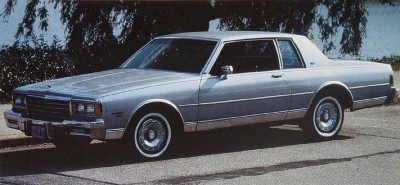
The last big coupe
The full-size Chevrolet lineup is settling into a familiar rhythm for 1984. The Impala and Caprice Classic sedans continue to be the backbone of this segment. But there’s a twist. The 1984 Caprice Classic Coupe is back from the dead.
Removed after the late 1982 model year. It dropped like a hot potato. This time it’s not just a comeback. It’s a statement. This is the only two-door model available in the entire Caprice/Impala range. People show up. There are almost 20,000 orders for this type. This is not a small number for a small volume, narrow range. This is proof that rear-wheel drive still has a place in a sedan-dominated world.
The rest of the changes are subtle. Pedestrian updates will go unnoticed unless you’re actively looking for them.
Small changes, big feelings
Get the wipers. Previously, you had to reach into the dashboard to adjust the interval speed. Annoying. Clunky. In 1984, GM moved the controls to the turn signal shaft. Right where your hand already lives. It’s a small ergonomic change, but it changes the way your car feels every time you drive it.
Then there’s cruise control. The optional package got an upgrade in precision. Old systems jumped in big increments. This allows you to adjust the speed one mile per hour at a time. 1 mile per hour. If you wanted a 65 instead of a 63, you got what you wanted. No need to guess.
These are not revolutionary changes. They are being improved. But when you’re selling cars that feel increasingly dated to the public and you’re moving to imports or smaller, more efficient vehicles, these small quality-of-life improvements become important.
Why coupes matter
The revival of the Caprice Classic Coupe in 1984 did more than fill a showroom void. It’s about identity. The Impala is the people’s car. Practical. Reliable. The Caprice sedan was popular with police and taxi drivers (although police sedans often omitted the V8 for durability reasons). coupe? That was different.
Attract specific buyers. People who want a full-size GM vehicle, not a four-door obligation. Maybe they like a smoother roofline. Maybe they like the idea of not looking like a fleet vehicle. 20,000 units sold shows that this segment exists. It’s small, but it’s real.
Interior updates improve this. Moving the wiper to the spindle isn’t just for convenience. It’s about modernizing the cockpit without completely redesigning it. Incremental cruise control is another step in making this big cruiser feel less like a ’70s boat and more like a car you knew the ’90s were coming.
The Impala and Caprice sedans continue to dominate sales. But the return of the coupe is a reminder that there is still room for variety. Even in the twilight years of the big rear-wheel-drive Chevrolet, General Motors listened enough and bring back the two-door. They just didn’t last long. 1984 coupe
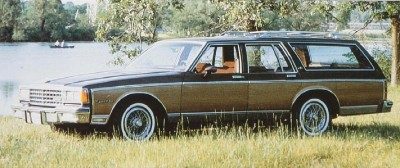
Transmission range
The engine has not changed much. The base coupe and sedan have Chevrolet’s 3.8-liter V-6 engine. It produced 110 horsepower. A similar Buick V-6 was packed into the car bound for California. The wagon comes standard with a 5.0-liter V-8 engine. It has 150 horsepower. Can be found elsewhere if necessary. There is also another option. 5.7 liter V8 diesel engine. It produced 105 horsepower. Available for all models.
The transmission follows a predictable pattern. A three-speed automatic transmission is standard on all models. That one got a four-speed. It was a 4 speed. A diesel engine is optional.
Sales and value
Prices start at less than $9,000. In 1984 dollars, that was a bargain. The buyer agreed. Sales were up 25% over 1983, with more than 276,000 people shopping.
1984 Chevrolet Impala and Caprice Classic Facts
| Model | Weight Range (lbs) | Price Range (New) | Production Quantity |
|---|---|---|---|
| Impala | 3,489-3,628 | $8,895-$9,270 | 55,296 |
| Caprice | 3,532-4,053 | $9,253 – $10,210 | 221,199 |
1985 Chevrolet Impala and Caprice Classic
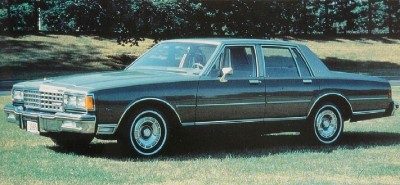
1985 Chevrolet Impala and Caprice Under the Skin
The 1985 Chevrolet Impala and Caprice Classic are essentially unchanged from their predecessors, but the mechanical changes tell a different story. Externally, the update is subtle. Inside, you’ll find new dashboard graphics to break up the monotony. The real shift takes place underneath the sheet metal.
Chevrolet spent more time improving the ride quality. The suspension was firmed up to eliminate the “floating feeling” that was common in early models. If you specify the optional F41 suspension package, you already knew the difference. Without it, the ride felt like a boat. the chassis felt grounded. The car had become too heavy and for its own good.
The new heart of the full-size sedan
The big headline comes from the engine compartment. Chevrolet has finally ditched the old 3.8-liter V-6 engine it shared with Buick. They were outdated. The replacement? A brand-new 4.3-liter V-6.
This is not an entirely new design. This is Chevrolet’s legendary small-block V-8 with two cylinders chopped off. Simple engineering. Proven architecture. The result is a more robust powerplant that’s perfect for the budget full-size sedan market.
How the of the 1985 Chevrolet V6 change?
The new 4.3 liter engine comes standard with throttle body fuel injection. This is a step up from previous carburetor options. The output? 130 horsepower. That’s 20 horses more than the old 3.8-liter V6 engine.
For modern muscle car fans, 20 horsepower might not be a big deal. It was meaningful from a heavy boxy 1985 sedan. This means better acceleration off the line. This means less stress on the highway when you’re climbing a hill with a full trunk.
“The new 4.3-liter V-6 is based on a small-block V-8 with two cylinders chopped off removed, producing 130 horsepower with throttle-body fuel injection.”
This move makes sense. The Buick engine was a stopgap. Chevrolet’s compact DNA ensures parts availability and mechanical sympathy. This is a practical choice for mass market cars. But it worked.
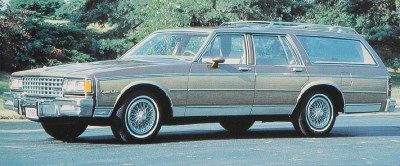
Transmission tuning and sales
Subtle but meaningful tweaks have been made to the 5.0-liter V8 engine. The compression ratio has been bumped up. This brings the total output to 165. This is not a revolution. It’s just an improvement.
The 5.7-liter V8 diesel engine remains unchanged. 105 horsepower. No changes. If you’re looking for low-end torque and fuel economy, this is the only real option besides the gasoline engine.
The Transmission logic is simple. Both the V-6 and diesel V-8 use a three-speed automatic transmission. It can be upgraded to four speeds for an additional fee. The 5.0-liter V8 engine comes with a 4-speed transmission as standard. There was no hesitation.
Full-size Chevrolet has not lost its grip on the market. The sales volume remains at around 265,000 units. The lineup still includes the Impala sedan and Caprice, and includes coupes, sedans, and wagons. They remain a staples. People are buying it in droves.
1985 Chevrolet Impala and Caprice Classic Facts
| Model | Weight Range (lbs) | Price Range (New) | Production Quantity |
|---|---|---|---|
| Impala | 3,508-3,634 | $9,519 – $9,759 | 55,438 |
| Caprice | 3,525-4,083 | $9,888-$10,714 | 211,355 |
The Caprice outperformed the Impala by a wide margin. More than 211,000 of them have been produced. The Impala is cheap and light, but couldn’t match that volume. The luxury of the Caprice is clearly superior.
1994 Chevrolet Caprice and Impala SS
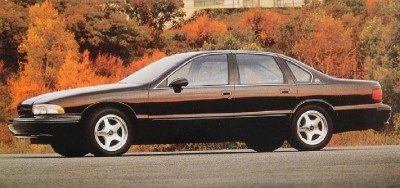
A real show vehicle
It started with a dream in the trailer. The 1994 Chevrolet Impala SS wasn’t born in a boardroom. It came straight from the 1992 show car. Chevrolet put it in showrooms in mid-1994. It immediately ignited the enthusiast crowd.
This name carries a lot of weight. It stems from Chevrolet’s deep performance roots. But let’s be honest about what it was. The Caprice-based Impala SS is quite the styling exercise. Looks mean. It doesn’t necessarily drive like a supercar. But it worked. Its success shows that even a boring front-wheel drive car can sell if you dress it up right. It spawned a generation of concept-inspired trims.
Behind the scenes, things got serious. Just in time for the release, Chevrolet added some teeth. It is equipped with a significantly improved 5.7 liter V8 engine. It has the legendary LT1 badge.
LT1 Specs and Reality
The engine ran on lower compression. This means it accepts regular gas. Does not require premium fuel. The Impala SS offers 260 horsepower. Compare with other LT1 applications. The Camaro Z28 has 275 horsepower. The Corvette squeezed out 300 horsepower. Both require premium fuel to achieve these numbers.
Still, 260 horsepower is a big jump. That adds 80 horsepower over the previous 5.7-liter V-8 in Chevrolet’s full-size lineup. That’s a lot of torque and acceleration for a body-on-frame sedan.
The Standard Option and Transmission Limits
Not everyone buys a big V8 engine. Introducing the new 4.3 liter V8 engine. It produced 200 horsepower. This engine is standard on Caprice sedans and wagons.
The Impala SS comes standard with the 5.7L LT1. However, the LT1 can be optionally added to the regular Caprice. The choice is yours.
There was only one transmission available. 4-speed automatic transmission.
There is no manual. No overdrive beyond fourth. It’s just a solid, heavy-duty automatic. It suited the philosophy of the time. Delivers explosive power when you need it and offers a smooth cruise. The Impala SS has nothing to do with track time. It’s about getting people’s attention and moving people with authority. This laid the groundwork for the next wave of American performance sedans.
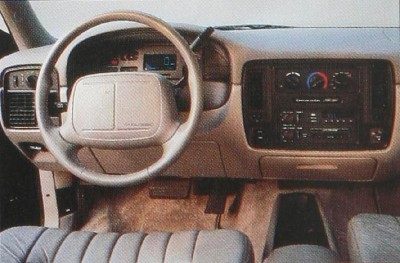
The 1994 Impala SS was more than just a badge-engineered sedan. This is a statement. Black on black statement. You’ll know when you see one. The exterior is strictly based on a monochrome model, i.e. only black paint. There are no metallic flake options. It’s not white. Very solid, deep black. The “retro” badge and unique insert on the C-pillar are full of nostalgia. People call it “dog leg”. These break up the long hood and give the rear profile a unique, aggressive stance.
Next, the wheels. 17-inch 5-spoke aluminum wheels. wide. Low profile. They filled the wheel wells. But therein lies the real magic. Chevrolet installed a lowered sports suspension with De Carbon gas pressure shock absorbers. The previous full size Chevy floated. This one planted itself. Handling has been greatly improved. Power comes from a powerful V8 engine that sends torque to the rear wheels via a standard limited-slip differential. Stopping power? Four-wheel discs. standard.
Internally, it means business. bucket seat. Black dashboard trim. This is what a performance car should look like. But not everyone is happy. Enthusiasts hate column-mounted shifter. And the lack of a tachometer? That was a dealbreaker for many. You can’t watch the needle dance. You just drove. This compromise offends purists.
Other changes to the 1994 full-size range were less sexy. It’s not flashy. But they are important. The passenger side airbag has arrived. The dashboard has also been redesigned accordingly. The instrument panel has also been changed. digital speedometer. Analog auxiliary gauges. Everything is housed in rectangular pod. The radio and climate controls are in a separate unit below. It was cleaner. More modern. In addition, standard air conditioners switched to CFC-free refrigerants. Environmental compliance. It won’t make your car faster, but it will keep it legal.
1994 Chevrolet Impala SS and Caprice Facts
| Model | Weight Range (lbs) | Price Range (New) | Production Quantity |
|---|---|---|---|
| Impala SS | 4,218 | $22,495 | $22,495 N/A |
| Caprice | 4,036-4,541 | $18,995 – $21,35 | 104,724 (including Impala) |
1995 Chevrolet Impala SS
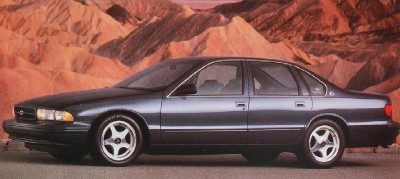
1995 Impala SS: Color enhancements and technology improvements
The 1995 Chevrolet Impala SS arrived with little fanfare because it needed none. The mid-1994 launch, it had already attracted wide media attention and established its position. Only minor changes were made for the second model year.
What is the biggest change? Painting options.
In 1994, the rules were simple. Any color is fine as long as it’s black. This is a bold limitation. In 1995, Chevrolet broke this monopoly. They expanded the palette to include Dark Cherry and a unique Green-Grey shade. You could finally step away from the void.
Interior and sound technology
Under the surface, everything remains familiar. The interior is still gray leather. No beige. No fabric. Just gray.
The real update lived in the head unit. Like its Caprice counterpart, buyers can choose between a premium cassette player or a CD player. These aren’t just stereos. They featured speed-compensated volume control. The system adjusts the volume of the radio according to the ambient noise level. Wind noise dropped? The volume decreases. You don’t have to fiddle with knobs every time you hit the highway.
This is a small adjustment. But in a car meant for cruising, it’s important. The Impala SS is more than just power. It was about comfort. In 1995, Comfort was introduced in three colors. black. black cherry. Greenish gray.
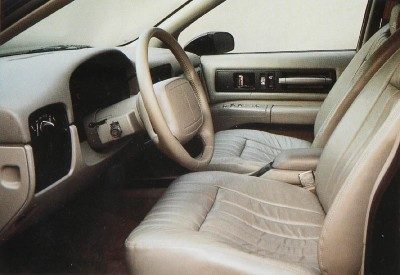
The formula hasn’t changed. not much. We still have the 260 horsepower 5.7L LT1 V-8. Together with a 4-speed automatic transmission. It has the same transmission as the regular Caprice. This makes the SS feel more like a pretty car than a performance car. Updated badge design. This distinction is also becoming blurred. The Caprice features the Impala’s distinctive dog-leg rear pillar design. So it looks the same from behind the B-pillar.
But don’t ignore it completely. The suspension is actually smarter here. It’s even more complicated. It brings a nimble ride that doesn’t give the 2-ton sedan a sense of mass. You can safely throw it in a corner. This is unusual for a full-size cruiser. The unique monochrome painting is also followed. The aerodynamic body helps. Beautiful 17 inch aluminum wheels. These bikes are a real attraction.
1995 Chevrolet Impala SS Specifications
| Model | Weight Range (lbs) | Price Range (New) | Production Quantity |
|---|---|---|---|
| Impala SS | 4.036 | $22,910 | Not Available |
1996 Chevrolet Impala SS
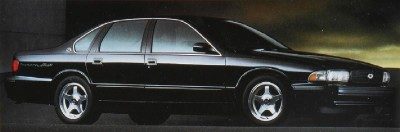
1996 Chevrolet Impala SS: The Last Bow of Perfection
It was a cruel twist of fate for the 1996 Chevrolet Impala SS. This year marked the absolute pinnacle of that line of performances and its final curtain call. This model was effectively doomed with the discontinuation of its parent platform, the Caprice. But before the curtain fell, the engineers managed to improve the already fine machine and tighten all the loose ends just as the production axe started swinging.
Important interior improvements
From the outside, it doesn’t look like the interior has been completely renovated. The body panels are almost unchanged from last year. But what about inside? Here’s the real story.
Critics and fans alike criticized the previous generation for feeling more like a fleet vehicle than a performance car. Is the shifter attached to the steering column? It’s unacceptable for a car with “SS” on the badge. Who wants to hunt-and-peck for gears when determining shift points?
Chevrolet fixed it. They moved the shifter to the floor. The driver’s hands can now really use the transmission in a sporty way. But they didn’t stop there.
A tachometer has been added to the dashboard. It wasn’t just an idea. This is necessary. A performance car without the ability to monitor engine speed is just a fast sedan. This addition shows intent. It tells you exactly when to downshift. It turned the cabin from a passive viewing platform to an active cockpit.
“After all, there’s nothing sporty about shifting gears with a column-mounted lever. What performance car would be complete without a tachometer?”
Why 1996 was the perfect time
Rumors about the Arlington Assembly Plant have been circulating for months. It is rumored that the factory will switch to the production of pick-up trucks. If this happens, the sedan chassis may be discontinued. “Caprice” continues to live, virtually carbon-copy form, stubbornly refusing to evolve. But what about the Impala SS? It developed to the end.
Engineers addressed almost every complaint about the original concept. The steering column shifter was gone. The tachometer is there. The suspension tuning has been improved to handle the 350 V8’s torque more effectively than last year’s model.
The Caprice Shadow
The 1996 Impala SS tragedy meant it was too late to save the platform, but just in time to prove its potential. Chevrolet can sold as many Impalas as they could build without offering anything new. This name carries a lot of weight. But they don’t just offer the same old stuff.
they listened. They changed the interior. They made it feel like a car built to drive, not just commute.
End of an era
When Caprice died, it took the Impala SS with it. There was no sequel. There is no 1997 model. Just a final run of cars to be polished, knowing they were the last of their kind.
For the gearheads who bought these in 1996, this was more than just a purchase. It was a collection. The opportunity to own the most complete version of a muscle sedan
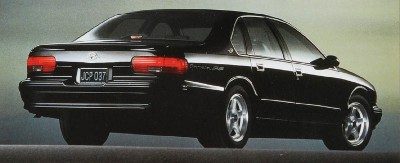
The first major obstacle for the 1996 Impala SS was an identity crisis. Early prototypes felt like dressed-up Caprice. To solve this problem, Chevrolet moved the shift lever from the column to the floor. They didn’t just slap a lever in there. They made a real console. It also includes the Impala logo. This small change requires the driver to change their seating position. This gives the car a planted feel.
The dashboard received a similar renovation. Gone are the old digital speedometers. It was replaced by an analog gauge. Added analog tachometer. These are not just aesthetic choices. They were functional ones.
“Both improvements not only differentiate the Impala from the regular Caprice, but also bring it more in line with a true sports sedan.”
These changes are important. What sets the SS apart from the regular Impala. They signaled intent. The digital display feels cold. Analog needles provide feedback. They wiggle. they react. Now this is a sports sedan. Or at least, Chevy wanted it to be one.
Production quantity and price
Chevrolet didn’t expect a big run. About 15,000 units were produced for the 1996 model year. Enthusiasts looked at that number and groaned. It was too few. Not enough to fill a parking lot. Not enough to become common.
It weighs about 4,036 pounds. That is heavy for a V8 sedan. The engine is 5.7L LT1. It produced 260 horsepower. Torque is 330 lb-ft. The numbers for 1996 were not bad. Not groundbreaking. But adequate.
“Most enthusiasts think this is not enough.”
The new price was $24,405. This allows it to compete with other V8 sedans. The Honda Accord V6? No. The Ford Taurus SHO? Maybe. The Impala SS needs to justify its premium. A console can help. Analog instruments can help. The badging helped.
| Model | Weight (lbs) | New Price | Build Unit |
|---|---|---|---|
| Impala SS | 4,036 | $24,405 | ~15,000* |
*The exact build number is not available.
SS legacy
Why is this important today? Because it’s a bridge. It combines the spirit of the old GM muscle car with the new era of electronic control. LT1 is very reliable. The chassis was tough. But the interior was where the character lived.
If you can find a model with a floor shift and analog dial, you own a piece of history. It’s rare. It’s specific. It’s not just the Impala. This is SS.
It’s not a question of whether it’s fast or not. It wasn’t. The question is whether it is special or not. For 15,000 people, yes. What about the rest of us? We just watch from the sidelines.