The Honda Prelude is back. The CR-V has a fresh coat of hybrid paint. On the surface, it looks like spring in Australia’s auto industry.
Except Honda’s sales aren’t skyrocketing. Not even close.
While rivals are chasing record highs, Honda’s growth sits at a modest 1 per cent. That’s barely a blip on the radar. Or is it?
“Yes, when you look at the year-and-year growth, we are up one percent, but that doesn’t tell you everything.”
That’s the opening gambit from Robert Thorp. The director of Honda Australia, who joined forces with CEO Jay Joseph earlier this year to steer the ship through choppy waters.
He’s betting on what you can’t see in the rear-view mirror: order intake.
The Invisible Boom
June was wild.
It was Honda’s best month for order intake in four years. And crucially? Real people placed those orders. No fleet discounts, no government fleets padding the stats. Just everyday Australians writing cheques.
“We’ve got 20 to 30 percent more orders than last year,” Thorp says. “The underlying health of the business is solid.”
It’s a disconnect, sure. You don’t see the sales figures jump, but you feel the demand in the showroom. It’s about timing, inventory, and patience.
Thorp is banking on the second half of 2026 to convert those whispers into shouts. With the updated CR-V, the ZR-V, the new Prelude, and the mysterious “Super-One” coming, the pipeline is full.
“But numbers are just numbers until they’re delivered,” he shrugs.
The Prelude Problem
Let’s talk about the car.
The new Prelude. The $65,000 sports car that feels like a vibe rather than a spreadsheet.
So far? 86 buyers. Since April, 228.
In the grand scheme of mass-market autos, that’s tiny.
Is Honda disappointed? No. They expected slow burns.
“It’s not about volume yet. It’s about inquiry. It’s about foot traffic,” Thorp explains. People walk in. They stare. They test drive. They kick tires. The curiosity factor is through the roof.
And the price tag? It’s fixed. No negotiation.
Honda hates games. When you walk in, that’s the price. Drive away. Plus, there’s a hook. Servicing costs $199 a time for five years. Do the math, and you unlock an eight-year warranty.
“It’s a total ownership package,” Thorp says. “Not just a car. A commitment.”
The EV Dead End?
Here’s the uncomfortable truth. Honda pulled the plug on its 0 Series EVs before they even launched.
Global parent company hit the brakes. Now, Australian roads are seeing EV market share climb toward a quarter.
Honda feels it.
“I’d love an EV in our mid-size segment. But I can’t conjure one out of thin air,” Thorp admits.
For now, they’re doubling down on hybrids.
The logic? Most drivers aren’t ready to leap from petrol to battery. It’s a jump too big. Hybrids are the bridge. The data agrees.
In June, 96% of all CR-Vs and ZR-Vs sold in Australia were hybrids.
“That strategy is working,” he insists.
Sure. Until the cost of logistics squeezes their margins. Fuel prices are record high. Shipping isn’t free. Somewhere between the factory in Japan and your driveway, profits get thin.
“It’s a battle,” he says. “We manage what we can. The rest… well, that’s just business.”
Why BYD? Why Them?
Then there’s the Chinese question.
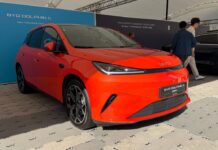
BYD. Explosive growth. Massive lineup. Do Honda execs lose sleep over this?
Thorp waves a hand. Dismissal.
“It’s an extraordinary story,” he concedes. “Maybe a good case study for university. But for us?”
Silence. Then clarity.
They won’t race to build five cars for five segments. Not right now.
Instead, they focus on what works. CR-V. HR-V. Trusted names. Names with history.
“Once you drive them, the spec sheet stops mattering,” he says.
Is that arrogance? Or confidence?
Probably both.
The point remains: Honda isn’t chasing volume for volume’s sake. They want depth. Quality. A reason to drive beyond the showroom.
Whether that’s enough to catch the tailwinds sweeping across Australia remains to be seen.
One thing’s certain: they aren’t panicking.