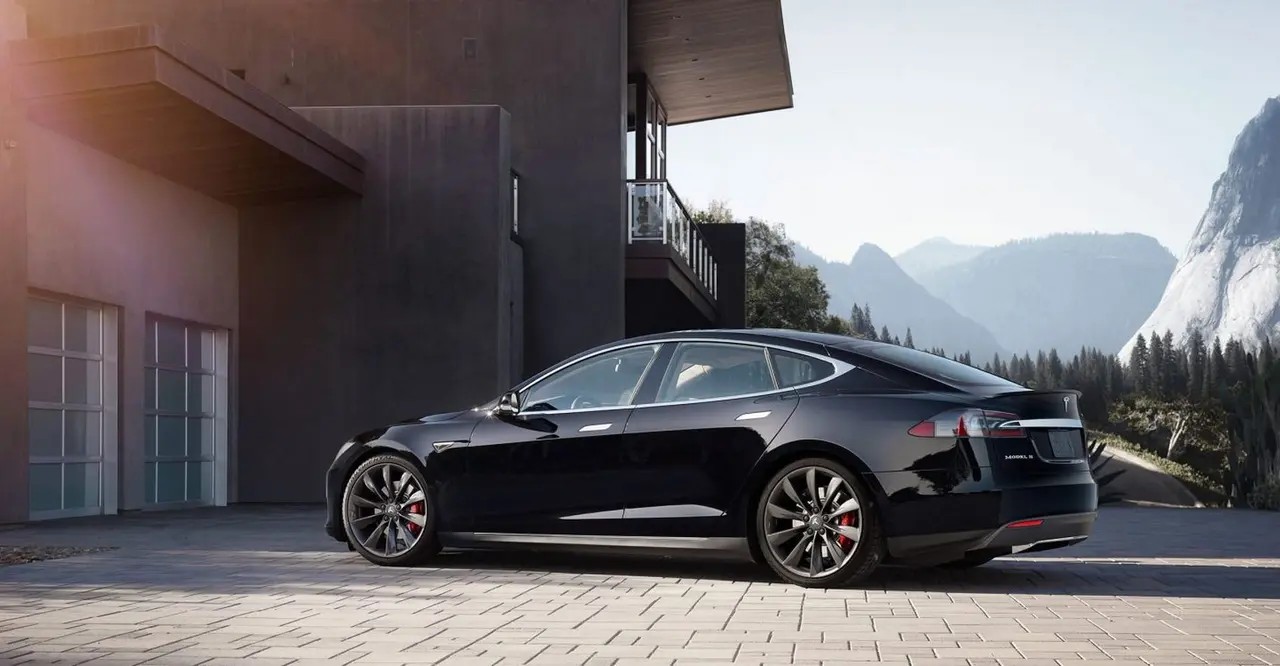
A symbolic barrier has been smashed. For the first time, a production electric vehicle has traveled over 1,000 kilometers on a single charge. The Tesla Owners Club Italia pulled it off with a Tesla Model S 100D. They covered exactly 1,078 kilometers. The run took 29 hours on the roads around Salerno, Italy.
Elon Musk quickly praised the feat. The Tesla CEO had just launched the Model 3, so the timing was sharp. But this wasn’t about peak performance. It was about efficiency.
The team used “hypermiling.” This technique pushes internal combustion and electric cars to their absolute limits. You drive at a constant speed. You brake as little as possible. The goal? Maximize distance per unit of energy.
How they beat the range barrier
The conditions for this record were strict. A bailiff sealed the charging port. No one could add juice mid-run. The car rolled on low-rolling-resistance tires. These tires reduce energy lost to friction.
Inside the cabin, it was bare bones. Air conditioning was off. The speed was locked at a sluggish 40 km/h. That is not highway cruising. It is a crawl. They used Autopilot to maintain that pace. The system handled the steering and throttle adjustments.
The previous record was set in June by a Tesla Model S P100D in Belgium. That car managed 901.2 kilometers. It fell short of the four-figure mark. This time, the gap was wide.
Real world vs. theoretical limits
Let’s be clear. This is not how you drive a daily commuter. Real-world driving demands climate control. It requires dealing with traffic. It means occasional acceleration to merge or overtake.
Tesla’s own online simulator tells a different story. For the Model S 100D, they cite 551 kilometers of range. That figure assumes 100 km/h highway speeds. It also assumes the A/C is running. The outside temperature is set to 20 degrees Celsius.
Compare those numbers to the 1,078 km achieved in Salerno. The difference is stark. It highlights the massive gap between theoretical maximums and practical usage.
Yet, the achievement matters. It proves that 1,000 kilometers of range is physically possible with current battery tech. The gap between reality and this record is closing. Battery improvements are on the horizon. The foundation is already there.
We are just getting started. The infrastructure is still playing catch-up. But the cars? They are leaving us behind.