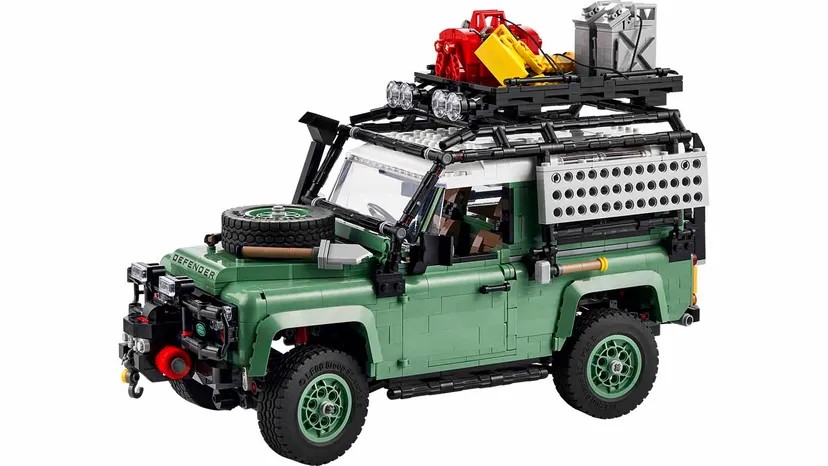
Think LEGO is the world’s biggest tire maker? You’re right. Guinness World Records confirmed it back in 2010. The company churned out 381 million tiny rubber tires that year.
That number isn’t just trivia. It’s a benchmark. LEGO produces more tires than almost any automaker, truck manufacturer, or bicycle shop combined. But toys are only a sliver of the picture. We need to know how many wheels are actually rolling around on the planet right now.
This isn’t a math problem with one clean answer. It’s an exercise in scale. And the number is going to make your head spin.
Toy Wheels in the World
Let’s look at that LEGO stat again. 381 million tires.
If we treat every tire as a wheel, we have 381 million wheels. But LEGO doesn’t just make cars. They make trains, spaceships, and motorcycles. If we assume those were all for four-wheeled toy cars, we’d be looking at roughly 95.25 million individual toy cars made in a single year.
That’s a lot of plastic. But it’s still just one brand, in one year.
Then there’s Hot Wheels. Mattel has pushed out billions of these die-cast models. Almost every single one has four wheels. We’re talking about 6 billion wheels sitting in garages, under beds, and in collector’s bins.
Tonka Trucks tell a different story. Hasbro celebrated the 60th anniversary of the line in 2007 by admitting they’d made over 250 million trucks. Those aren’t four-wheelers. They’re heavy-duty, six-wheeled giants. Hasbro has made plenty more since 2007. Add those up and the toy sector alone accounts for billions of wheels.
We’re still only talking about plastic and metal toys. Now we have to face reality.
Car Wheels in the World
How many cars are there?
The exact count fluctuates daily. New registrations happen every minute. Cars get totaled. Wheels get stolen. But the scale is manageable enough to estimate.
There are roughly 1.4 billion cars on the road globally.
Multiply that by four.
That’s 5.6 billion wheels. Just for passenger vehicles.
But cars aren’t the only thing with rubber. You need to count the trucks. The buses. The motorcycles. The bicycles. The construction equipment. The forklifts in warehouses. The go-karts in your backyard.
The 5.6 billion figure is a floor, not a ceiling.
Add in the 2+ billion bicycles (two wheels each). That’s another 4 billion wheels.
Add the 1.4 billion motorcycles (two wheels each). That’s another 2.8 billion.
We’re already past 12 billion wheels.
And we haven’t even touched on heavy machinery. A single excavator might have four massive rubber tracks or tires. A semi-truck has 18 wheels. There are millions of these on the highway.
Then there are the wheels that never touch the ground. Skateboards. Roller skates. Office chairs. Suitcases. Shopping carts.
The number is staggering.
But here’s the catch
The math gets a bit fuzzy when you move past the standard sedan. But the rough estimate holds up.
Let’s look at the baseline. As of 2022, the world held roughly 1.5 billion cars. A standard car has four road wheels. That’s 6 billion right there. Simple enough.
But cars aren’t just four wheels. Most have a spare. That’s 7 billion wheels.
Then you look inside. There’s the steering wheel. Then there are the gears in the transmission. They spin. They act like wheels. If you count those hidden rotating parts, the average car suddenly has six “wheels.”
Multiply that by 1.5 billion cars. You’re looking at 9 billion wheels just from passenger vehicles.
This number jumps when you include the three-wheeled oddballs.
The Tuk-Tuk Factor
Three-wheelers change the equation. They are everywhere in Southeast Asia and India.
In Thailand, there were about 20,000 tuk-tuks in 2018. India had 1.5 million of them that same year.
That’s 1.52 million vehicles. Each has three wheels. That’s nearly 4.6 million road wheels alone.
If you add the steering wheel and transmission gears, you push that count higher.
Why the Exact Number Is Impossible
You might think we can just add these up. You can’t.
The problem is scope.
Does a wheel on a forklift count? What about a wheelbarrow? A wheelchair? A bicycle? A motorcycle?
The definition of “wheel” varies. The definition of “vehicle” varies.
Some counts include industrial machinery. Some don’t.
If you count every rotating disc on every moving object, the number explodes.
If you stick to passenger cars and light trucks, the number stays manageable. But even then, the data is messy.
Not every car has a spare tire today. Modern run-flats eliminate the spare.
Not every transmission has visible gears that a layperson would call a wheel.
So the 9 billion figure is an estimate. A good one. But not exact.
It depends on how you define a wheel. And whether you’re counting hidden gears or not.
The average car has six wheels if you count the steering wheel and transmission gears.
This is why no one gives a single, final number. The answer depends entirely on what you’re willing to include in the count.
Are we counting every screw? Every bolt? No.
But where do you draw the line?
The Impossible Count of Global Wheels
We scoured the internet for a definitive registry. It doesn’t exist. There is no comprehensive list estimating how many wheels are produced annually or the total stockpile currently in circulation. We tried to build one. We started small. We tallied wheels on toy cars, pickup trucks, and tuk-tuks. The number skyrocketed into the billions before we even finished our sample size.
Now expand that scope.
Think beyond the driveway. Consider the logistics of modern life. Hand trucks roll across warehouse floors. Golf carts navigate manicured fairways. Office chairs spin under desks. Razor scooters zip through city sidewalks. Shopping carts clatter in parking lots. Baby strollers push down suburban streets. Skateboards click on pavement. Dumpsters roll onto curbs. Airplanes touch down with massive landing gear.
Every single one of these uses at least two wheels. And that is before we account for the global bicycle population. There are over one billion bikes on Earth. Multiply that by two. Add the car count. Add the truck count. Add the toy count. The math becomes abstract. The variables are infinite.
Are all toy cars one category? Do we separate LEGO bricks from Hot Wheels tracks from Power Wheels ride-ons? The distinction matters if you are trying to be precise. It doesn’t matter if you are trying to be realistic. Estimating the total number of wheels in the world is an exercise in futility.
So how many wheels are in the world? No one knows.
If you crack this code, let us know. We are genuinely curious.
Doors vs. Wheels: The Social Media War
Here is the only fact we feel comfortable asserting: There are not more doors than there are wheels.
Why does this trivia matter? It fuels a silly debate currently raging across social media platforms. The conflict began when Ryan Nixon, a New Zealander, posed a simple question on Twitter. It escalated from a casual query into an online war. People are fighting over inventory counts. It is the internet, after all.
The premise is simple. Count the wheels. Count the doors. Compare the totals. The consensus among anyone who has actually looked at the data? Wheels win. Hands down. But the argument persists. People love to argue about things they haven’t actually counted.