Concept cars today? They are mostly just production models in disguise. Waiting to hit dealerships next month. It used to be different. Back then the term meant something radical. A glimpse of pure imagination. No limits. No safety committees. Just designers playing god with metal and glass.
We are looking at more than eighty years of weird and wonderful machines. We picked a few. We could have picked ten times this many. Maybe that’s better. Here is the ride:
Buick Y-Job (1941)
Call it the first concept car. Everyone does. It isn’t strictly true—the Volvo Venus Bilo showed up in 1933—but the Y-Job made Harley Earl a legend. General Motors’ design boss needed a canvas. He got it.
The thing looked like a spaceship crashed into a sedan. Hidden headlights. Electric windows. A powered roof tucked under a hard top. These weren’t gimmicks. They set the tone for every American car after WWII. Subtly? No. Loudly? Yes.
Buick LeSabre (1948)
Harley Earl wanted an encore. He got one. The LeSabre screamed optimism. Or at least the optimistic kind that burns oil at three miles to the gallon.
It sat low. Like, a full foot lower than regular cars. A 335hp V8 under the hood. Huge tailfins. That wrap-around windshield was wild then. Now? Standard. It even had a roof that opened if it rained. Automatic weather sensing? In the fifties? Sure. This was the peak of jet-age America. Tailfins everywhere.
“Jet age aesthetics didn’t start with a plane. It started here.”
Ford XL-500 (1962)
Push-button transmission. Glass everywhere. You couldn’t see the sky because of the glass roof. A real problem until AC fixed the heat buildup. Smart.
It also came with a telephone. Built-in jacks for flats. Ford knew we’d be lazy drivers. They just didn’t know we’d still be stuck in traffic. Why drive if you’re just moving metal anyway?
Alfa Romeo BAT 5 (1961)
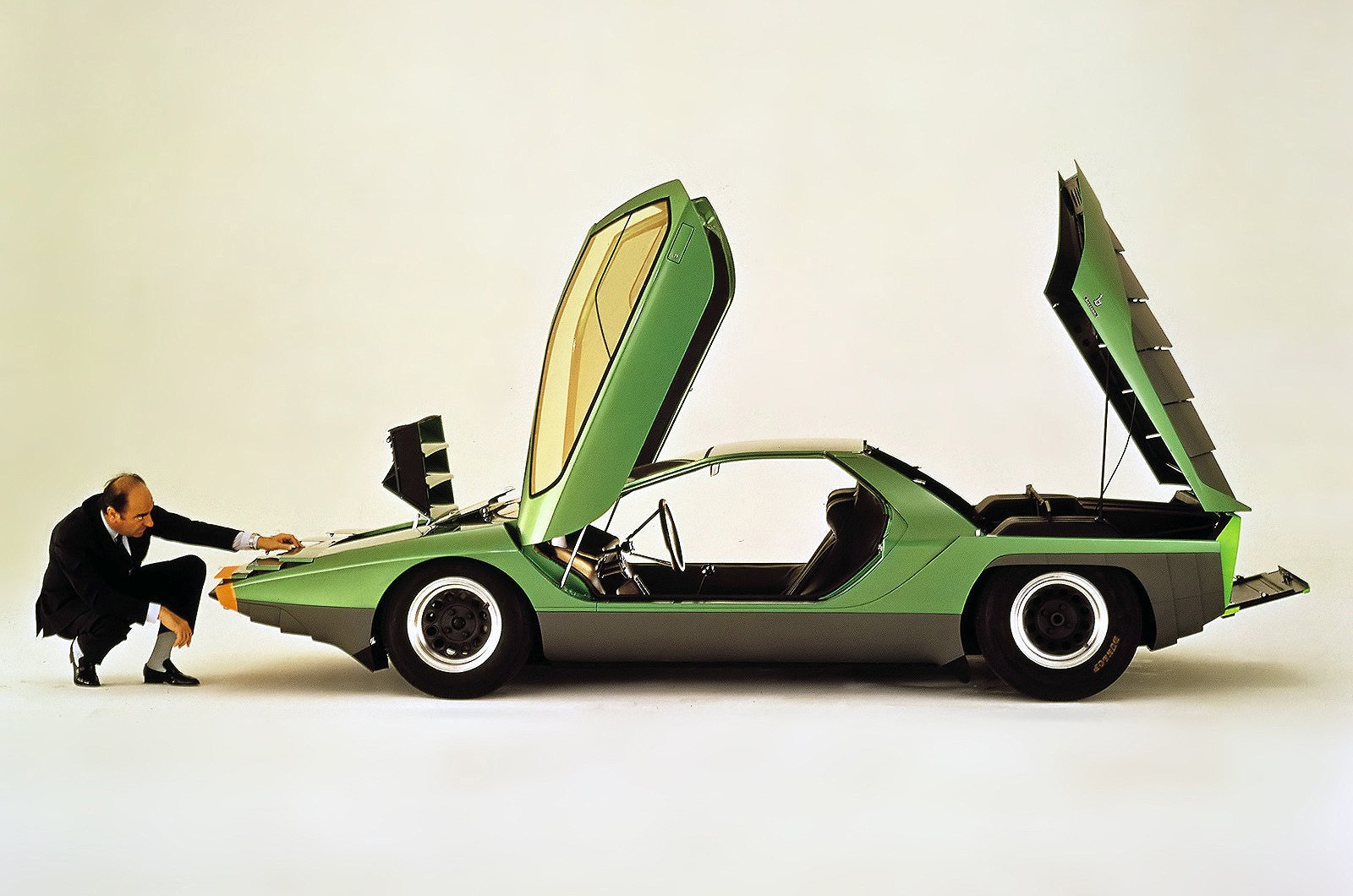
America had fun with fins. Italy went for aerodynamics. Nuccio Bertone wasn’t playing around. He built three BAT concepts. This is the one that hurts your brain.
The BAT 5 looks like a beetle had a baby with a dart. The drag coefficient? 0.28. Tiny. The next year, the BAT 7 hit 0.30? Wait—0.20 on the earlier prototypes. Either way, it slid through air.
The engine was modest. 100 horsepower. The weight? Light as a feather. Top speed of 142mph? Easily. Form over function? Not quite. Both.
Buick Wildcat II (1947)
A flying wing on wheels. Literally. The front end looks like a jet’s cockpit. Glassfibre body. That was new for 1947.
Look closely at the center. Do you see that? That is the spirit of the first Corvette. The Wildcat didn’t just look futuristic. It built the foundation. Without this strange metal sculpture, we wouldn’t have the sports car culture we have today. Coincidence? Hardly.
De Soto Adventurer (1945)
This thing needs its own paragraph. The whole body lifts off. The driver stays seated while the rest of the car rises on hydraulic pistons.
No roof? No problem. It’s an open-air experience. De Soto thought we’d want to feel the sky while stuck in suburban traffic. A noble failure.