The V8 isn’t dead. It just learned how to be fake.
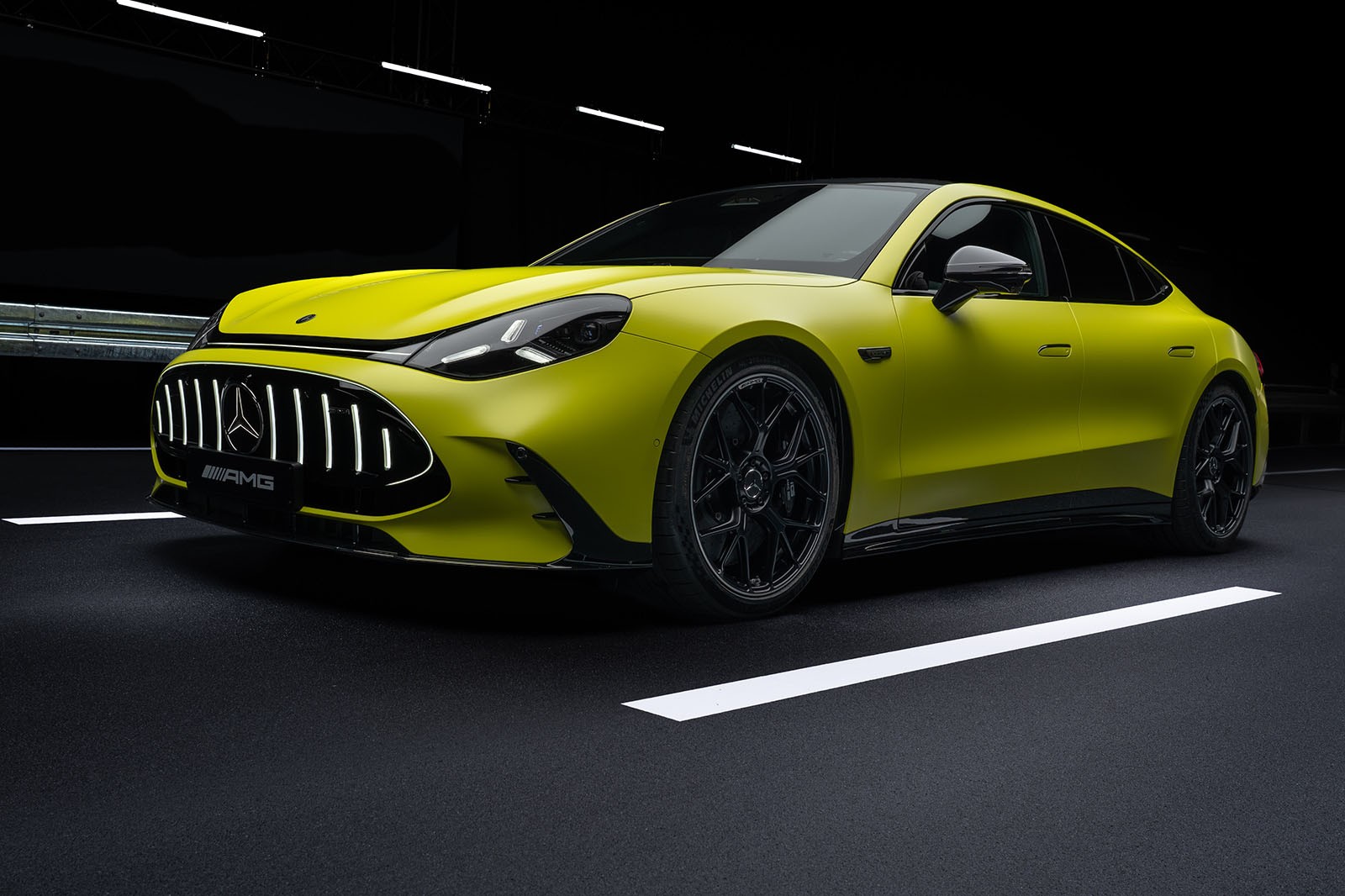
Mercedes-AMG just dropped its first dedicated EV and it is the most violent thing they have ever built. The GT 63 4-Door Coupé arrives this September with a price tag hovering around £150k and numbers that make the steering wheel tremble. 1169 horsepower. 1475 lb-ft of torque. It hits 62mph in 2.4 seconds and caps out at 186mph.
It rivals the Porsche Taycan and the Lotus Emeya but feels like a completely different beast. We’ve seen this coming since the 2022 Vision AMG concept and the 2025 GT XX reveal. The production car keeps that sharp, evolved look but grounds it in something heavy.
Under the Metal
It sits on the new AMG.EA platform. This chassis is the future for the brand including a super-SUV being cooked up at their Affalterbach headquarters right now. Dimensions are bulky but tight. At 5.09 meters long it stretches slightly longer than a Taycan but sheds a bit of width and gains some height. The wheelbase is solid at 3 meters.
The scale says “tank”. The weight agrees. A curb mass of 2460 kg. That’s heavy. Really heavy.
But AMG swears the center of gravity is lower than the original petrol GT 4-Door from 2018. The battery sits low and the motors are compact so it should handle without feeling like a falling refrigerator. Let’s see.
The car is the first to ride on the AMG.EA electric architecture, designed from the ground up for high-performance handling despite the mass.
Weird Motors
The powertrain is the interesting part here. Mercedes stopped using traditional radial-flux motors. Instead, they worked with Yasa—an Oxford-based specialist they own—to create three axial-flux motors. Production happens in a dedicated Berlin facility alongside the AMG powertrain division in Brixworth.
The difference is physical. In normal EV motors the magnetic field flows perpendicular to the shaft. Here it runs parallel. Think of it as a disc instead of a sandwich. Flat. Slim.
Each rear motor is about 80mm thick. The front one is 90mm. It allows them to cram high power into less space. More room for structure. Less room for error?
Is a computer-simulated V8 sound better than real explosions?
The car is built. It is loud on paper. We’ll see if the silicon can truly replicate the soul of the badge when it finally hits the tarmac.