Everyone knows the big three: MPG, horsepower, and torque. You can also probably recite 0-60 times or the cubic feet of cargo space in your daily driver. These metrics are straightforward. They tell you what you get for your money. But some numbers hide in plain sight, causing confusion for new buyers. Ignoring them can be costly. Or dangerous.
One such metric is the Gross Combination Weight Rating, or GCWR.
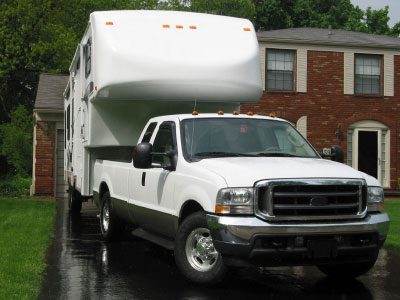
If you plan to tow a trailer with any car, truck, or SUV, you need to know your GCWR. It is not optional. It is a manufacturer-defined limit representing the maximum weight of a loaded tow vehicle combined with its attached loaded trailer. Never exceed this number.
How GCWR Is Calculated
GCWR functions similarly to Gross Vehicle Weight Rating (GVWR). The difference? GVWR applies to a single vehicle. GCWR accounts for two connected units: the tow vehicle and the trailer.
But how do you get the number? Ford Motor Company outlines the formula clearly. You add together:
- The vehicle’s listed curb weight
- Allowable payload
- Driver and passenger weight
- Trailer weight
Keep in mind that GCWR is a maximum limit, not a real-time measurement. It is the ceiling set by engineering.
Why the Limit Exists
Safety is the primary driver. Overloading a tow vehicle is risky. Overloading both the tow vehicle and the trailer is a recipe for disaster.
A heavy load is hard to control. Braking systems can overheat and fail. Tires may blow out under the extra strain. Engines and transmissions can overheat from mechanical stress. Suspension components can bend or break. One failure leads to loss of control. The result varies from inconvenient to fatal. Do not surpass your vehicle’s GCWR.
Where to Find Your GCWR
Find the number before you hit the road. Check the label inside the driver’s door frame, near the latch area. Manufacturers also publish this data online. Use both resources to verify.
Below is a list of available GCWR data for specific models. Note that many luxury and performance vehicles have minimal to no towing capacity listed.
GCWR List
Browse by Make
– Acura
– Audi
– BMW
– Buick
– Cadillac
– Chevrolet
– Chrysler
– Dodge
– Ford
– GMC
– Honda
– HUMMER
– Hyundai
– Infiniti
– Isuzu
– Jaguar
– Jeep
– Kia
– Land Rover
– Lexus
– Lincoln
– Mazda
– Mercedes-Benz
– Mercury
– MINI
– Mitsubishi
– Nissan
– Pontiac
– Porsche
– Saab
– Saturn
– Scion
– smart
– Subaru
– Suzuki
– Toyota
– Volkswagen
– Volvo
Acura GCWR
| Year | Model | GCWR (lbs) |
|---|---|---|
| 2006 | MDX | 8121 |
| 2006 | RL | 5162 |
| 2006 | RSX | 4384 |
| 2006 | TL | 4730 |
| 2006 | TSX | – |
| 2007 | MDX | 10053 |
| 2007 | RL | 5164 |
| 2007 | RDX | 6394 |
| 2007 | TL | 4773 |
| 2007 | TSX | 4407 |
| 2008 | MDX | 10053 |
| 2008 | RL | 5164 |
| 2008 | RSX | 6394 |
| 2008 | TL | 4773 |
| 2008 | TSX | 4407 |
| 2009 | MDX | 10053 |
| 2009 | RL | 5233 |
| 2009 | RSX | 5574 |
| 2009 | TSX | 4550 |
More Acura Specs:
– Acura GVWR
– Acura GAWR
– Acura Cargo Carrying Capacity
– Acura Curb Weight
– Acura Payload
– Acura Towing Capacity
Audi GCWR
| Year | Model | GCWR (lbs) |
|---|---|---|
| 2006 | A3 | – |
| 2006 | A4 | – |
| 2006 | A6 | – |
| 2006 | A8 | – |
| 2006 | S4 | – |
| 2006 | TT | – |
| 2007 | A3 | – |
| 2007 | A4 | – |
| 2007 | A6 | – |
| 2007 | A8 | – |
| 2007 | Q7 | 10665 |
| 2007 | RS4 | – |
| 2007 | S4 | – |
| 2007 | S6 | – |
| 2007 | S8 | – |
| 2008 | A3 | – |
| 2008 | A4 | – |
| 2008 | A5 | – |
| 2008 | A6 | – |
| 2008 | A8 | – |
| 2008 | Q7 | 10665 |
| 2008 | R8 | – |
| 2008 | RS4 | – |
| 2008 | S4 | – |
| 2008 | S5 | – |
| 2008 | S6 | – |
| 2008 | S8 | – |
| 2008 | TT | – |
| 2009 | A3 | – |
| 2009 | A4 | – |
| 2009 | A5 | – |
| 2009 | A8 | – |
| 2009 | Q7 | 10665 |
| 2009 | R8 | (Data incomplete) |
| 2009 | S4 | – |
| 2009 | S5 | – |
| 2009 | S8 | – |
| 2009 | TT | – |
More Audi Specs:
– Audi GVWR
– Audi GAWR
– Audi Cargo Carrying Capacity
– Audi Curb Weight
– Audi Payload
– Audi Towing Capacity
BMW Gross Combined Weight Ratings
The numbers for BMW’s lineup between 2006 and 2009 tell a story of heavy iron meeting strict limits. If you’re looking at the 3 Series or M3, the GCWR data is missing from the archives. That silence usually means the manufacturer didn’t publish a specific towing or combined weight rating for the standard sedan configurations. You can’t tow a trailer with a 325i if the paperwork doesn’t exist. The M3, M5, and M6 fared no better. No numbers.
The heavy hitters are where the data lives. The X3 stuck to a tight 7,662 to 7,673-pound GCWR across those four years. Not much room for error there. The X5 had more grunt, jumping from 10,802 pounds in 2006 to 11,132 in 2007 and 2008, before dipping slightly to 11,066 in 2009. The X6 followed a similar path, hovering around 11,044 pounds.
Luxury sedans like the 750 and 760 didn’t get published ratings either. The Alpina B7 appeared in 2007 and 2008 but left the GCWR blank. If you need to tow, the data points to the SUVs, specifically the X5 and X6. Everything else is a guess until you check the door jamb sticker.
Buick GCWR Data
Buick kept it simple. The LaCrosse and Lucerne never moved from a 4,645 and 4,914-pound GCWR respectively. They aren’t built for hauling. The Rainier hit 10,500 pounds in 2006 and 2007, a solid number for a mid-size SUV of that era. The Rendezvous sat at 7,746 pounds.
When the Enclave arrived in 2008, it took over the towing duties with a 9,500-pound GCWR. That number held steady through 2009. The Terraza disappeared after 2006, leaving behind an 8,500-pound rating. If you are looking for the best towing capacity in the Buick lineup for these years, the Rainier and Enclave are your only real options. The rest are passenger haulers.
Cadillac Gross Combined Weight Ratings
Cadillac stretched the limits further than Buick. The CTS started at 4,659 pounds in 2006 and 2007, then bumped to 5,011 pounds in 2008 and 2009. The CTS-V stayed fixed at 5,000 pounds. The DTS hovered around 5,159 pounds.
The Escalade family dominated the upper end. The standard Escalade, ESV, and EXT all shared a massive 14,000-pound GCWR by 2007. In 2006, the EXT was lower at 13,464 pounds, and the standard Escalade was 12,902. That gap closed quickly. The Escalade Hybrid, introduced in 2009, struggled with a much lower 6,314-pound rating.
The SRX and STS models sat in the middle. The SRX ranged from 5,314 to 6,314 pounds depending on the year and trim. The STS-V hit 5,544 pounds in 2008 and 2009. The XLR and XLR-V have no ratings listed. They are grand tourers, not tow vehicles.
Chevrolet GCWR Breakdown
Chevrolet’s range is vast, and the GCWR reflects the hierarchy. Small cars like the Cobalt, Aveo, and HHR cap out around 4,141 to 4,305 pounds. They aren’t towing machines. The Equinox stuck to a consistent 7,252 pounds across all available years.
The truck segment is where the numbers explode. The Silverado 1500 Classic sat at 10,798 pounds in 2007, while the regular 2007 Silverado 1500 dropped to 10,000 pounds. By 2008, the 1500 settled at 10,000 pounds. The HD variants stayed high. The Silverado 2500 HD and 3500 HD both maxed out at 16,000 pounds.
Suburbans and Tahoes varied by engine configuration. The Tahoe hit 10,000 pounds in 2007, 2008, and 2009. The Suburban 2500 climbed from 13,822 pounds in 2006 to 14,000 pounds in 2007, then jumped to 16,000 pounds in 2008 and 2009. The Avalanche 1500 saw significant drops, falling from 13,000 pounds in 2007 to 11,000 pounds in 2009. The Colorado improved over time, moving from 5,218 pounds in 2006 to 7,000 pounds by 2008 and 2009. The Trailblazer stayed locked at 10,000 pounds from 2007 onward.
Chrysler Gross Combined Weight Ratings
Chrysler’s offerings shifted as the company restructured. The PT Cruiser started high at 8,132 pounds in 2006, dropped to 4,297 in 2007, then recovered to 7,105 in 2008 before settling at 4,297 in 2009. The Town & Country minivan held steady at 6,600 pounds through 2008, then rose to 7,000 pounds in 2009.
The 300 and 300C sedans remained static at 4,862 and 6,196 pounds respectively. The Aspen SUV saw volatility. It hit 11,000 pounds in 2007, jumped to 13,966 in 2008, then dropped back to 11,000 in 2009. The Aspen Hybrid topped that at 11,700 pounds in 2009. The Sebring stayed in the 4,400-pound range. The Pacifica varied wildly, from 4,297 pounds in 2006 to 7,105 in 2007, then back down to 4,297.
Dodge GCWR Analysis
Dodge leaned hard into trucks and large vans. The Ram 1500 held at 8,000 pounds for most years, only jumping to 8,500 in 2009. The Ram 2500 stayed fixed at 15,000 pounds. The Ram 3500 climbed from 17,000 pounds to a massive 19,000 pounds by 2009.
The Sprinter vans were workhorses. The 2500 model capped at 13,550 pounds. The 3500 model varied, starting at 13,550 pounds, rising to 14,110 in 2007, and hitting 15,250 pounds in 2008 and 2009. The Sprinter Wagon 2500 was inconsistent, ranging from 10,626 to 13,550 pounds.
Personal vehicles like the Charger, Durango, and Grand Caravan had lower limits. The Charger sat around 5,877 to 5,950 pounds. The Durango held at 8,600 pounds. The Grand Caravan dropped from 8,600 pounds to 7,000 pounds in 2008 and 2009. The Dakota remained at 7,700 pounds. The Nitro stayed at 7,582 pounds. The Avenger and Caliber were small, with the Avenger rising from 3,605 to 4,505 pounds. The Challenger entered the scene in 2009 with a 4,869-pound limit.
Ford GCWR Limits
The numbers for Ford’s lineup shift year over year, and sometimes model to model. If you are tracking total weight limits, the data below is specific to Gross Combined Weight Rating. That means truck plus trailer. Not just the truck.
2006 Ford Models
* Crown Victoria: 5,592 lbs
* E-150: 11,318 lbs
* E-250: 10,912 lbs
* E-350 Super Duty: 13,000 lbs
* Escape: 4,830 lbs
* Escape Hybrid: 4,777 lbs
* Explorer: 7,700 lbs
* F-150: 11,665 lbs
* F-250: 15,000 lbs
* F-350: 15,000 lbs
* Five Hundred: 4,799 lbs
* Focus: 3,771 lbs
* Freestar: 7,945 lbs
* Freestyle: 6,109 lbs
* Ranger: 9,360 lbs
* Fusion, GT, Mustang, Taurus: Data not available
2007 Ford Models
* Crown Victoria: 5,751 lbs
* E-150: 11,500 lbs
* E-250: 11,000 lbs
* E-350 Super Duty: 13,000 lbs
* Edge: 6,248 lbs
* Escape: 4,830 lbs
* Escape Hybrid: 4,777 lbs
* Expedition: 14,928 lbs
* Expedition EL: 15,078 lbs
* Explorer: 8,500 lbs
* Explorer Sport Trac: 10,000 lbs
* F-150: 11,700 lbs
* F-250: 17,000 lbs
* F-350: 17,000 lbs
* Five Hundred: 4,793 lbs
* Focus: 3,771 lbs
* Freestar: 7,000 lbs
* Freestyle: 6,109 lbs
* Mustang: 4,611 lbs
* Ranger: 5,820 lbs
* Fusion: Data not available
2008 Ford Models
* E-150: 11,500 lbs
* E-250: 11,500 lbs
* E-350 Super Duty: 13,000 lbs
* Edge: 6,248 lbs
* Escape: 4,940 lbs
* Escape Hybrid: 4,788 lbs
* Expedition: 14,928 lbs
* Expedition EL: 15,078 lbs
* Explorer: 8,500 lbs
* Explorer Sport Trac: 8,500 lbs
* F-150: 11,765 lbs
* F-250: 15,000 lbs
* F-350: 17,000 lbs
* F-450: 27,000 lbs
* Mustang: 4,611 lbs
* Ranger: 6,000 lbs
* Taurus: 4,793 lbs
* Taurus X: 6,183 lbs
* Focus, Fusion: Data not available
2009 Ford Models
* E-150: 11,500 lbs
* E-250: 11,500 lbs
* E-350 Super Duty: 13,000 lbs
* Edge: 6,248 lbs
* Escape: 4,940 lbs
* Escape Hybrid: 4,788 lbs
* Expedition: 15,000 lbs
* Explorer: 8,110 lbs
* Explorer Sport Trac: 8,233 lbs
* F-150: 14,950 lbs
* F-450: 16,983 lbs
* Flex: 6,900 lbs
* Mustang: 4,611 lbs
* Ranger: 6,000 lbs
* Taurus: 4,793 lbs
* Taurus X: 6,183 lbs
* Focus, Fusion: Data not available
Related specs to check: Ford GVWR, Ford GAWR, Ford Cargo Carrying Capacity, Ford Curb Weight, Ford Payload, Ford Towing Capacity.
GMC GCWR Limits
GMC’s ratings hover around the heavy-duty trucks, but the SUVs hold steady too. The Sierra 3500 jumps significantly in 2008. Pay attention to those big numbers if you are hauling anything substantial.
2006 GMC Models
* Canyon: 5,179 lbs
* Envoy: 10,000 lbs
* Envoy XL: 10,000 lbs
* Savana 1500: 9,500 lbs
* Savana 2500: 12,000 lbs
* Savana 3500: 12,000 lbs
* Sierra 1500: 8,361 lbs
* Sierra 2500: 15,792 lbs
* Sierra 3500: 15,792 lbs
* Yukon: 11,000 lbs
* Yukon XL: 13,000 lbs
2007 GMC Models
* Acadia: 9,500 lbs
* Canyon: 5,679 lbs
* Envoy: 9,854 lbs
* Savana 1500: 9,500 lbs
* Savana 2500: 12,000 lbs
* Savana 3500: 12,000 lbs
* Sierra 1500: 9,398 lbs
* Sierra 2500: 15,858 lbs
* Sierra 3500: 15,342 lbs
* Yukon: 10,000 lbs
* Yukon XL: 13,000 lbs
2008 GMC Models
* Acadia: 9,500 lbs
* Canyon: 5,882 lbs
* Envoy: 10,000 lbs
* Savana 1500: 9,500 lbs
* Savana 2500: 12,000 lbs
* Savana 3500: 12,000 lbs
* Sierra 1500: 9,500 lbs
* Sierra 2500: 15,858 lbs
* Sierra 3500: 16,000 lbs
* Yukon: 10,000 lbs
* Yukon Hybrid: 12,000 lbs
* Yukon XL: 13,000 lbs
2009 GMC Models
* Acadia: 9,500 lbs
* Canyon: 5,887 lbs
* Envoy: 10,000 lbs
* Savana 1500: 9,500 lbs
* Savana 2500: 12,000 lbs
* Savana 3500: 12,000 lbs
Kia towing ratings breakdown
You want to know how much a Kia can pull? The numbers are sparse for the early late-2000s. Look at the 2006 Sportage. It has a Gross Combined Weight Rating of 4880 lbs. That is not a lot of margin. You are towing a small trailer at best. The Amanti, Rio, Spectra, and Sedona show hyphens. No data. Probably because they weren’t rated for towing or the data wasn’t published in these tables.
Jump to 2007. The Sedona gets a rating. 8015 lbs. That is a minivan moving some weight. The Sorento hits 9299 lbs. Big jump. The Sportage stays stuck at 4880.
2008 brings the Borrego. It clears 9000 lbs with a GCWR of 9398. The Sorento holds steady at 9299. The rest of the lineup remains dark. You will find hyphens for the Optima, Rio, and Spectra again.
2009 sees the Borrego edge up to 9398 lbs again. The Sorento data is missing from this specific year’s list, but the 2008 figure stands as the reference point. The Sedona and Sorento were the workhorses here. If you are looking for a vintage Kia capable of hauling a boat, the 2007-2009 Sedona and Sorento are your only real options in this dataset.
Land Rover heavy haulers
Land Rover plays in a different weight class. These are not your average crossovers. The 2006 LR3 pulls 13165 lbs. The Range Rover is heavier at 13324. The Range Rover Sport trails slightly at 13318.
2007 shifts the numbers. The LR3 climbs to 13276. The Range Rover stays at 13324. The Sport edges up to 13334. Precision matters at this level.
2008 is weird. The LR2 is missing. The LR3 is missing. The Range Rover is missing. Only the Range Rover Sport shows up, holding the line at 13334 lbs. Maybe the data was just harder to find for the others.
2009 brings the LR2 back. But its GCWR is just 7905 lbs. That is a huge drop from the big boys. The LR3 jumps to 13662. The Range Rover hits 13564. The Sport holds at 13334. If you need to tow a horse trailer or a large camper, the LR3 and Range Rover from 2009 are the heavyweights. The LR2 is a compact utility vehicle at best in this context.
Lexus towing limits by model
Lexus offers a mix of luxury sedans and body-on-frame trucks. The sedans generally do not show towing ratings in these tables. The ES, GS, IS, LS, and SC lines are mostly empty. Hyphens across the board. You cannot tow much with an ES 350 in 2008, apparently.
The trucks tell a different story. The 2006 GX 470 is rated at 11521 lbs. The LX 470 is stronger at 12240. The RX 330 is modest at 7510. The RX 400h matches the Sedona at 8015.
2007 sees the RX 350 settle at 7520. The RX 400h stays at 8015. The GX and LX remain unchanged at 11521 and 12240 respectively. Consistency is a Lexus trait.
2008 introduces the LX 570. It jumps to 14645. That is serious towing capacity. The RX 350 drops to 6020. The RX 400h drops to 6340. Why the drop? Weight distribution or gearing changes? The data doesn’t say, but the numbers are lower. The GX 470 holds at 11521.
2009 keeps the LX 570 at 14645. The RX 350 stays at 6020. The GX 470 remains at 11521. If you need to tow a large fifth-wheel, the LX 570 is the clear choice. The RX models are for small utility trailers only.
Lincoln towing capacity specs
Lincoln in the late 2000s was about volume. The Mark LT is a pickup. It pulls 14500 lbs in 2006, 2007, and 2008. Steady as she goes.
The Navigator is the main event. 2006: 11900 lbs. 2007 and 2008: 15000 lbs. A big jump between ’06 and ’07. The Town Car is a sedan. It pulls 6460 lbs in 2006 and 2007. In 2008, it edges up to 6502. Small gains.
2009 brings the MKS. It is rated at 5277 lbs. Low. The MKX is rated at 7350. The Navigator holds the 15000 lb mark. The Town Car holds at 6502. The Mark LT is missing from 2009 data, likely discontinued or replaced. If you need to tow a heavy boat, the Navigator is the reliable choice. The MKS is for light loads only.
Mazda towing ratings 2006-2009
Mazda’s lineup here is split between trucks and cars. The B-series trucks are the movers.
2006: The B2300 pulls 4744 lbs. The B3000 hits 6072. The B4000 goes to 6973. The MPV is at 5904. The Tribute is at 4842. The rest are hyphens.
2007: The B2300 climbs to 4800. The B3000 drops slightly to 6000. The B4000 rises to 7000. The CX-7 enters at 5860. The CX-9 is stronger at 6826. The rest remain empty.
2008: The B2300 stays at 4800. The B4000 holds at 7000. The CX-7 holds at 5860. The CX-9 holds at 6826. The Tribute Hybrid is at 4747. The standard Tribute is 4893. The B3000 is missing.
2009: The B2300 drops to 4749. The B4000 drops to 6952. The CX-7 holds at 5860. The CX-9 drops to 6484. The Tribute is missing. The rest are hyphens.
The B-series trucks are the consistent haulers. The CX-9 is a decent mid-range option. The CX-7 is lighter. If you need to tow a small camper, the B4000 or CX-9 are your best bets. The rest are for light duty only.
Mercedes-Benz towing capacity guide
Mercedes-Benz in this era was mostly cars. The sedans and coupes show no towing ratings. Hyphens for the C-Class, CL-Class, CLK, CLS, E-Class, R-Class, S-Class, SL, SLK, and SLR McLaren. You cannot tow with these, or the data is not available.
The SUVs are the heavy lifters.
2006: The ML350 pulls 6773 lbs. The ML500 hits 6893.
2007: The G500 jumps to 12695. The GL320 is at 12946. The GL450 is at 12399. The ML350 climbs to 12056. The ML320 is at 12167. The ML500 is at 12145. The ML63 AMG is at 12443. Big SUVs.
2008: The G500 drops slightly to 12661. The G55 rises to 12783. The GL320 is at 12963. The
Toyota and Subaru: The Reliable Workhorses
If you are looking for numbers that don’t change much year over year, look at Toyota. The 2006-2009 Land Cruiser sits at the top of the pile with a Gross Combined Weight Rating (GCWR) of 12,400 lbs, which jumps to 15,775 lbs for the 2008-2009 models. That is massive. The Sequoia follows, hitting 12,000 lbs in 2006-2007 before skyrocketing to 16,900 lbs in 2008.
For everyday drivers, the Tacoma holds steady at 8,100 lbs GCWR from 2006 through 2009. The Tundra is interesting because it dips. It starts at 11,800 lbs in 2006, drops to 10,000 lbs in 2007 and 2008, then sits there. The Highlander Hybrid is the efficiency king, reaching 8,158 lbs in 2008-2009, a significant jump from its 6,220 lb start in 2006.
Subaru offers a different story. The B9 Tribeca maintains a consistent 7,805 lbs GCWR in 2006 and 2007. The Outback sees a slight bump from 6,160 lbs in 2006 to 6,207 lbs in 2009. Note that many Subaru models, like the Impreza Sedan and Forester in certain years, have no listed GCWR, implying they are not rated for towing or the data is unavailable.
Suzuki and Scion: Niche and Declining
Suzuki’s XL7 offers a respectable 7,536 lbs GCWR in 2007 and 2008, up from 6,788 lbs in 2006. The Grand Vitara stays flat at 6,602 lbs for those same years. By 2009, Suzuki had largely exited the US market, leaving many models with blank GCWR values.
Scion is even simpler. The tC, xB, and xD have no GCWR listed for any year from 2006 to 2009. These were street-focused imports, not haulers. If you need to tow something with a Scion, you are likely on your own or using a specialized trailer setup not covered by standard manufacturer ratings.
Pontiac and Saturn: The End of an Era
Pontiac’s GCWR data tells the story of a brand in its final years. The G8, a rear-wheel-drive sedan based on the Holden Commodore, carries the heaviest load at 6,035 lbs in 2008 and 2009. The Montana SV6 hits 8,500 lbs in 2006. The G6 and Grand Prix hover around 4,500 lbs, while the Vibe and G5 are lighter, typically under 4,500 lbs.
Saturn’s lineup was more varied. The Relay minivan starts strong at 8,500 lbs in 2006, drops to 7,918 lbs in 2007, then falls further to around 6,872 lbs in 2008 and 2009. The Outlook SUV follows a similar downward trend, starting at 9,500 lbs in 2007 and settling at 6,852 lbs by 2009. The VUE Hybrid maintains a steady 5,439-5,475 lbs range in the later years. Many Saturns, like the Sky and Astra, have no GCWR, reflecting their coupe-focused design.
Porsche and Saab: Performance and Luxury
Porsche’s GCWR is dominated by the Cayenne. In 2006 and 2008, it sits at 12,628 lbs. By 2009, it increases slightly to 12,650 lbs. The 911, Boxster, and Cayman have no listed GCWR, as they are not intended for towing.
Saab’s 9-7X, a rebadged Chevrolet TrailBlazer, offers the highest GCWR in this segment at 10,500 lbs for 2006-2009. The 9-5 sedan ranges from 7,120 lbs across all years. The 9-3 is lighter, starting at 5,430 lbs in 2006 and rising to 5,680 lbs by 2009. The 9-2X, based on the Subaru Impreza, holds steady at 5,220 lbs.
Nissan: From SUVs to Hybrids
Nissan’s GCWR varies wildly by model. The Armada starts at 11,818 lbs in 2006, jumps to 12,800 lbs in 2007, and peaks at 15,100 lbs in 2008-2009. The Titan is close behind, starting at 11,465 lbs and reaching 11,688 lbs by 2008.
The Pathfinder holds steady around 10,500-10,596 lbs. The Frontier fluctuates between 10,676 lbs and 11,133 lbs. The Xterra drops from 9,658 lbs to 9,300 lbs by 2008.
For crossovers and sedans, the numbers are lower. The Murano hovers around 8,100 lbs in 2006-2007, then drops to 7,505 lbs in 2008-2009. The Quest is around 7,941-7,943 lbs. The Altima Hybrid leads the sedans with a GCWR of 4,632 lbs in 2007-2008, slightly higher than the standard Altima at 4,205 lbs. The Versa has no listed GCWR.
Why This Data Matters
GCWR is not just a number on a sticker. It dictates what you can legally and safely tow. If your vehicle’s GCWR is 10,000 lbs and your loaded vehicle weight is 5,000 lbs, you have 5,000 lbs left for the trailer and its cargo. Exceeding this limit stresses the drivetrain, brakes, and suspension. It also voids warranties.
Many drivers confuse GCWR with towing capacity. Towing capacity is the weight of the trailer. GCWR is the total weight of everything: car, passengers, fuel, cargo, and trailer. You must account for the weight of the trailer tongue, which adds to the vehicle’s rear axle load.
Where to Find More Specs
If the GCWR data for a specific model year is missing or you need to dig deeper, check the other Nissan specs, Pontiac specs, Porsche specs, Saab specs, Saturn specs, Scion specs, smart specs, Subaru specs, Suzuki specs, or Toyota specs links. These often include GVWR, GAWR, and payload data, which are essential for calculating what you can actually haul.
The trend is clear. SUVs and trucks dominate the upper limits. Sedans and coupes stay low. Hybrids often offer slightly higher GCWRs than their gas-only counterparts, likely due to reinforced chassis components or different gear ratios. But as brands like Pontiac, Saturn, and Suzuki fade, the data becomes a historical record rather than a buying guide.
What matters now is how these numbers hold up over time. A 2009 Land Cruiser with 15,775 lbs GCWR is still a potent hauler. A 2009 Pontiac G8 with 6,035 lbs is a relic. The numbers don’t lie, but they also don’t tell the whole story of drivability, reliability, or value.
2006–2009 Volkswagen Gross Combined Weight Rating
If you are hauling anything behind a VW from this era, the Touareg is your only real candidate for heavy towing. The data is sparse for the rest of the lineup. For the 2006 Touareg, the GCWR sits at 12,952 lbs. That number ticks up slightly to 13,034 lbs for the 2007 model before dropping back to 12,952 lbs in 2009. Why the fluctuation? Engineering tweaks, or perhaps just different test configurations. The rest of the VW roster—Golf, GTI, Jetta, Beetle, Passat, Phaeton, Rabbit, Eos, R32, Routan, and Tiguan—shows dashes across the board. A dash usually means the manufacturer didn’t publish a GCWR, implying you should assume towing capacity is zero or negligible unless you find a specific owner’s manual note. The Routan hits 6,771 lbs, and the Tiguan manages 5,748 lbs in 2009. That’s it. If you’re trying to tow a small trailer with a GTI, you’re likely exceeding the chassis limits. Stick to the Touareg.
2006–2009 Volvo Gross Combined Weight Rating
Volvo plays by stricter rules here. Every model from this period has a listed GCWR, which helps if you need precise numbers for legal or safety compliance. The heavy lifters are the XC90s. In 2006, the XC90 maxes out at 8,694 lbs. It dips to 8,570 lbs in 2007 and 2008, then falls further to 8,476 lbs in 2009. The XC70 holds steady at 7,125 lbs for 2006 and 2007, then climbs to 7,549 lbs in 2008 and 2009.
The sedans and wagons are lighter. The S80 ranges from 6,943 lbs in 2007 to a peak of 7,425 lbs in 2009. The V70 stays in the 6,746–6,984 lbs band. Smaller cars like the S40 and V50 hover around 5,370–5,494 lbs. The C70 drops from 7,222 lbs in 2006 down to 5,777 lbs by 2008. The C30 is the lightest, sitting between 5,105 and 5,351 lbs. These numbers matter if you’re attaching a boat or a camper. Exceeding them stresses the suspension and brakes. It voids warranties. It’s a bad idea.
What These Numbers Actually Mean for Your Build
Most car buyers confuse GVWR with GCWR. GVWR is the max weight of the vehicle itself, including passengers and cargo. GCWR includes that vehicle weight plus the weight of whatever you are towing. If you have a Volvo XC90 with a GCWR of 8,476 lbs, and the car weighs 5,000 lbs loaded with people and gear, you have roughly 3,476 lbs left for the trailer and its cargo. Do not guess. Weigh the car. Weigh the trailer.
The VW data suggests a clear hierarchy. The Touareg is a truck in disguise. The Routan and Tiguan are light-duty haulers. The rest are passenger cars not intended for towing. Volvo’s consistent reporting makes it easier to plan, but the margin for error is thin on the smaller models. A full S40 with passengers might eat up 90% of its GCWR before the trailer is even hooked up.
You might think a GTI can tow a jet ski. It can’t