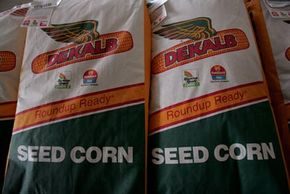
Oil prices are swinging wildly. Naturally, people want options. Corn growers say ethanol is the answer. It’s simple enough in theory. Ferment sugar from corn. Distill it. You get ethyl alcohol. Mix it with gas and you have gasohol.
The Renewable Fuels Association says ethanol-blended fuel makes up 12 percent of all automotive fuel sold in the US. Pure ethanol can run modified cars. But running a standard car on it changes the math. Hard.
Let’s look at the numbers. Let’s say you are driving a Toyota Camry. It was the best-seller in 2000. The automatic transmission gets 30 miles per gallon (mpg) on highway gas. Gasoline is denser in energy. One gallon of gas equals 1.5 gallons of ethanol.
Switch to ethanol. Your Camry drops to 20 mpg. That is a significant hit.
Now, add distance. Los Angeles to New York is 2,774 miles. Or 4,464.2 kilometers. You need fuel for that whole stretch.
Corn yields are not infinite. Cornell University research says one acre of land produces about 7,110 pounds of corn. You can process that into 328 gallons of ethanol. That ratio is roughly 26.1 pounds of corn per gallon of fuel.
The Math Behind the Trip
First, figure out the fuel volume. In metric, you need about 525.2 liters of ethanol.
Since it takes 26.1 pounds of corn to make one gallon, you have to calculate the total weight required. In metric, that works out to roughly 1,642 kilograms of corn.
You don’t need a massive farm for this. You need a little more than half an acre of corn. That seems manageable. Until you look at the input costs.
The Hidden Energy Cost
Growing corn is energy-intensive. Cornell notes it takes about 140 gallons of fossil fuel just to plant, grow, and harvest an acre. That puts the pre-production cost at roughly $1.05 per gallon of ethanol. Just to get the raw material.
The processing plant adds more pain. The grain gets crushed. Enzymes are added. Yeast ferments the mixture into alcohol. Then it is distilled to 85-95 percent purity. You have to denature it with a bit of gasoline so it isn’t taxed as beverage alcohol.
The final cost for fuel-grade ethanol sits around $1.74 per gallon. Variables change that number. Subsidies do. Weather does. But the base energy economics are steep.
“The energy economics get worse at the processing plants,” the Cornell report states.
Is it worth it? Depends on your definition of “alternative.” If you define it by low carbon footprint, maybe. If you define it by net energy gain, the numbers get murky. You need half an acre to cross the country. You spend fossil fuels to grow the corn. You spend more fossil fuels to turn it into fuel.
It is a cycle. A complex one. And the price tag is higher than most drivers realize.
Lots More Information
Related HowStuffWorks Articles
-
How Gas Prices Work
-
How much gasoline does the United States consume in one year?
-
Why doesn’t gasoline burn cleanly?
-
What is the problem with MTBE in gasoline?
-
Biodiesel Quiz
More Great Links
-
Cornell Study: Ethanol from corn faulted as energy waster
-
Argonne National Laboratory: Using Ethanol as a Vehicle Fuel
-
Renewable Fuels Association
-
Alternative Fuels Data Center: Ethanol
-
Planet Green
-
TreeHugger.com