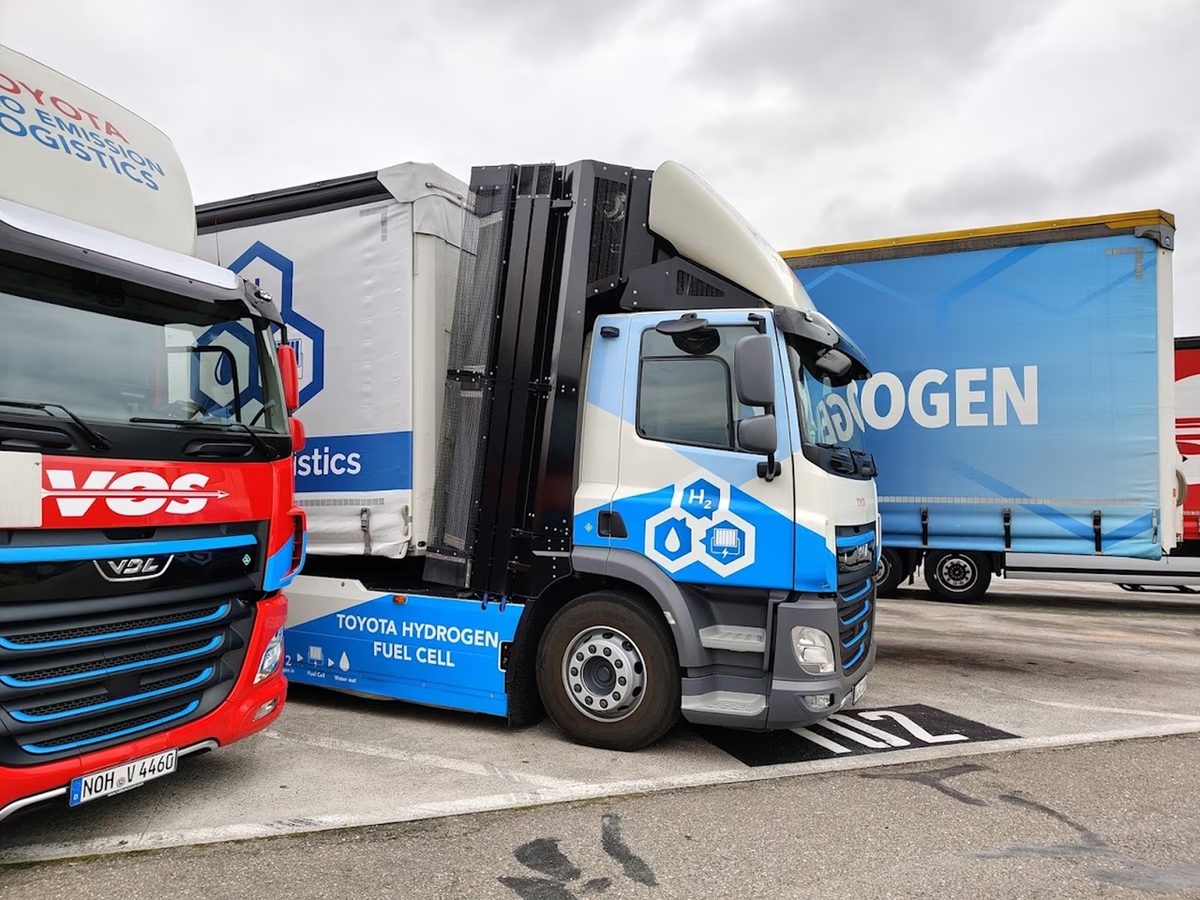
Neil turns the key. Handbrake off. He glances at the strange digital display, pushes the gear lever, and the 40-tonne rig moves. No roar. No shake. Just silence. The truck merges onto the highway and accelerates. Where a diesel exhaust would spew black smoke, a white cloud rises above the cab. Other truckers stare, confused.
Inside, there is no vibration. No diesel rumble. Only the hiss of tires on asphalt and a faint whine from the rear of the cab. White steam, a whistle, and dead quiet? This is not a battery-electric truck. It runs on hydrogen fuel cells.
This is one of four units built by Toyota. The Japanese manufacturer uses them daily to ship spare parts from its main hub in Diest, Belgium, to logistics centers in Amsterdam, Rotterdam, Cologne, and Lille. Neil’s stop today is the Amsterdam depot, roughly 200 kilometers away.
The truck carries 36 kilograms of hydrogen. That gives it a range of up to 400 kilometers. It is less than half the distance of a standard thermal engine truck, but significantly better than most electric tractors on the market.
Zero carbon emissions are the headline feature. Heavy trucks account for roughly 7% of national emissions, according to the French environment agency Ademe. These four hydrogen trucks have been running since May. They have covered more than 80,000 kilometers, emitting only water vapor.
Under the hood: The MAN chassis and Toyota fuel cell tech
This is not a rolling sketch or a test mule. It is a working truck. The base is a MAN tractor, stripped of its diesel powertrain and rebuilt to house an electric motor and two substantial battery packs.
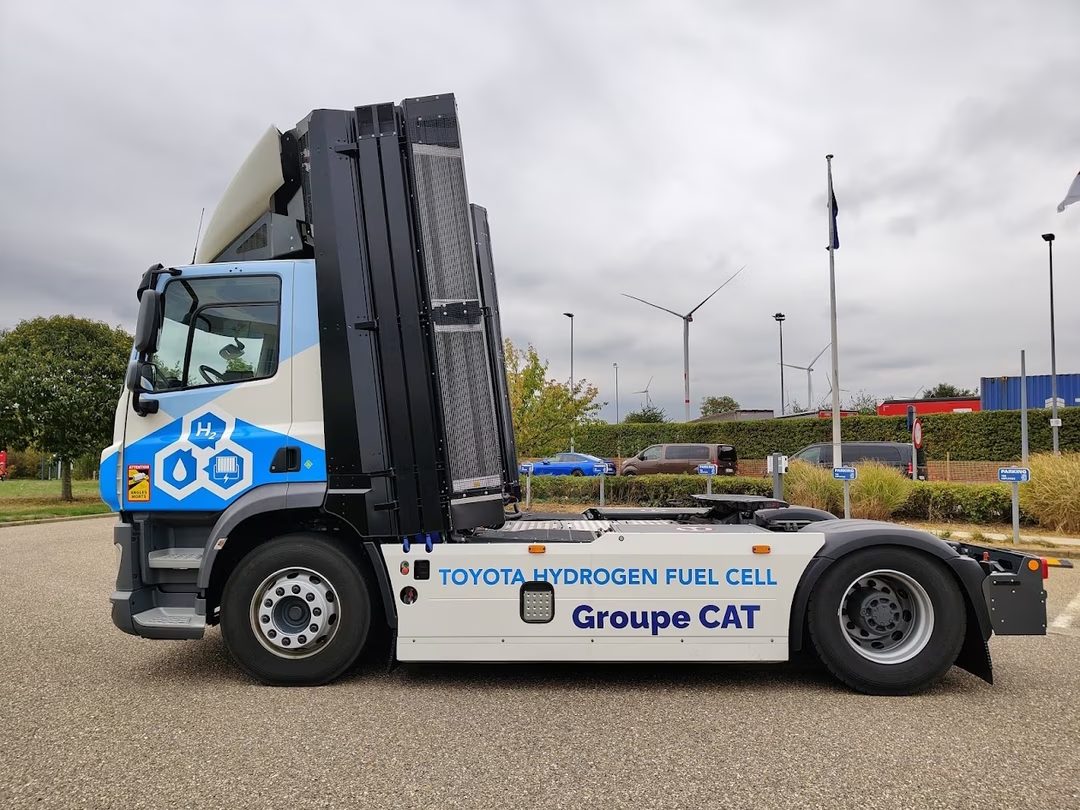
The energy source is hydrogen. Seven black, high-pressure cylinders sit stacked vertically outside the cab. They hold gas at 350 bar. You cannot miss them. They hang off the frame like a distinct architectural feature.
The system works like any other fuel cell vehicle. Hydrogen feeds into fuel cells, which generate electricity to charge the batteries, which then drive the electric motor. Toyota did not invent a new cell for this truck. They pulled the technology straight from the Mirai fuel cell sedan. However, one Mirai unit is not enough to power a heavy-duty rig. Two are required to generate sufficient voltage and current.
Refueling: Faster than a battery charger, simpler than a diesel pump
The main argument for hydrogen over battery-electric in this context is downtime. Refilling takes less than twenty minutes. That is roughly the same time you spend at a diesel station.
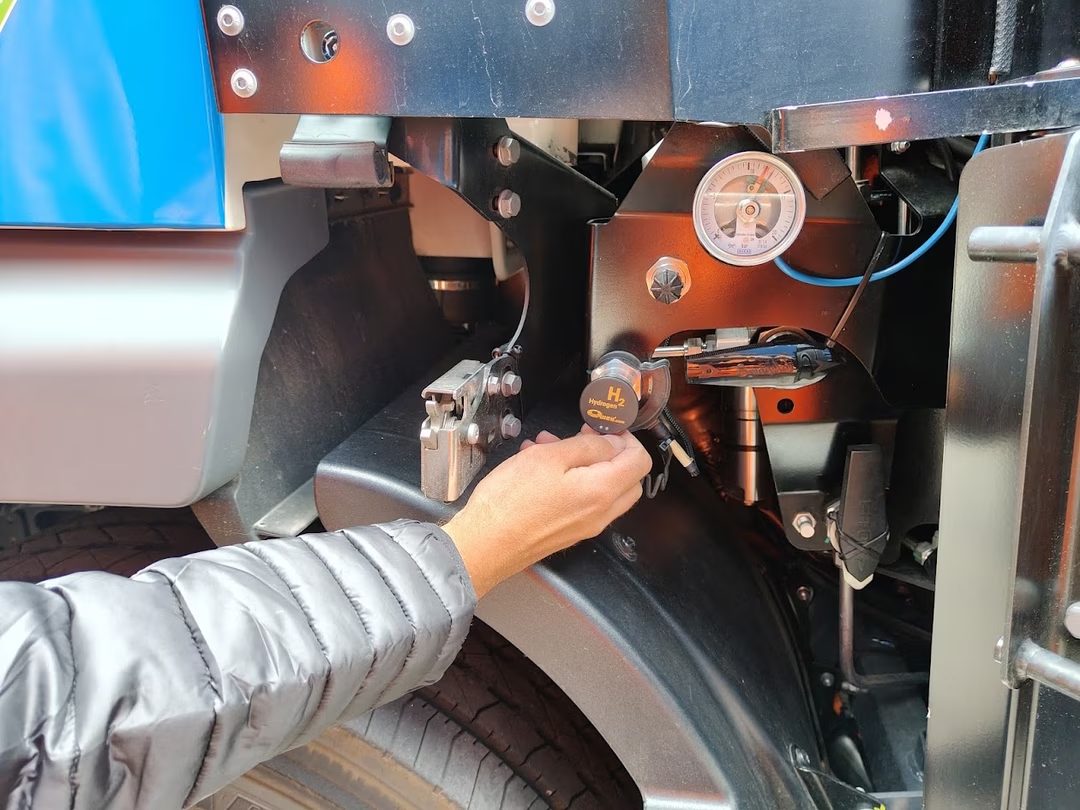
The process is clean. No gloves required. No dirty hands. The driver uses a small touchscreen dashboard to manipulate the valves. Then, connect the hydrogen line from the dispenser to the truck and press a button on the pump.
Neil demonstrates the routine. It is mundane in the best way. No complex choreography, just a connection and a wait.
The driving experience: Silent and less tiring
Does it feel different? Neil says no. The weight distribution, the steering response, the braking feel, all track with a conventional truck.
There is one big change though. The noise. Or rather, the lack of it. The diesel rumble is gone. The cabin is quiet. Neil points out that this silence reduces driver fatigue over long hauls.
Is it a perfect solution? Probably not. The infrastructure is sparse. The efficiency chain is complex. But for a truck that needs to move heavy loads without stopping for hours to charge, the hydrogen fuel cell setup offers a specific, practical advantage.
The quietness is the part you notice first. Then you forget it was ever loud.
Hydrogen fuel cell trucks vs diesel: the real cost breakdown
The economics still don’t add up. Toyota admits it.
While Stellantis and other major OEMs have quietly shelved their hydrogen road vehicle programs, Toyota is still betting on fuel cells for heavy-duty freight. The logic is straightforward on paper. But the reality of refueling infrastructure is messy.
If a truck driver takes a predefined route mapped by Toyota, they will likely pass one or two hydrogen stations. That works. It’s efficient enough for specific corridors. But if you want to cover long distances without anxiety, the current network is barely there. Freight rotations cannot simply wait for a station to open.
Then there is the price per kilogram.
Most hydrogen stations are underutilized. And when a station is quiet, the price doubles. Frequently visited pumps might sell hydrogen for under €10/kg. The neglected ones charge more than €20/kg. Even at the low end of €10/kg, a hydrogen truck is less profitable than a thermal diesel unit. Toyota’s internal threshold is clear: the fuel needs to drop below €8/kg to become genuinely competitive.
“It would have to fall below 8 euros for it to be profitable.”
How Toyota plans to cut weight and boost range
Toyota is targeting the hardware next. The current prototype tractors carry two fuel cell stacks. That setup is heavy. The cooling systems alone are a massive drag on payload.
The plan is to consolidate to a single, more efficient fuel cell stack. This change alone would halve the mass of the thermal management equipment. Combine that with a proper electric drivetrain platform, and the efficiency gains compound. Toyota estimates the tractor could shed at least one ton in total weight.
That extra ton translates directly to payload or lower operating costs.
There is also a push toward liquid hydrogen storage at 700 bars. If the infrastructure can support it, this method would push the range to 800 kilometers. That is a significant jump from current capabilities. But again, this requires compatible stations. The fuel format has to match the pump.
Is the Belgian subsidy masking the true cost?
The sticker price is the final hurdle.
These hydrogen tractors cost more than six times as much as a conventional diesel truck. That is not a rounding error. That is an entirely different asset class.
Transport companies in Belgium are running these vehicles with operating costs that look similar to diesel models. How? The Belgian state is subsidizing 80% of the purchase price. Without that public funding, the total cost of ownership would be prohibitive for most operators.
So the technology is improving. The weight is dropping. The range is expanding. But until the fuel price stabilizes and the hardware cost drops, the hydrogen truck remains a niche project rather than a fleet standard.
And the subsidy? It’s not going to scale globally.