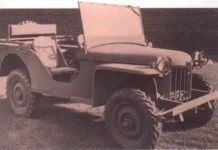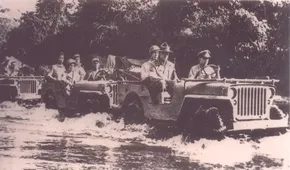
The history of the jeep began with World War II. No other motor vehicle has ever inspired that level of respect and affection. There were many advantages. It was small. It was compact. This allowed it to be transported to battle areas by plane or glider. Parachute drops were possible. Floating across rivers was an option.
It became familiar to the rich and famous as much as to ordinary Joe. Madame Chiang Kai-shek toured Cairo in a jeep. General Claire Chennault drove her. Queen Elizabeth used one in her wartime visit to Northern Ireland. President Franklin D. Roosevelt rode in a jeep. He reviewed troops in Morocco. Prime Minister Winston Churchill sat in one. He watched the historic landings at Normandy. General George S. Patton chose a jeep instead of a staff car. He did this for his trip to Fatale, Morocco. He accepted the surrender of the French resident general there.
Hollywood got into the act. Tin Pan Alley joined too. Songs included such gems as “A Jerk in a Jeep.” Another was “I’ll Be Jeeping Back to You.” All of them were eminently forgettable. Meanwhile, the silver screen gave us Four Jills In a Jeep. It was a piece of fluff. It starred Kay Francis, Martha Raye, Carole Landis, and Mitzi Mayfair. The plot was loosely based on a 1943 USO tour undertaken by those same four ladies.
It all added up to unprecedented recognition. This was for an inanimate object. It was lovable. Lyman Nash described it as “short, squat, and ugly as sin. . . an inelegant, incredible, and virtually indestructible little vehicle, not much bigger than a fair-sized doghouse.”
“an inelegant, incredible, and virtually indestructible little vehicle, not much bigger than a fair-sized doghouse.”
Somehow this remarkable machine garnered trust. It demanded respect. It bounced its way into the hearts and souls of all who came into contact with it.

The Postwar Pivot: 1945-1956
By the time the guns fell silent in 1945, the military had ordered over 600,000 Jeeps. Most were scrap metal waiting to happen, but a few survived. Willys-Overland didn’t just sit on their laurels. They realized the general public wanted that ruggedness. The CJ-2A arrived in 1945 as the first true civilian Jeep. It wasn’t a luxury vehicle. It was a tool.
The CJ-3A followed in 1949. This model added a soft top and a stronger frame. It looked like the Jeeps most people remember from the 1950s. Sales were steady. Enthusiasts loved the simplicity. Mechanics loved the simplicity. Parts were cheap. The flathead L-head engine pushed out about 60 horsepower. That was enough to climb most hills at the time.
Then came the CJ-3B in 1953. This was the peak of the classic era. It featured a more robust transmission and better visibility. The grille changed. The windshield straightened out. It looked sharper. Sales peaked in the mid-50s before the market shifted. Trucks became bigger. SUVs started appearing. The Jeep had to adapt or die.
The Station Wagon Revolution: 1963-1992
In 1963, Jeep launched the Wagoneer. This wasn’t a Jeepster. It was something bigger. It had a V8 engine option. It had four-wheel drive. It had a body-on-frame construction. It was the first sport utility vehicle in the modern sense. People bought it for family trips. It was comfortable. It was quiet. It was practical.
The Grand Wagoneer arrived later. It added luxury touches. Wood grain panels on the interior. Better seats. More power. It became a status symbol. Wealthy buyers wanted one. It looked like a luxury car. It drove like a truck. That contradiction defined the era.
Production continued until 1991. The Wagoneer nameplate was revived later, but the original run defined the segment. It proved that off-road capability didn’t mean sacrificing comfort. It paved the way for the XJ Cherokee. But that’s a different story. The Wagoneer era was about refinement. It was about taking the Jeep concept and making it palatable for suburbia.
The Modern Era: 1993-2002
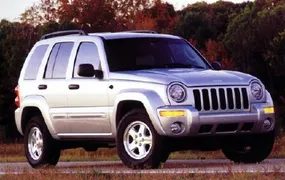
1993 brought the Cherokee XJ. It was smaller. It was lighter. It used unibody construction. This was a gamble. Many purists hated it. It wasn’t body-on-frame. It didn’t feel as rugged. But it sold well. It got better gas mileage. It handled better on pavement. It changed the perception of what a Jeep could be.
The Grand Cherokee launched in 1993 too. It had a more luxurious interior. It had more power. It had more options. It competed with the Land Rover Discovery. It was a direct hit. Sales soared. The Grand Cherokee became the best-selling model in the lineup.
By 2002, the Jeep brand had a diverse portfolio. There were Wranglers for the hardcore.