It started with covered wagons in South Bend, Indiana, back in 1852. Henry and Clem Studebaker built three of them. By 1872, that small shop had ballooned into the world’s biggest horse-drawn vehicle manufacturer. Five brothers were involved in the chaos over the years. The family empire didn’t pivot to automobiles until 1902. J.M. “Wheelbarrow Johnny” was president then. They cut their teeth on electric cars. Gas engines soon joined the lineup.
Albert Russell Erskine changed everything. A former accountant, he took the reins in 1915. He ran the show until 1933. Erskine claimed he ate obstacles for breakfast. He meant it. His aggressive optimism turned Studebaker into a profit machine. The company dominated the medium-price sector. But Erskine wanted more. He needed to stretch down to cheap cars and up to luxury.
The strategy worked. Sort of.
In 1927, he launched the light six, dubbed the Erskine. It put the brand in the low-price fray. The next year, Studebaker bought Pierce-Arrow. That acquisition gave them a foothold in the luxury market. Then came 1929. The stock market crashed. The economy tanked. Erskine’s optimism became a liability. He kept paying large dividends to shareholders. He expected a quick recovery. He was wrong. The Depression deepened. Cash reserves vanished. The company teetered on the brink.
The Erskine and Rockne Experiments
The Erskine car failed. It sold poorly. In 1930, it was rebranded as the Studebaker Model 53 Six. Erskine didn’t give up. He tried again with the Rockne. Named after Knute Rockne, the legendary Notre Dame football coach. It sounded promising. It lasted barely two years. Production stopped after 1933. Just over 36,000 units rolled off the line.
Price tags ranged from $585 to $735. That should have moved metal during the depths of the Depression. It didn’t. The engines lacked power. Workmanship was questionable. Another blunder? Naming a model Dictator. As Hitler and Mussolini rose to power, the name felt absurdly unpatriotic. They kept using it until 1937 anyway.
A Confusing 1930 Lineup
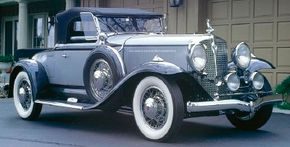
Skip the failed namesakes for a moment. Studebaker’s 1930 regular line was a mess of options. They offered six engines across seven series. It was confusing. The base models were 114-inch wheelbase Standard Sixes. Above that sat the 115-inch wheelbase Dictator and the 120-inch Commander. Both used 221-cubic-inch inline-six engines. Similar power. Similar size.
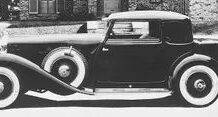
At the top? The President Eights. These were stunning. Offered on a 125-inch chassis. Or a special 135-inch platform. These were South Bend’s finest automobiles of the decade. Perhaps ever. But the lower-end chaos and the missteps with names like Dictator masked the engineering excellence at the top. The company was fighting on two fronts. One for survival. One for prestige. And the bank account was empty.
What Happened Next?
The Erskine and Rockne were desperate moves. Desperate times create desperate products. Studebaker tried to be everything to everyone. Low price. High luxury. Mid-range reliability. The Depression made that impossible. The cash flow dried up. The dividends stopped. But the damage was done. The brand was weakened.
How did Studebaker survive the next few years? Did they pull the plug on the luxury division? Or did they double down on the mid-range? The answers lie in the models of the early 1930s. The Rockne was a ghost. The Dictator was a political landmine. The President was a beauty. But beauty doesn’t pay bills. Not when you’re bleeding cash.
The era of the horse-drawn wagon was gone. The age of the affordable motorcar had begun. Studebaker was caught in the crossfire. They had the cars. They had the history. They just lacked the cash.
See also:
– AMC
–
The Squeeze: 1931–1933 Model Year Adjustments
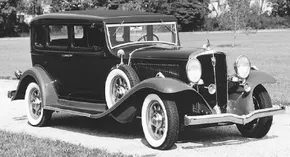
By 1931, Studebaker had already axed the Dictator Six. The Dictator Eight survived, sitting on a longer 124-inch wheelbase. The bigger cars stretched further. Commanders hit 124 inches. Presidents sprawled across 130- or 136-inch frames. Mid-year, Studebaker squeezed more power from the iron. The 221 cubic-inch Dictator eight jumped from 70 to 81 bhp. The long-stroke 250.4 cid Commander motor climbed to 101 hp. Pricing got a haircut too. $795 to $2,550 replaced the previous $895–$2,595 spread. It was a slimming-down act before the real crash hit.
1932: The Rockne and the Standard Shift
The lineup held steady into 1932. The new Rockne entered the fray. It used either a small 205 cid six or an even tinier 190 cid six. Upmarket buyers got the Senior-line six. This stroked 230 cid unit made 80 bhp. It went into a new Standard chassis. That chassis measured 117 inches. It also housed the Dictator Eights. Commanders gained an inch of wheelbase. Presidents stayed put on a 135-inch frame.
1933: Right-Sizing the Fleet
1933 brought more trimming. Commanders dropped to a 117-inch wheelbase. They kept a straight-eight but swapped to a smaller 235 cid block. Output stayed near 100 hp. The big Presidents clung to their 135-inch chassis. The 337 cid eight pushed 135 bhp. A new 125-inch President appeared. It used a smaller 250 cid eight rated at 125 hp. The Dictator name vanished again. It made sense. The brand had lost its way.
1934: A Curious Return
Dictator came back in 1934. Strange move. Standard, Special, and Deluxe models wore the badge. They sat on a 113-inch wheelbase. Power came from a 205 cid six making 88 bhp. Commanders rode a 119-inch frame. They got the old 221 eight back. Power crept up to 103 hp. Presidents lost ground. The 250 cid eight dropped to 110 hp. Wheelbase shrank to 123 inches. The hierarchy was collapsing.
The Fall and the Rescue
Sales had been bleeding out. Over 123,000 units moved in 1930. By 1932, numbers fell under 26,000. Studebaker slipped from fourth to eleventh place in the industry. 1933 was worse. The company finished 14th. Receivership loomed. A merger with White Motors was supposed to save them. It failed. Albert Russell Erskine, the company head, resigned. He took his own life shortly after. The corporate suicide note was written in steel and glass.
The financial bleed stopped in 1934. Studebaker squeaked out a small profit, but it was enough to unlock a line of credit and pull the company out of receivership. That single fiscal win changed everything. Production numbers, which had languished at a paltry 12,500 units in 1933, jumped to nearly 60,000 the very next year. It was a massive leap that vaulted the brand into eighth place in the industry standings.
The momentum wasn’t perfectly linear. Output dipped below 44,000 for the 1935 model year. But it bounced back hard. By 1936, Studebaker was moving nearly 56,000 vehicles. In 1937, that figure climbed to 98,000. Those two years secured eleventh and tenth place finishes, respectively. It was a clear trajectory of recovery.
Strategic Pruning of the Lineup
This resurgence wasn’t just luck. It reflected a hard reversal of Erskine’s “full-line” strategy. The company had been trying to be everything to everyone and losing money doing it. For 1934 and 1935, Studebaker slashed its offerings down to just three series: the Dictator Six, the Commander Eight, and the President Eight.
The Commander Eight took a two-year hiatus after 1935. Why? To streamline production and focus resources. This consolidation allowed the company to tighten margins and improve quality control on the remaining models. It was a lean, mean machine compared to the bloated lineup of previous years.
The ’34 “Year Ahead” Look
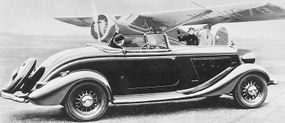
The 1934 models arrived with a fresh face. Studebaker introduced streamlined “Year Ahead” designs. The aesthetic shift was distinct. Pontoon fenders wrapped around the wheels, creating a smoother, more integrated look. Grilles were rounded, softening the front end. It was a move toward modernity, shedding the boxy rigidity of the late twenties.
Rumble-seat body types, once a staple for touring families, departed the lineup the following year. They were a relic of a different era. Studebaker was clearly betting on a more streamlined future for the American road.
“Studebaker made a small profit in 1934, enough to secure a line of credit and get out of receivership.”
Looking Ahead
The foundation was set. The financials were stable. The product was cleaner. The brand was climbing the ranks. But the road ahead would bring new competitors and shifting tastes. The strategies that worked in 1934 would face new tests in the years to come. How would Studebaker handle the increasing pressure from the Big Three? The answer would define the next decade.
1936, 1937, 1938, 1939, 1940 Studebakers
The Loewy Touch and the Champion’s Rise
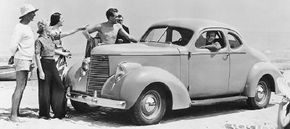
By 1938, Studebaker needed a new look. Paul G. Hoffmann brought in Raymond Loewy, the industrial design guru behind the Aerodynamic Hupmobiles. Loewy’s first South Bend project gave the cars a distinct prow. He tucked pod headlights between the radiator and the fenders. Some models got “catwalk” trim, a nod to GM’s style.
The lineup shifted. The Dictator was gone. In its place came the revived Commander Six. It sat on a 116.5-inch wheelbase. Five body styles were available. The State Commander Eight used the same platform, offered in four versions. A shorter 122-inch chassis underpinned the State President. By 1939, Studebaker moved the headlamps out into the fenders. The grille went horizontal.
Money was tight before the rebound. Studebaker made $2 million in 1936. Profits dropped to $812,000 in 1937. The recession hit hard in 1938, leaving a $1.76 million deficit. Then came 1939. Production jumped nearly 50 percent. Almost 86,000 cars rolled off the line. Things only got better from there, until the war stopped everything.
The winner was the Champion. It was clean. Efficient. Available as a coupe, club sedan, or four-door Cruising Sedan. It rode a 110-inch wheelbase. Price? $660 to $800. That was only $25 to $40 more than the Low-Priced Three.
Engineering VP Roy Cole and project chief Eugene Hardig had stripped weight from the chassis. The Champion wasn’t a toy. It was as substantial as a Commander or President. Its engine was a 164.3-cid L-head six. Smaller than rivals. Less power—78 bhp initially. But the car weighed 500 to 600 pounds less. So performance held steady.
It couldn’t touch a Ford V-8/85. Top speed hit 78 mph. That beat or matched Chevy, Plymouth, and the Ford V-8/60. Durability was fantastic. Mileage was great.
Nearly 34,000 Champs sold in 1939. That’s impressive for a mid-season debut. Studebaker climbed back to seventh in the industry. Total production hit just under 86,000. Hoffmann and Vance had slashed the break-even point to 75,000 cars. South Bend banked $2.9 million.
1940 Updates and Final Pre-War Adjustments
You don’t mess with a savior. Changes for the 1940 Champion were minor. Grille bars got finer. Headlamps switched to sealed beams, following industry standard. New trim called for Custom DeLuxe. A second coupe arrived, featuring a rear “opera seat.” Series production nearly doubled. The model year ended with 66,264 units.
Commanders and Presidents stayed put in 1938-39. Wheelbases and engines didn’t change. They lost their convertible sedans. Each kept a coupe, Cruising Sedan, and two-door club sedan. The Commander still offered a business coupe. Front ends looked sharper. More Lincoln-like. A split, heart-shaped vertical-bar grille replaced the old look. Presidents cost about $125 more than Commanders. Commanders ran $200 above the Champions.
For more on defunct American cars, see:
-
AMC
-
Duesenberg
-
Oldsmobile
-
Plymouth
-
Tucker
1941, 1942 Studebakers
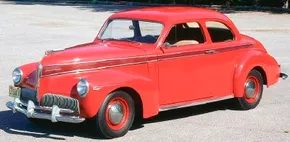
Loewy’s Touch and the 1941 Facelift
Raymond Loewy didn’t just tweak the 1941 Studebaker lineup; he reworked the entire front end. The result was a slightly sharper nose and a vertical-bar grille that sat lower and looked wider. Inside, the engines got attention too. The Champ’s unit was stroked to 169.6 cubic inches, pushing output to 80 horsepower. The Commander’s six-upgraded to 94 horsepower. The President’s straight-eight, featuring nine main bearings, climbed to 117 horsepower.
Sales remained strong. Studebaker slipped from eighth to ninth in total production volume, but volume tells only half the story. The Champ was a juggernaut, moving nearly 85,000 units—the best single-year haul in brand history. The Commander also surged, climbing from just under 35,000 to nearly 42,000. The President stayed niche, with just under 7,000 sales, a modest 500-unit increase over 1940.
The War Shortage and 1942 Changes
The 1942 models arrived wider and heavier, sporting a front end that resembled contemporary Chevrolets. DeLux-tone trims were renamed “Deluxstyle.” Studebaker pushed a new option for Commander and President buyers: Turbo-matic Drive. It wasn’t a true automatic. It was a manual transmission fitted with a fluid coupling. This allowed clutchless shifting between two gear ranges. Think of it as Chrysler’s Fluid Drive.
Production hit roughly 50,000 units before February 1942. Then the government pulled the plug. Consumer car manufacturing stopped for the duration of World War II. Studebaker moved to eighth place in the final tally before the halt.
Military Output and the Postwar Gap
Studebaker didn’t idle. The company produced numerous military vehicles. Trucks were the primary output, leveraging a long history of success in that segment. They also built airplane engines and “Weasel” personnel carriers.
There was a strategic advantage in this pivot. Because the 1939 Champion had been such a success, Studebaker handed over styling duties to Loewy Associates. The firm was an outside entity, less bogged down by immediate defense contracts than Studebaker’s internal design team. This separation of powers allowed Studebaker to debut all-new cars in the spring of 1946. They were first back on civilian roads, beating everyone except the industry newcomer, Kaiser-Frazer.
Skyway Champions: 1946 Return to Civvies
The 1946 Skyway Champions were the return ticket to civilian sales. These were lightly modified 1942 Champs. The lineup included three- and five-passenger coupes, plus two- and four-door sedans. Changes were minimal. An upper-grille molding now extended beneath the headlamps. Optional lamps appeared atop the fenders. Hoodside moldings were scrapped.
Only 19,275 were built. South Bend switched production to the all-new 1947 models before the year ended. The transition was quick. The gap between war and peace was bridged by a car that hadn’t changed much, bought by people who just wanted to drive again.
For more on defunct American cars, see:
-
AMC
-
Duesenberg
-
Oldsmobile
-
Plymouth
-
Tucker
1947, 1948, 1949, 1950, 1951 Studebakers
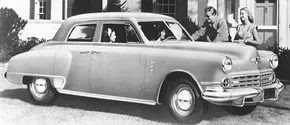
Developing the 1947 Studebaker line cost about $11 million. That was a massive gamble for a company that hadn’t released a new model since 1942 due to World War II. The design roots went back to 1940 sketches by young Robert E. Bourke. That early work caught the eye of Virgil M. Exner, chief stylist at Loewy Associates. Exner hired Bourke. Exner had come to Loewy after Pontiac, and he started the ’47 Studebaker program. He left before the final design was locked in, though. So the finished product was a hybrid of Exner’s initial concepts and Bourke’s execution.
The 1947 Return to Production
The postwar President was still years away. Instead, Commanders and Champions returned. The Champion lost its “Skyway” name but kept its mechanicals mostly the same. It rode on a wheelbase that was two inches longer than before.
For the Commander, there was a special 123-inch chassis. This supported the new Land Cruiser, a plush option priced at $2043. Other Commanders stuck to the prewar 119-inch wheelbase. Both series offered two- and four-door sedans. The four-doors finally got “suicide” rear doors. There was also a long-deck three-seater coupe. A new five-passenger “Starlight” coupe arrived, featuring a radical three-element wraparound rear window.
Trim levels were simple. You could get the base DeLuxe or splash out about $120 more for the Regal DeLuxe. Studebaker also brought back Regal convertibles. The Champ went for $1902. The Commander convertible cost $2236. The strategy worked. Studebaker returned to profitability in 1947. They earned over $9 million on calendar-year sales that were 58.5 percent higher than the previous cycle.
Inflation Hits South Bend
The momentum didn’t stop in 1948. Earnings jumped to $19 million. Production hit over a quarter-million cars and trucks. Both were company records. Predictably, the cars themselves didn’t change much for the ’48 model year. The only visual cue was a winged hood medallion for instant identification.
But prices went up. An average hike of $200 was slapped on stickers. Prices ranged from $1535 to $2430. This reflected strong postwar inflation. The move paid off. Studebaker climbed to seventh place in the industry roster for that model year. They sold nearly 185,000 cars.
The 1949 Refinement
Styling changes were planned for 1949 to keep ahead of competitors. Time ran out. They settled for refinements instead. The Champ got a new grille with horizontal and vertical louvers. These formed three rows of rectangular openings. The Commander six engine was stroked. It hit 245.6 cubic inches. That pushed output to an even 100 horsepower. Profits soared to $27.5 million despite the lack of major changes.
Studebaker turned 98 in 1950. It would be the best car year in their history. Model-year production totaled 343,166 units. Grand preparations were underway for the firm’s “second century.” There were many equally grand predictions. But that second 100 years would be cut short. Exactly 14 years, in fact.
The Bullet Nose Controversy
To look fresh against rivals with newer designs, Studebaker gave the basic ’47 bodies a dramatic cowl-forward facelift for 1950. It was controversial at the time. Designer Bob Bourke claimed the new “bullet nose” front was ordered by the French-accented Loewy. The instruction was clear. “Now Bob, eet has to look like zee aeroplane.”
It did look like an airplane. It had the most bizarre face of any American car since Graham’s abortive 1939-40 “Sharknose.”
The new front end increased the wheelbase by a nominal one inch for all 1950 Studebakers. Champs moved up to 113 inches. Commanders hit 120 inches. Engines stayed the same. The lineup was mostly unchanged, except for a quartet of price-leading Champ Customs in the low $1400s. That year’s Land Cruiser was tagged at $2187.
Automatic Drive and the V-8 Shift
The big technical news for 1950 was “Automatic Drive.” It was available as an across-the-board option. Studebaker designed this fully self-shifting transmission in cooperation with Detroit Gear Division of Borg-Warner. It was the only postwar automatic developed by an independent manufacturer other than Packard’s Ultramatic.
Wheelbases were rearranged again for 1951. An improved chassis with better brakes and easier “center-point” steering made it possible. The wheelbase became a uniform 115 inches for all models. That was up two inches for Champions. It was down five inches for Commanders. The Land Cruiser got a 119-inch spread instead.
Champ power remained unchanged. But Commanders got Studebaker’s first V-8. It was a standard feature. Sized at 232.6 cubic inches, it pumped out 120 bhp by conventional means. Overhead cams and hemispherical combustion chambers had been considered. They weren’t used.
Rising production costs forced Studebaker to raise prices for 1951. Another hike came midyear. The range ran $1560 to $2380. Buyers seemed happy to pay for the lively new V-8. Commander sales jumped by no less than 70 percent.
The End of an Era’s Beginning
Appearance changes for ’51 were slight. The bullet nose was toned down by painting its chrome outer ring. Prominent air vents above the sub-grilles were erased. Model names were spelled out on the hood leading edges. However you think it looks now, the 1950-51 bullet nose was quite salable.
Korean War restrictions held 1951 car production to 268,566 units. Studebaker actually increased its market share from 4.02 to 4.17 percent. The momentum was real. The engineering was sound. The styling was polarizing but effective. Yet the clock was ticking on the company’s independence. The second century had already begun its countdown.
For more on defunct American cars, see:
-
AMC
-
Duesenberg
-
Oldsmobile
-
Plymouth
-
Tucker
1952, 1953, 1954 Studebakers
The plan for a centennial Studebaker in 1952 was ambitious. They were building a unit-construction car with evolutionary bullet-nose styling. It made it to a running prototype stage. Then reality hit. Government restraints on civilian goods tightened. Military orders surged. The “N-Series” project got shelved.
Instead of a new platform, the 1947 chassis got a final facelift. Raymond Loewy Associates drew up a low, toothy full-width grille. Dealers called it “the clam digger.” The lineup didn’t change much. Champion levels stayed Custom, DeLuxe, and Regal. Commander got Regal and State. They did, however, add the Starliner hardtop coupe. It was the top-tier model.
Performance was predictable. Studebaker paced the 1952 Indy 500. A Champ and a Commander took class wins in the Mobilgas Economy Run. Sales were weak though. Only 186,239 units moved.
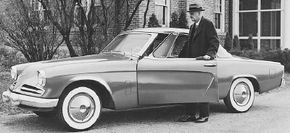
The 1953 model year changed everything. Or at least, it looked like it would. This was the first year of the second century, and the cars were stunning. The “Loewy coupes” are still legendary for a reason. Sleek. Low. Clean.
There were six body styles. Pillarless Regal Starliners. Pillared Deluxe and Regal Starlights. Commander sedans. Champion sedans.
It’s a myth that Raymond Loewy drew these lines. He didn’t. Bob Bourke did. He designed it for a show car. Loewy saw it and forced management to build it.
The design was flawless from every angle. It sat on a new 120.5-inch Land Cruiser chassis. That was longer than the 116.5-inch platform used for the sedans. It was marketed as the “new European look.” Today, it’s widely considered the best American car design of the 1950s. The sedans were good too, borrowing coupe lines but looking stubbier on the shorter wheelbase.
Here is where it went wrong. Tooling delays pushed back production. Sales ended at a disappointing 169,899 units. When they finally rolled off the line, the market spoke loudly. Demand for coupes was four times higher than for sedans. Management had guessed the opposite. They lost time and money pivoting to meet the actual demand.
The coupes had another fatal flaw. The frames were too light. Flexing caused squeaks and rattles. Quality suffered. Despite the mess, the company scraped together a slim $2.69 million profit for the fiscal year.
The 1954 models were minor updates. Eggcrate grille inserts broke up the monotony. The Loewy coupes returned. They added two basic Champ Custom sedans. Deluxe and Regal sedans continued in both lines.
The big news was the Conestoga. A two-door all-steel station wagon. Named after the prairie schooners from Studebaker’s early days. It came in Deluxe and Regal versions for both Champ and Commander lines.
Mechanically, Commanders got seven extra horsepower. Brakes got larger across the board. The coupe frame got beefed up to stop the flexing. But the reputation damage from 1953 stuck.
The numbers tell a darker story. Bourke ran a cost analysis using General Motors’ structure. A Chevrolet could have sold a Commander Starliner for $1,900. Studebaker charged $2,500. The math was brutal.
Meanwhile, Ford launched a price war. GM held the line. The independents got crushed. Studebaker’s volume plunged to 81,930 units. The weakness was painful.
In October 1954, Nash president George Mason persuaded Packard president James J. Nance to buy Studebaker. The goal was bigger. Mason wanted to merge Studebaker, Packard, Nash, and Hudson into American Motors. It would have been the “Big Four.”
The deal closed. Nance took over, creating the Studebaker-Packard Corporation. Then Mason died suddenly. The dream died with him. The merger happened, but the future remained uncertain.
For more on defunct American cars, see:
-
AMC
-
Duesenberg
-
Oldsmobile
-
Plymouth
-
Tucker
1955, 1956, 1957 Studebakers
The marriage to Packard didn’t save Studebaker from the brink. By mid-1954, the South Bend plant was clinging to life, banking everything on a chrome-heavy facelift of the ’55 lineup. This was the debut of the postwar President series, replacing the Land Cruiser with Deluxe and State four-door sedans, alongside pillared and pillarless State coupes.
Power figures were the only thing getting louder. Studebaker stroked the Champ six up to 185.6 cubic inches, squeezing out 101 bhp. The Commander V-8 got smaller—down to 224.3 cid—but made more power, hitting 140 bhp. President models got the biggest bump: a 232 cid block bored out to 259 cid, producing 175 bhp. To keep costs down, the expensive Automatic Drive transmission was ditched for Borg-Warner’s cheaper Flight-O-Matic.
Sales didn’t care. They languished.
By January ’55, Studebaker threw more parts at the wall. The Commander engine was rebranded as the “Bearcat,” pushing 162 bhp, with an optional High Power Kit adding another 20 hp. Presidents got the “Passmaster” upgrade to 185 bhp. Style-wise, they added “Ultra Vista” wrapped windshields to non-coupe Presidents and Commanders. The crown jewel was the President Speedster hardtop. It had quilted leather, a tooled-metal dash, and paint schemes like pink-and-black or “lemon and lime.”
It looked great. It sold poorly.
At $3,253, the Speedster was too expensive for most. Only 2,215 made it out the door. Studebaker sold just 133,826 cars for the whole year. They needed 250,000 to break even. The gap was widening.
The Hawk Era and the Packard Bailout
For ’56, Studebaker tried to look sharper. Large mesh grilles gave the front end a squarer, more aggressive look. They introduced “sedanets”—two-door bodies on Champion and Commander chassis—priced under $2,000. The President line added the long-chassis Classic sedan at $2,489. Wagons got new names: Pelham (Champion), Parkview (Commander), and Pinehurst (President).
But the headline act was the Hawk.
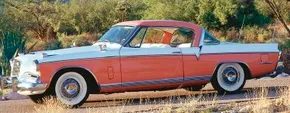
Styled by Raymond Loeway’s final team, the Hawk line was marketed as “family sports cars.” It was a restrained facelift of the ’53 coupe, featuring modest tailfins and a high-mounted square grille. The lineup included the pillared Flight Hawk and Power Hawk, and the hardtop Sky Hawk and Golden Hawk. They handled well around corners and moved fast in a straight line.
The Golden Hawk was the star. It got exclusive use of Packard’s 352 cid V-8, making 275 bhp. Commanders and Power Hawks stuck with the 259 cid V-8 (170 or 185 bhp). New for Presidents and Sky Hawks was a long-stroke 289 cid engine, offering 195, 210, or 225 bhp.
Prices were competitive. The Flight Hawk started below $2,000. The Golden Hawk was $3,061. They were good buys. So why did they fail to save the company?
Because enthusiasts bought them. Mainstream buyers didn’t. Studebaker sold 85,462 cars in ’56, including 19,165 Hawks. The bread-and-butter models were still struggling to find customers.
The situation turned dire in 1957 and 1958. Combined Studebaker-Packard sales never topped 80,000 units annually. In May 1956, Packard president James J. Nance arranged a lifeline. Through Roy Hurley of the Curtiss-Wright Corporation, they secured “advisory management services.” It was a cash bailout in all but name.
The cost was immediate. Plans for an expansive new 1957 S-P line were scrapped. Nance resigned. Studebaker chairman Paul Hoffman and president Harold Vance followed.
Hurley was left to oversee the 1957 and 1958 models. With no budget for new bodies, the restyle had to be cheap.
The Duncan McRae Stretch and the Scotsman
Duncan McRae did what he could with scraps. Standard ’57s got a full-width grille and rear fenders stretched and swollen to mimic fins. Hawks kept their prominent fins, which actually looked better than the fake ones on the base models.
The model lineup was trimmed down to Deluxe and Custom Champ and Commander sedans, Pelham and Parkview wagons, three President sedans, the Golden Hawk, and a new pillared Silver Hawk. The Silver Hawk could be ordered with the six or the 289 V-8.
Studebaker also somehow kept the four-door wagons, marketing them as the Commander Provincial and President Broadmoor.
Mechanically, compression ratios on the 259 cid V-8 were raised, boosting output to 180 and 195 bhp. The Golden Hawk swapped the Packard engine for a Paxton-supercharged version of Studebaker’s own 289, still making 275 bhp.
Desperate for volume, Studebaker introduced the mid-year Scotsman. It was a wagon and two sedans with six-cylinder power. It had very little else. It cost well under $2,000.
It sold 9,300 units. Not bad for a panic move, but not enough. Total ’57 production ended at 74,738 cars. The spark they hoped for never caught.
The end was coming. And when it arrived, it wouldn’t be with a roar. It would be with silence.
For more on defunct American cars, see:
-
AMC
-
Duesenberg
-
Oldsmobile
-
Plymouth
-
Tucker
1958, 1959, 1960 Studebakers
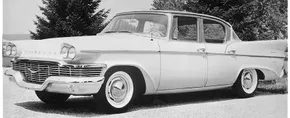
The Lark Saves Studebaker from Oblivion
The 1958 models were a disaster. They were ugly, cheaply designed, and stuffed with garish trim and hastily slapped-together four-headlamp fronts. Studebaker’s Commander and President lines tried to stay relevant with new Starlight hardtop coupes on the 116.5-inch chassis, but the lineup was thinning out fast.
Total volume plummeted to 62,114 units.
The Scotsman plant fared better, moving nearly 21,000 units in that recession year, but the brand was bleeding out. Studebaker likely would have died right then and there if not for the sudden, massive success of the compact Studebaker Lark.
For 1959, the Lark replaced every old standard model. It kept the basic sedan and wagon inner structure used since 1953 but stripped away all the extra sheetmetal that had been added over the years. The result? A curb weight reduction of up to 200 pounds. Designer Duncan McRae applied simple, clean styling. The look was defined by a Hawk-like grille and a return to dual headlamps.
The 169.6-cid six came back, making 90 bhp in the Lark VI Deluxe and Regal models. These came in two- and four-door sedans, two-door wagons, and a Regal hardtop coupe.
The Lark VIII series included the four-door, hardtop, and wagon. These used the standard two-barrel 180-bhp 259 V-8. You could add 15 horsepower with an optional “Power Pack” four-barrel carb and dual exhaust. Wagons stayed on the familiar 113-inch wheelbase, but the other Larks sat on a trim new 108.5-inch span.
This combination made the Lark lively, economical, and surprisingly roomy.
With the 180-bhp V-8, the Lark hit 0-60 in under 10 seconds.
It was also easy on gas, returning over 22 mpg. Starting prices were below $2000. It was a smash hit. Studebaker sold 131,078 Larks.
They didn’t abandon “family sports cars” entirely. The only one offered in ’59 was the pillared Silver Hawk. It came with the six or either Lark V-8. It added 7,788 units to total production. Still, Studebaker found its way out of the financial woods. It earned its first profit in six years. Sales jumped over 250 percent from the abysmal 1958 numbers.
1960: The Hawk Struggles, Lark Holds Steady
The Lark was predictably little changed for 1960. Minor trim was shuffled, and the grille moved from horizontal bars to mesh. Four-door wagons returned for the first time since 1958. The Lark VIII line offered Studebaker’s first convertible in eight years, a $2756 Regal.
Prices were bumped up slightly. New competition from the Big Three cost them some sales.
Meanwhile, South Bend’s lone family sports car carried on as simply the Hawk. Its main change involved engines. V-8s were now exclusively 289s. They made 210 standard bhp, or 225 with the optional “Power Pack.” Though dated, the V-8 Hawk remained a fine value at $2650. It was still a good performer.
But sales dropped by almost half from ’59, down to 3,939.
The reasons were clear: a dearth of dealers, continued advertising emphasis on the Lark, and steadily diminishing demand.
1961: The Decline Continues
Ominously, Lark volume also fell by more than half for 1961.
This happened despite revised outer sheetmetal that gave a slightly squarer look. Quad headlamps appeared on V-8 models. A new overhead-valve head turned the old six into a 112-bhp “Skybolt Six.” They also added a V-8 Lark Cruiser.
The Cruiser revived Studebaker’s luxury-sedan idea. It rode the wagon chassis and boasted a richly upholstered interior with extra rear legroom.
The Hawk returned with a narrow contrast-color panel beneath its fins. A newly optional four-speed gearbox was available. Sales slipped to 3,340.
For more on defunct American cars, see:
- AMC
- Duesenberg
- Oldsmobile
- Plymouth
- Tucker
Studebaker Lark and Studebaker Hawk
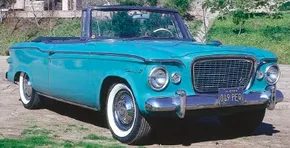
Sherwood H. Egbert didn’t just take the helm at Studebaker in early 1961; he dragged the company kicking and screaming into the modern era. Replacing the embattled Harold Churchill, Egbert knew the house was on fire. He needed a lifeline, fast. So, he called in Brooks Stevens.
Stevens wasn’t just a stylist. He was an industrial designer from Milwaukee who understood that beauty pays the bills. Egbert gave him six months to overhaul the Lark and Hawk lines. Company styling chief Randall Faurot was shown the door. Stevens stepped in with makeovers that were cheap to tool up for but looked expensive on the street.
The 1962 Lark and Hawk Makeover
The changes for 1962 were immediate and drastic. The Lark shed its timid front end for quad headlamps and a grille that borrowed heavily from Mercedes-Benz. It made sense; Studebaker had been the North American distributor for Mercedes since 1958 through Curtiss-Wright. The rear quarters were stretched. The taillights grew round and substantial. The rooflines, once bulky on wagon models, became crisper. Two-door wagons were axed entirely, likely to save tooling costs.
But the real news was the Daytona. Four new variants arrived. You could get a six-cylinder or V-8. You could choose a convertible or a hardtop coupe. Both came with bucket seats and deluxe trim. The hardtop even offered an optional European-style sliding cloth sunroof. It was a complete package.
The Hawk got the same Stevens treatment. He resurrected the pillarless “Loewy” body style, giving it square, Thunderbird-esque rear roof quarters. The tail lost its fins, opting for a matching, thrust-forward grille design. Inside, Stevens designed a new dashboard featuring a large rectangle of round gauges, with the outer ends canted toward the driver. It focused attention where it needed to be.
The Gran Turismo Hawk
They retitled the Hawk the Gran Turismo Hawk. It came with only two engine options: the previous pair of 289 V-8s. But don’t let the “previous” label fool you. This was a deft piece of engineering.
The optional 225-horsepower engine could push the GT Hawk to 120 mph. Zero to 60 mph took under 10 seconds. The 289 was heavy, sure, but it had power potential far greater than its modest displacement suggested. We’d see that potential explode shortly.
Priced at a tempting $3,095 base, the GT Hawk struck a chord. Nearly 8,400 buyers snapped them up. Total Studebaker car sales jumped by over 30,000, hitting roughly 101,400 units. It was a massive win. Regrettably, it was also the firm’s only gain of the entire decade. Sales would never recover that momentum.
1963 Refinements and the Wagonaire Disaster
Stevens didn’t rest. For 1963, he refined the Lark again. A-pillars were raked back. Windshields were new and likely stronger. Door-window frames got thinner. The grille became finely checked. Inside, they copied the Hawk’s dash with round gauges, rocker switches, and a vanity glovebox complete with a pop-up mirror.
But 1963 gave us something else entirely. Something novel. Something tragic.
The Studebaker Wagonaire.
Offered in Standard, Regal, and Daytona trims, the Wagonaire featured a unique rear roof panel that slid forward. The idea was brilliant. Unlimited headroom for hauling tall loads. But the execution was flawed. The sliding roof leaked badly, even when buttoned up. It was a nightmare for owners. Studebaker had to reinstate cheaper fixed-roof wagons mid-year to fix the mess.
The line expanded too. New sedans arrived in Standard and the nicer Custom trim. Custom sat between Regal and Daytona in price.
Enter the Avanti
By mid-1963, both Lark and Hawk could be ordered with new “Avanti” 289 V-8s.
The R1 engine made 240 horsepower and cost $210. The R2 was the beast. It was supercharged, made 290 horsepower, and cost $372. These engines were named for the totally unexpected grand-touring car that broke cover in early 1962.
The numbers didn’t lie. An R2-equipped “Super Hawk” exceeded 140 mph at Bonneville that year. An R2 “Super Lark” hit over 132 mph. They were quick. They were potent. They were the tip of the iceberg.
The Avanti name was already floating in the air. A secret project. A car that would change everything. Or end everything.
For more on defunct American cars, see:
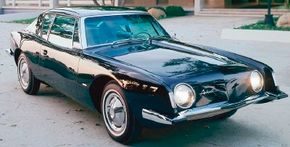
It was the most stunning South Bend product in a decade. The Avanti didn’t just look forward—it embodied the word. Raymond Loewy and his team, including John Ebstein, Robert Andrews, and Tom Kellogg, crafted something brilliantly conceived. A swoopy four-seat coupe, exactly the kind of exotic sporty car Loewy Associates had been designing for years.
Brooks Stevens was busy updating Studebaker’s higher-volume models, so president Sherwood H. Egbert went to Loewy. He needed to rejuvenate a sagging image. When it bowed in 1962, the promise was clear.
Like the original Corvette a decade prior, fiberglass was the material of choice. It minimized time and tooling costs. An all-new chassis was too expensive, so chief engineer Gene Hardig beefed up the Lark rag-top frame. He added front and rear antiroll bars. Rear radius rods were installed. The Bendix front-disc power brakes were newly optional for the ’63 Lark and Hawk. First caliper discs in U.S. production, by the way.
Under the hood, the 289 V-8 got a heavy revision. It became the “Jet Thrust.” The basic R1 engine used a 3/4-race high-lift cam, a dual-breaker distributor, a four-barrel carb, and dual exhaust. Andy Granatelli’s Paxton Products, then part of Studebaker, added a supercharger to create the R2.
They also built a trio of bored-out, 304.5-cid extensions. The blown R3 hit 335 bhp with 9.6:1 compression. The naturally aspirated R4 featured twin four-barrels, 12:1 compression, and 280 bhp. The experimental R5? Twin blowers, one per cylinder bank, magneto ignition, Bendix fuel injection, and no less than 575 bhp.
Excitement was high. The Avanti promised to pack Studebaker showrooms like nothing else in years. Then came the calamity.
Production was delayed a critical six months. The supplier, Molded Fiber Glass Company, botched the bodies. They also built Corvette shells, yet failed here. Studebaker had to set up its own fiberglass production. It was a desperate move.
By the time bugs were squashed, most buyers with advance orders had canceled. They bought Corvettes instead. Just 3,834 Avantis were built for ’63, including 500 exports.
Studebaker’s 1963 volume skidded to 81,660. Well down from ’62. Only Lincoln and Imperial ranked lower among major U.S. makes. Egbert, repeatedly hospitalized of late, left in November. He never returned. Sadly, he would die of cancer in 1969.
A month later, new president Byers Burlingame announced the closure of Studebaker’s historic South Bend plant. Last-ditch efforts to obtain financing for future models had failed. Operations were consolidated at the Hamilton, Ontario, assembly plant. Management hoped to return to profitability on 20,000 family compacts a year.
With that, the Avanti and GT Hawk were unceremoniously dumped. A token run of little-changed ’64 models followed: 809 Avantis and 1,767 GT Hawks, including exports. The end was not dramatic. It was just quiet. And then, nothing.
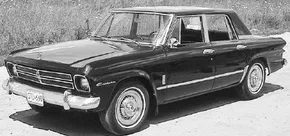
The South Bend era ended with a whimper of sheet metal rather than a bang. The 1964 Larks arrived with Brooks Stevens’ crisp, square outer panels. Overall length stretched six inches. The grille went horizontal. An eggcrate center sat between integral headlights. The rear end pointed aggressively upward, housing high-set tail and backup lamps.
It was a fresh look for a dying brand.
The Last Stand of the Lark and Commander
Under the hood, the machinery shifted. The stripped-down Standard model got a new badge: Lark Challenger. Price started at a modest $1,943. The hallowed Commander name returned to the lineup, pushing the Custom and Regal trims aside. A four-door Daytona sedan joined the mix.
Performance figures tell a specific story about what remained of Studebaker’s engineering. The newly optional Avanti R3 powertrain dropped a Super Lark’s 0-60 time to 7.3 seconds. These were fast cars. But very few were actually built.
The R3 was also listed for the GT Hawk. It was an even rarer order. That model bowed out with distinct styling cues. Landau roof styling came standard. Optional rear vinyl half-tops were available. The rear deck smoothed out. The dashboard featured matte-black appliqué.
Sales didn’t care about the aesthetics. They kept sliding. Calendar year 1964 saw fewer than 20,000 units sold. The model year total hovered around 44,400.
The 1965 Cuts and Chevy Substitutes
For 1965, management killed the Lark name. It was too much of a liability. The lineup shrank to ten “Common-Sense” models.
You had six-cylinder and V-8 Cruisers. Two- and four-door Commander sedans. A solid-top Commander wagon. Then came the V-8 Daytona Wagonaire with and without a sliding roof. A new pillared Daytona sport coupe rounded out the roster.
Styling was virtually unchanged from the year before. But the heart of the car changed. The closure of the South Bend plant ended the production of Studebaker engines. Management had no choice but to look elsewhere. They settled for Chevrolet substitutes.
The entry-level powerplant was the 120-hp 194 cubic-inch six from the compact Chevy II. Up top, the legendary 283 small-block V-8 ran in a 195-hp tune. It wasn’t originality. It was survival.
Hamilton nearly moved 20,000 cars for the 1965 model year. But without facilities to develop replacement models, Studebaker had no real future as an automaker. Financing dried up.
The 1966 Finale
The 1966 models were the end. They were basically warmed-over 1965s. Dual-beam headlamps replaced the quad setups. A new four-slot grille appeared at the front. Air-extractor vents took the place of the upper taillight units in the rear.
Studebaker built only 8,947 of these final cars. Then they called it quits.
Looking back, this was a classic case of the downward spiral. It’s the same death trap that claimed so many makes during the Depression. Insufficient sales meant you couldn’t cover development costs for new models. Your old ones grew unpopular. Sales dropped further. Talk of demise became a self-fulfilling prophecy.
Losing Studebaker was a shame. But perhaps it was inevitable.
For more on defunct American cars, see:
-
AMC
-
Duesenberg
-
Oldsmobile
-
Plymouth
-
Tucker